SpaceXAI Loses Bid to End Lawsuit Over 27 Gas Turbines
A gas turbine can be transported without being treated as a mobile pollution source. That distinction now keeps SpaceXAI in a federal Clean Air Act lawsuit over 27 turbines allegedly operated without an air permit at data-center facilities near Greater Memphis.
On October 30, 2026, a judge in the U.S. District Court for the Northern District of Mississippi denied SpaceXAI’s motion to dismiss the case. The judge held that the turbines are not mobile sources under Mississippi’s state implementation plan, that the NAACP has statutory standing and that the Clean Air Act’s citizen-suit provision survives the company’s constitutional challenges. The ruling allows the claims to proceed; it does not determine whether SpaceXAI violated the law.
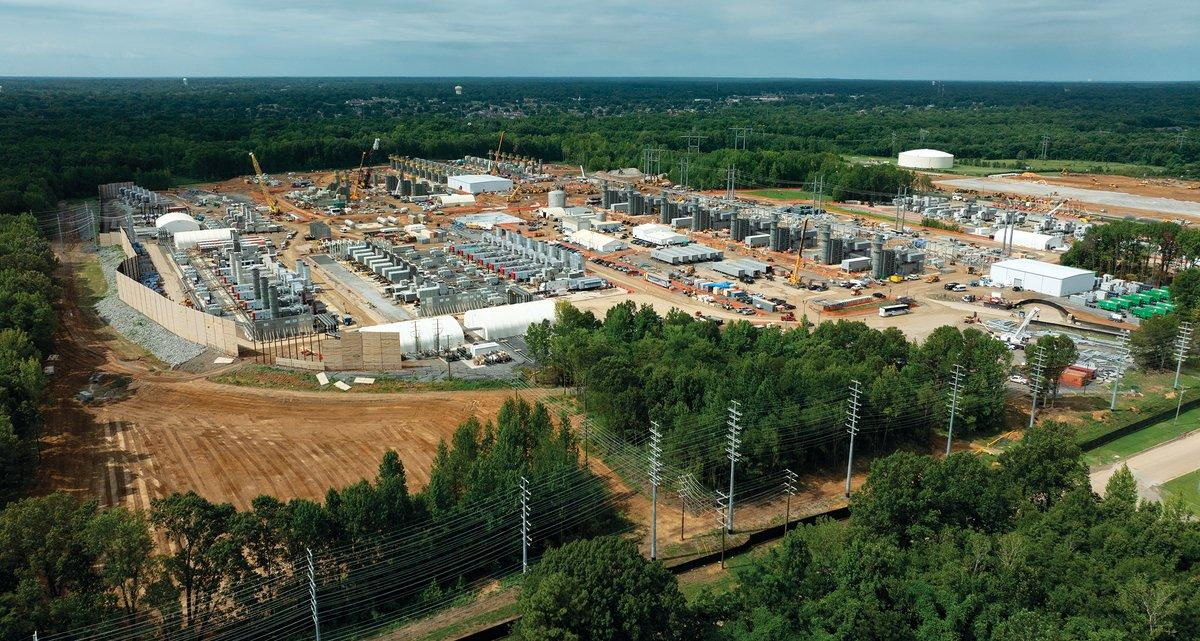
The Southern Environmental Law Center and Earthjustice filed the complaint for the NAACP in April. It alleges that xAI and subsidiary MZX Tech installed and operated 27 gas-fired combustion turbines in Southaven, Mississippi, between August and December 2025. SpaceX, identified as the owner and operator of the division formerly known as xAI, did not immediately respond to a request for comment.
Mobility is not decided by wheels alone
The central engineering-policy issue is the equipment’s function while operating. SpaceXAI characterized the turbines as “mobile” and therefore exempt from the permitting requirements asserted in the complaint. The court rejected that classification under Mississippi’s implementation plan.
That result reflects a practical distinction between transportability and operating role. Industrial equipment can be mounted on trailers or designed for relocation, yet still spend its working life generating electricity at a fixed facility. In this case, the disputed turbines allegedly served as power infrastructure for data-center operations rather than providing propulsion for vehicles moving from place to place.
Federal turbine rules illustrate why physical configuration alone is an incomplete test. The Environmental Protection Agency’s standards for stationary combustion turbines describe systems that compress air, burn fuel and expand hot gas through turbine blades to turn a generator or mechanical drive. A current federal definition also recognizes that a stationary turbine may be mounted on a vehicle for portability, although qualifying nonroad engines can be excluded under specified conditions.
The Mississippi plan governs the classification challenged in this lawsuit, so the federal definition does not itself decide the case. It does, however, show the broader regulatory logic: agencies distinguish equipment by how it performs its function and which emissions regime covers it, not solely by whether it can be moved.
Classification determines the accountability path
For industrial power systems, classification establishes which regulatory framework applies before questions about actual emissions are resolved. Treating a turbine as a stationary source can place it within rules designed for equipment operating at a facility. Treating it as a mobile or nonroad source can shift it into a different framework or, depending on the applicable rule, remove the permitting obligation alleged here.
That boundary also affects competitive fairness. A permanently installed generating unit and a relocatable unit can perform the same data-center power function and produce emissions through the same basic combustion process. If portability by itself controlled the outcome, facilities could face different permitting treatment based on mounting architecture rather than operating use. The judge’s dismissal ruling prevents that interpretation from ending this case before the factual allegations are tested.
The public stake is similarly tied to process. The complaint alleges that the turbines emit particulate matter and pollutants that contribute to smog, potentially increasing health risks and causing unpleasant odors for nearby residents. The EPA says nitrogen oxides from power generation contribute to ground-level ozone and fine-particle pollution, which can aggravate heart and lung disease. Those general health effects explain why communities care about permitting, but the amount and impact of emissions from these 27 turbines remain issues for the continuing litigation.
The ruling also preserves a route for community enforcement. SpaceXAI argued that the NAACP lacked the right to sue and that citizen suits by community groups were unconstitutional. The judge rejected both positions, finding statutory standing and holding that the citizen-suit provision did not violate the constitutional doctrines cited by the company. The same court had rejected a Justice Department request to end the case about two weeks earlier.
The next phase must address the substance left untouched by dismissal: how the turbines operated, which requirements applied and whether the alleged unpermitted operation occurred. For data centers increasingly dependent on dedicated power equipment, the immediate lesson is narrower but consequential making a generating system movable does not automatically make its stationary operating function disappear.
| More aerospace and engineering stories, right in your MSN feed. Follow AMI on MSN |
By Thomas Caldwell — AMI’s senior editor for mechanical and mobility engineering, covering vehicle electronics, systems integration, electrification, chassis systems, propulsion, and safety policy.