Lake Mead Could Hold Water Yet Stop Hoover Dam Releases to Yuma
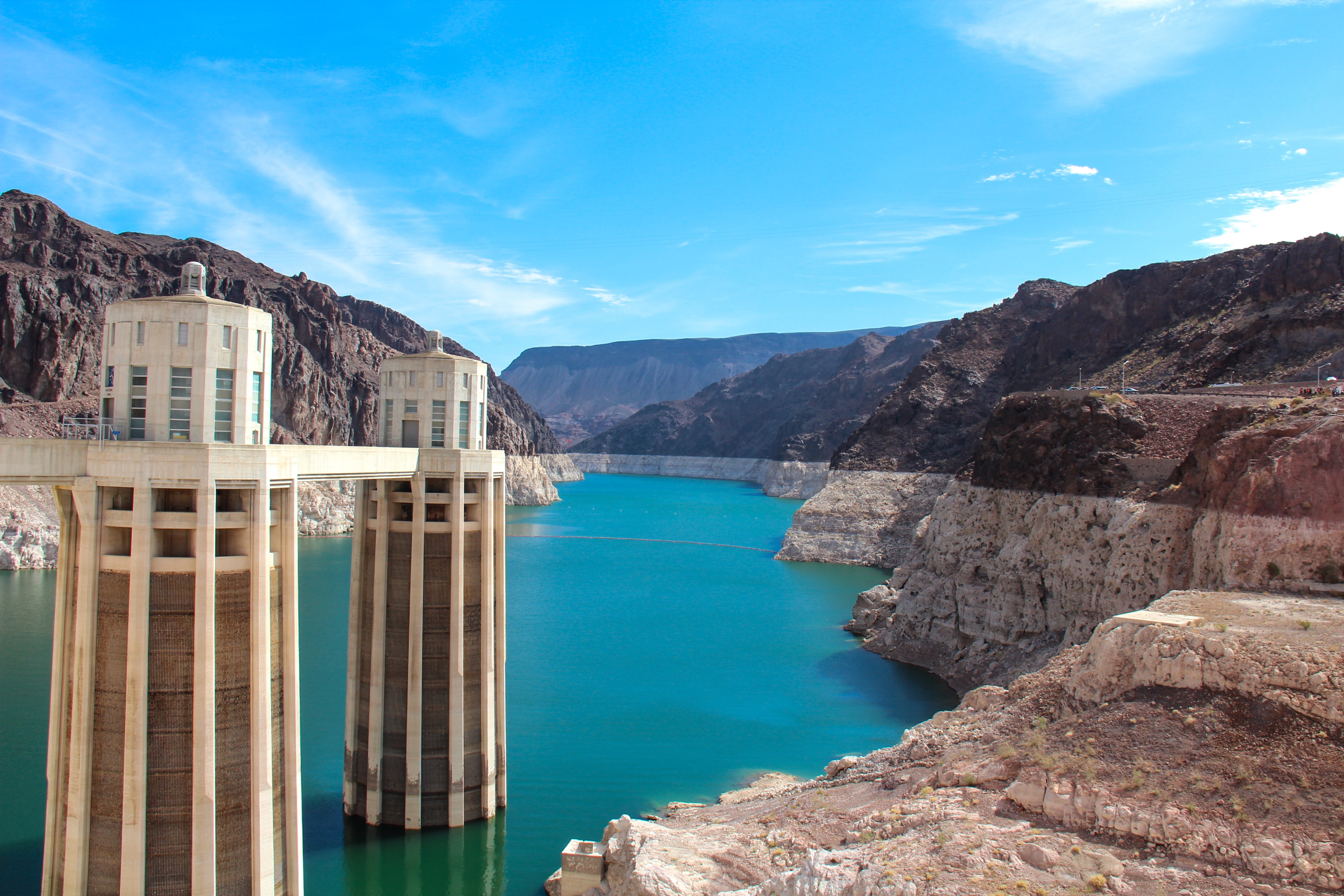
Yuma’s senior Colorado River rights offer substantial protection when available water is divided among users. They cannot overcome a physical cutoff at Hoover Dam. If Lake Mead fell to approximately 895 feet above sea level, water would remain in the reservoir but sit below the dam’s existing gravity-fed outlets, stopping ordinary releases toward Yuma.

This condition, known as dead pool, has not occurred. It is distinct from the minimum power pool at about 950 feet, below which Hoover Dam’s turbines can no longer generate electricity normally. Between those two elevations, hydropower could be unavailable while lower outlets continued passing water downstream. At dead pool, the delivery constraint would shift from power production to the basic geometry of the reservoir and dam.
Stored water downstream would buy time
A cutoff at Hoover Dam would not necessarily halt Yuma’s supply immediately. Lake Mohave behind Davis Dam and Lake Havasu behind Parker Dam hold water downstream of Hoover. Operators could use that existing storage to sustain flows temporarily, including water moving toward Imperial Dam, where diversions feed canal systems serving Yuma.
The duration of that buffer would depend on how much water the downstream reservoirs held when Hoover releases stopped and how operators managed subsequent withdrawals. Without replacement water from Lake Mead, continued releases would progressively deplete the stored volume. New inflow could eventually raise Mead sufficiently for limited releases to resume, but downstream storage would delay the shortage rather than eliminate it.
Yuma’s position in the legal priority system would remain relevant while water was still available below Hoover Dam. The city holds first- and third-priority entitlements, including a first-priority right dating to 1893. Those rights could influence the allocation of remaining downstream supplies, but they could not move water through outlets sitting above Lake Mead’s surface.
The city also draws from the lower river network rather than the Central Arizona Project. Water bound for its Main Street treatment plant travels through the All-American Canal and Yuma Main Canal. That arrangement places the city close to major lower-river infrastructure, but proximity does not create a path around Hoover’s outlet elevation.
Groundwater covers only part of municipal demand
Yuma has a groundwater hedge at its Agua Viva Water Treatment Facility, although treatment equipment currently limits how much of that water can enter the municipal system. Three wells can pump a combined 9 million gallons per day, but the plant’s groundwater filtration capacity stood at 6 million gallons per day in October 2026. The city approved equipment intended to raise treatment capacity to 9 million gallons per day, with completion estimated for June 2027, according to details of the Agua Viva expansion.
Even after that work, the groundwater system would provide less than half of Yuma’s average customer deliveries of about 20.5 million gallons per day in 2022. Pumping capacity alone is therefore not equivalent to replacement supply; the water must also pass through filtration equipment sized to remove iron and manganese.
If surface deliveries stopped, the gap between 9 million gallons of treatment capacity and normal demand would make conservation central to household protection. Yuma’s drought plan calls for mandatory restrictions on nonessential use at the Water Crisis stage and prioritizes essential needs at the Water Emergency stage. Available groundwater could support critical municipal service, but not normal consumption at the measured 2022 rate.
Agriculture presents the larger volume problem
Municipal taps and agricultural fields would not necessarily reach crisis at the same time. The federal Yuma Project serves approximately 68,000 acres in Arizona and California, an irrigation requirement far beyond what a municipal groundwater plant is designed to address. During peak weeks in December, Yuma-area fields can supply up to 95% of U.S. leafy-green shipments.
Insufficient canal deliveries could force growers to leave acreage unplanted or jeopardize crops already in the ground. The consequences would extend into packing and refrigerated storage, systems scheduled around concentrated winter harvests.
Groundwater is also intertwined with the river system rather than functioning as a fully independent reserve. Much of the area’s groundwater originated as seepage from the Colorado River, unlined canals or irrigated fields, while local rainfall contributes little recharge. Research on the region’s aquifers found that some water beneath the Yuma and San Luis Mesas predates the 1950s and may have residence times measured in thousands of years, indicating vulnerability to overdraft rather than rapid replenishment.
The Yuma Desalting Plant does not remove this constraint. It was designed to recover salty agricultural drainage, not to operate as an ocean-fed municipal source, and its feedwater depends substantially on the broader irrigation system. In a dead-pool scenario, Yuma would therefore face two different engineering emergencies: preserving essential household service with a groundwater system supplying less than half of normal demand, and confronting an irrigation shortfall on a scale that municipal treatment cannot absorb.
| More aerospace and engineering stories, right in your MSN feed. Follow AMI on MSN |
By Thomas Caldwell — AMI’s senior editor for mechanical and mobility engineering, covering vehicle electronics, systems integration, electrification, chassis systems, propulsion, and safety policy.