California High-Speed Rail Clears 494 Miles, but Service Remains Decades Away
California High-Speed Rail has cleared a major regulatory barrier across its entire planned 494-mile route, but the milestone does not provide the track, tunnels or funding required to carry passengers from San Francisco to Anaheim. No track has yet been laid, and service in Southern California is not expected before 2040 at the earliest.

The California High-Speed Rail Authority board completed the environmental review by approving documents for the final 33-mile section between Los Angeles Union Station and an existing Anaheim transit hub. That action environmentally clears the full first-phase alignment and establishes where the railway, stations and associated infrastructure may be built.
Clearance is consequential because it reduces one category of regulatory uncertainty and allows more detailed design, permitting and financing work to proceed. It is not construction authorization backed by a complete funding package. Current estimates put the system’s cost between $128 billion and $231 billion, compared with figures of $33 billion to $45 billion presented around the 2008 vote authorizing nearly $10 billion in future bond sales.
Funding remains concentrated in the Central Valley
The authority says it has $39 billion in funding on hand, with most of that money intended for the Bakersfield-to-Merced section. Construction has continued for nearly 12 years along 119 miles between those cities, although the project has not yet laid track. Authority spokesman Jim Patrick said track installation there could begin as soon as the end of this year.
The planned sequence is to open fare service between Merced and Bakersfield, then use operating revenue as one source of support for further expansion. That approach gives the project a nearer-term deliverable, but it also places the first operating segment away from the state’s largest population centers. Prospective passengers in the Bay Area and Southern California would receive the system’s full intercity benefit only after costly extensions connect the Central Valley line to those regions.
That creates a public-access tradeoff. Concentrating available funding can produce an operable railway sooner than spreading construction across the state, but it postpones the direct benefit for many of the taxpayers and bondholders supporting the program. The withdrawal of $4 billion in previously committed federal funding has added pressure to a financing plan that already depends on money not yet secured.
Mountain tunnels are the defining Southern California barrier
The most difficult expansion lies between Bakersfield and the Los Angeles basin. The route to Anaheim would require nearly 40 miles of tunneling through the Tehachapi and San Gabriel mountain ranges. Plans for the San Gabriel crossing include four tunnels totaling 28 miles, with two extending at least 12 miles each.
Long rail tunnels are established engineering systems rather than an untested concept. A Mineta Transportation Institute study of long tunnels examined 67 projects longer than 4.5 miles in 28 countries, including 32 high-speed-rail tunnels. Its analysis emphasizes ground-disturbance control and passenger and operator safety among the planning considerations. California’s challenge is the scale, cost and integration of several long tunnels within a larger railway that still lacks full financing.
The authority’s 2026 business plan estimates that the two segments between Bakersfield and Burbank would cost $42 billion by themselves. Private financing and interim upgrades to Metrolink lines between Union Station and Palmdale are under consideration, but regional-track improvements cannot substitute for every dedicated mountain crossing required by the planned route.
Shared tracks also change the service passengers would receive
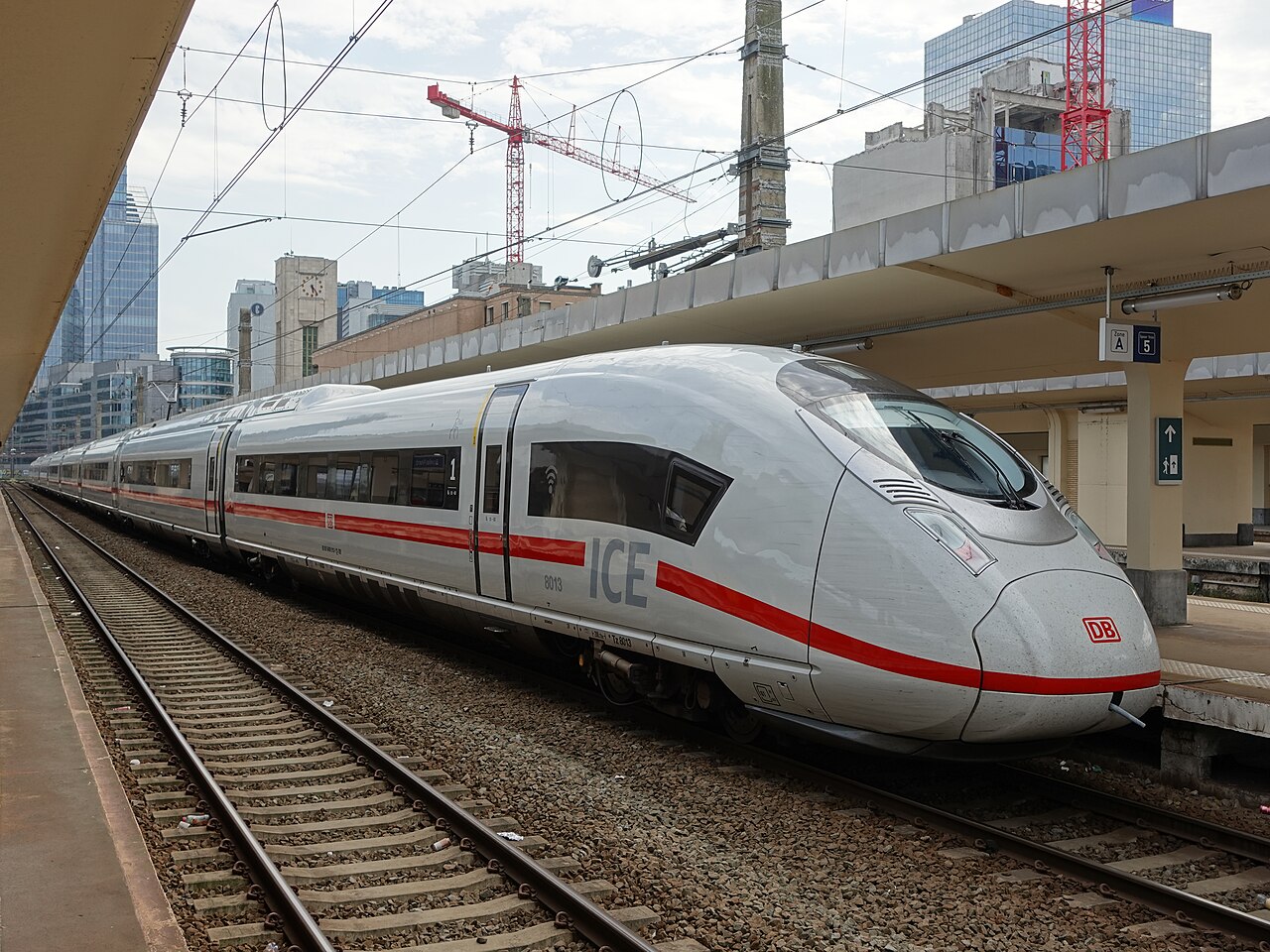
The operating plan has moved away from dedicated high-speed tracks over the full distance. Trains would share regional rail infrastructure in the Bay Area and much of Los Angeles County, limiting top speeds to about 80 mph on those urban sections. Sharing tracks can reduce the need for new rights of way and duplicate infrastructure, but it also introduces speed constraints and requires the high-speed service to fit around existing regional operations.
The original proposal described trains traveling as fast as 220 mph and completing Los Angeles-to-San Francisco trips in two hours and 40 minutes, with service expected by 2020. The current projection is just over four hours from San Francisco to Los Angeles, plus another 37 minutes to Anaheim.
The completed environmental review therefore settles the planned path, not the delivery equation. Before trains can reach Southern California, the program must finance and build a $42 billion mountain connection, install and certify railway systems, integrate slower shared-track sections and turn a cleared 494-mile corridor into an operating network. Even on the stated earliest schedule, Los Angeles-area passengers would wait at least another 14 years.
| More aerospace and engineering stories, right in your MSN feed. Follow AMI on MSN |
By Thomas Caldwell — AMI’s senior editor for mechanical and mobility engineering, covering vehicle electronics, systems integration, electrification, chassis systems, propulsion, and safety policy.