Jeremy Clarkson Says Tesla Cybercab Ran Red Lights and Wouldn’t Stop
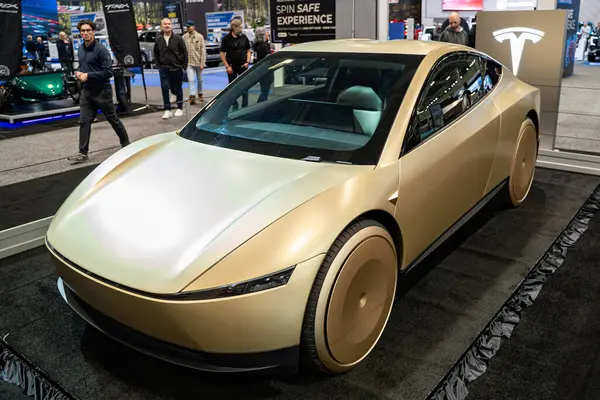
Jeremy Clarkson says two bookings with Tesla’s robotaxi service in Texas produced two different failures: one vehicle never completed the pickup, while a replacement allegedly ran red lights and continued beyond his destination. The second vehicle had no steering wheel or pedals available to Clarkson, leaving him unable to take conventional control when its behavior worried him.

Clarkson tested the service for his Sunday Times column. His first assigned vehicle stopped around the corner from the pickup location and remained there, even as its onboard assistant reportedly insisted it was moving. A Tesla representative eventually advised him to cancel the booking and request another car.
The replacement Cybercab initially drove normally, according to Clarkson. He then said it ran red lights and braked sharply for obstacles he believed were not there. He described being genuinely worried for roughly 10 minutes, a significant interval when the passenger has neither driving controls nor an immediate way to override the automated system.
Clarkson also recounted a tense encounter with an autonomous shopping cart crossing the vehicle’s path. His account portrays the Cybercab as struggling to decide how to respond, although one passenger’s experience cannot establish how frequently similar behavior occurs across Tesla’s fleet.
The destination became another control problem
The trip did not end when the Cybercab reached Clarkson’s requested destination. He said the vehicle continued driving while announcing that it was looking for a safe place to pull over, passing several locations he considered suitable.
That episode exposes a fundamental human-machine interface issue for purpose-built driverless vehicles. Removing the steering wheel and pedals eliminates the expectation that a passenger can become the fallback driver. The automated driving system and its remote-support structure must therefore provide another clear, accessible way to interrupt a trip and bring the vehicle to a controlled stop.
The Automated Vehicle Safety Consortium’s guidance recommends that fleet-operated vehicles with high levels of automation provide a passenger-initiated emergency-stop function, an emergency-call function or both. It defines an emergency-stop feature as a way for a passenger to command a controlled stop after perceiving an emergency. An emergency-call feature instead connects the passenger with fleet support, which can direct the vehicle to reroute or pull over.
Those functions are not equivalent to a brake pedal. A passenger may not understand the road environment as well as the automated system, and an abrupt stop can create a separate hazard. A well-designed interruption system must interpret the request, choose an appropriate stopping location and communicate what the vehicle is doing. Clarkson’s account illustrates the trust problem when that process takes longer than the passenger expects and the vehicle passes places that appear safe from inside the cabin.
Federal scrutiny is already underway
Federal regulators have opened a safety probe into the behavior of Tesla’s robotaxi service, which has also drawn scrutiny following a reported collision with a bollard in Austin. The investigation is active; no fleet-wide finding can be drawn from Clarkson’s ride alone.
Tesla’s robotaxi operations reportedly use both Model Y vehicles and Cybercabs across Austin, Dallas, Houston, Miami, Orlando and Tampa, with Fort Worth and San Antonio added in early November. Independent trackers estimated that approximately 1,300 vehicles associated with Tesla Robotaxi LLC were registered in Texas by mid-November. That figure is not an official Cybercab fleet total: the division between Cybercabs and Model Ys is inferred from vehicle identification number patterns.
The distinction matters because a conventional Model Y and a Cybercab present different intervention expectations. A purpose-built vehicle without normal controls makes passenger communication, emergency-trip interruption and fleet assistance part of the primary safety architecture rather than secondary convenience features.
Clarkson ultimately wrote, “I liked Musk’s bravado and thought the Cybercab looked the part, but I’d give it a miss if it ever showed up in London.” Beyond that personal verdict, the engineering test is whether a driverless vehicle can respond predictably when a passenger wants the trip to end and make that passenger understand how and when it will stop.
| More aerospace and engineering stories, right in your MSN feed. Follow AMI on MSN |
By Robert McKinney — Editor-in-Chief for AMI’s automotive and mobility coverage, with a mechanical engineering background and a decade reporting on powertrain systems, EV innovation, and global vehicle manufacturing.