Federal Plan Could Leave California Oil Platforms Underwater, Avoiding $200 Million-Plus Removals
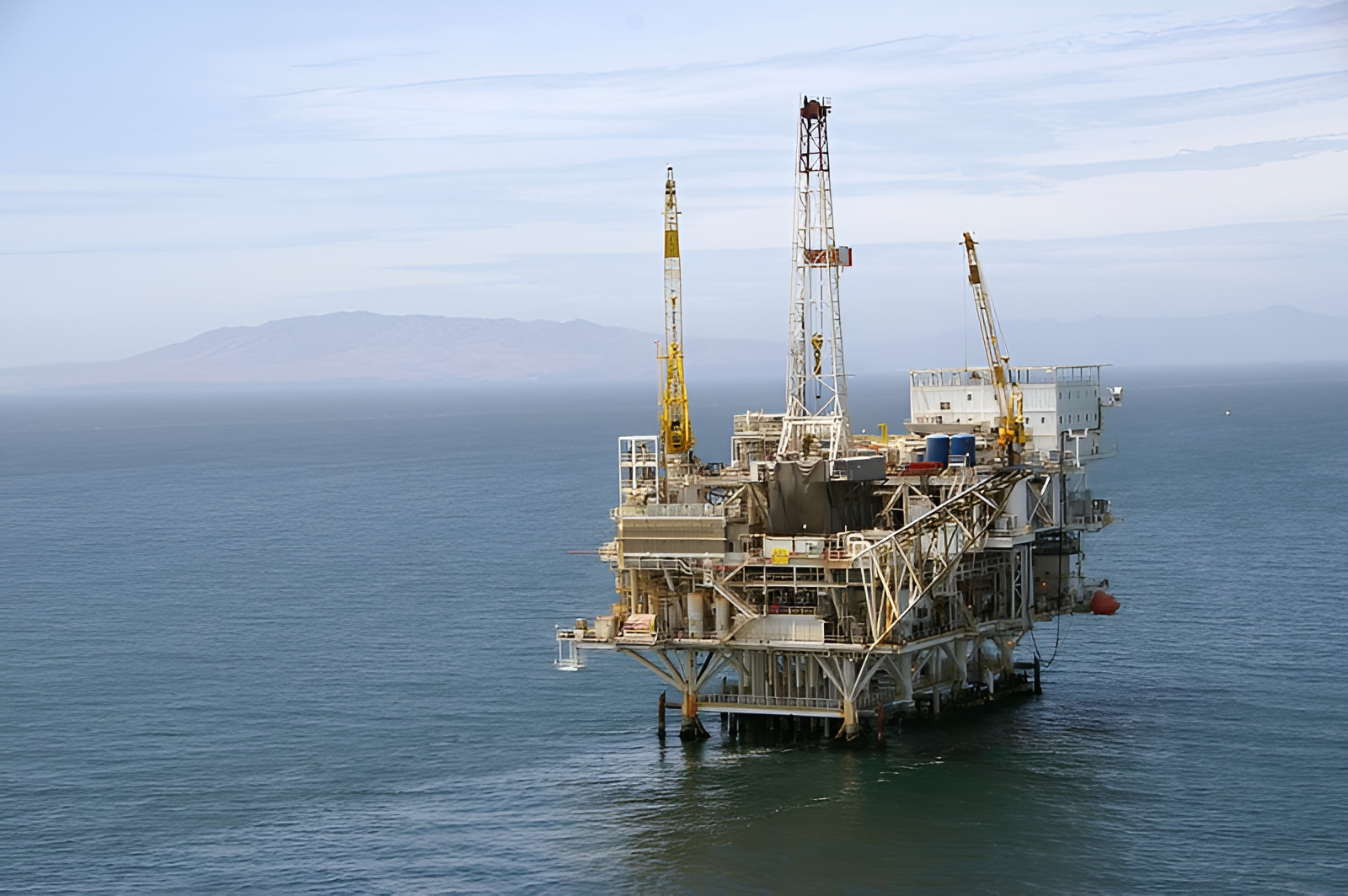
California’s retired offshore oil platforms could remain underwater rather than be completely removed, preserving established marine habitat while allowing operators to avoid removal bills exceeding $200 million for some large structures. A September executive directive ordered the Department of the Interior to create a federal artificial-reef program, and a regulatory proposal planned for 2027 could make toppling structures in place the default retirement method under specified conditions.

The policy would reverse the starting assumption for a major industrial cleanup task. California has previously removed aging platforms taken out of service, but toppling in place would sever all or most of a platform, knock it onto its side and leave the structure on the seabed. The method is established in the Gulf of Mexico but has not been used for platforms in federal Pacific waters off California.
Removal and reefing are mechanically different endpoints
Complete decommissioning is broader than taking away the steel structure visible above the water. It generally includes permanently plugging wells, addressing pipelines, removing platform components and clearing the seabed of obstructions. The Bureau of Safety and Environmental Enforcement explains that platforms have a topside containing operational equipment and a substructure extending from the surface to the seabed. Under conventional removal, the topside typically goes ashore for recycling or reuse, while the substructure is severed below the mudline and removed.
Artificial-reef retirement changes the substructure step. Partial removal can cut a platform at a permitted depth and place the upper section beside the remaining base. Toppling in place severs the structure from the seabed and lays it on its side. A third method can sever and tow the structure to an approved reef location. Each avoids some heavy-lift, transport, onshore dismantling and disposal work, although well plugging and other approved decommissioning duties remain.
The economic difference can be enormous. Federal estimates indicate that complete removal of some of California’s largest platforms could exceed $200 million apiece. Avoiding that work reduces an operator’s direct bill and removes difficult offshore engineering and contracting tasks. It also leaves a physical asset in public waters, making approval criteria, navigational clearance, structural condition and future monitoring central to the policy.
California presents a concentrated test
There are 23 oil platforms in federally controlled waters off Southern California, including eight in various stages of retirement. Four more are in state waters. The federal initiative therefore applies to a relatively small but aging regional fleet, where a change in the default method could affect multiple projects already approaching or undergoing decommissioning.
The environmental case is not reducible to whether steel belongs in the ocean. During decades of operation, submerged platform members provide hard surfaces on which marine organisms can establish communities. UC Santa Barbara research biologist Milton Love has argued that complete removal kills organisms living on those structures. Research reviewed by the Congressional Research Service, however, finds that ecological results can vary by species, platform, depth, proximity to natural habitat and fishing pressure. Studies have also raised questions about contamination, invasive species and whether artificial reefs increase fish production or mainly attract fish from elsewhere.
That variability favors platform-by-platform environmental and structural assessment even if federal rules establish toppling as the default. A structure that supports a developed biological community may offer a stronger habitat case than one with contamination concerns, poor structural condition or conflicts with navigation and fishing. The proposed approach would still have to account for U.S. Coast Guard navigation requirements.
Lower removal costs do not eliminate long-term liability
The most consequential policy question is who remains responsible after a platform becomes a permanent reef. Interior Department rules and offshore leases generally assign decommissioning obligations to lessees and, in some circumstances, predecessor lessees. Yet operators have not always completed required work, particularly after bankruptcy, and financial bonds have sometimes been insufficient.
Across the federal outer continental shelf, the department held about $3.5 billion in supplemental bonds against an estimated $40 billion to $70 billion in total decommissioning costs as of June 2023. That gap would not automatically become a public bill because current or former lessees may perform the work, but it illustrates why operator solvency and enforceable financial assurance matter when infrastructure remains offshore for decades.
A toppled platform may require continuing monitoring and provisions for damage, pollution or interference with other ocean users. The administration proposed an industry-supported contingency fund for damage to fishing gear and federal liabilities associated with orphaned infrastructure, but a House committee’s fiscal 2027 funding bill did not include that requested language.
The planned 2027 rulemaking will therefore determine more than whether steel is removed or retained. Its durability will depend on whether habitat benefits and immediate savings are paired with clear ownership, funded monitoring and enforceable responsibility for structures that could remain on California’s seabed long after oil production ends.
| More aerospace and engineering stories, right in your MSN feed. Follow AMI on MSN |
By Thomas Caldwell — AMI’s senior editor for mechanical and mobility engineering, covering vehicle electronics, systems integration, electrification, chassis systems, propulsion, and safety policy.