L3Harris Router Probe Follows Nationwide Ground Stop That Disrupted Thousands of Flights
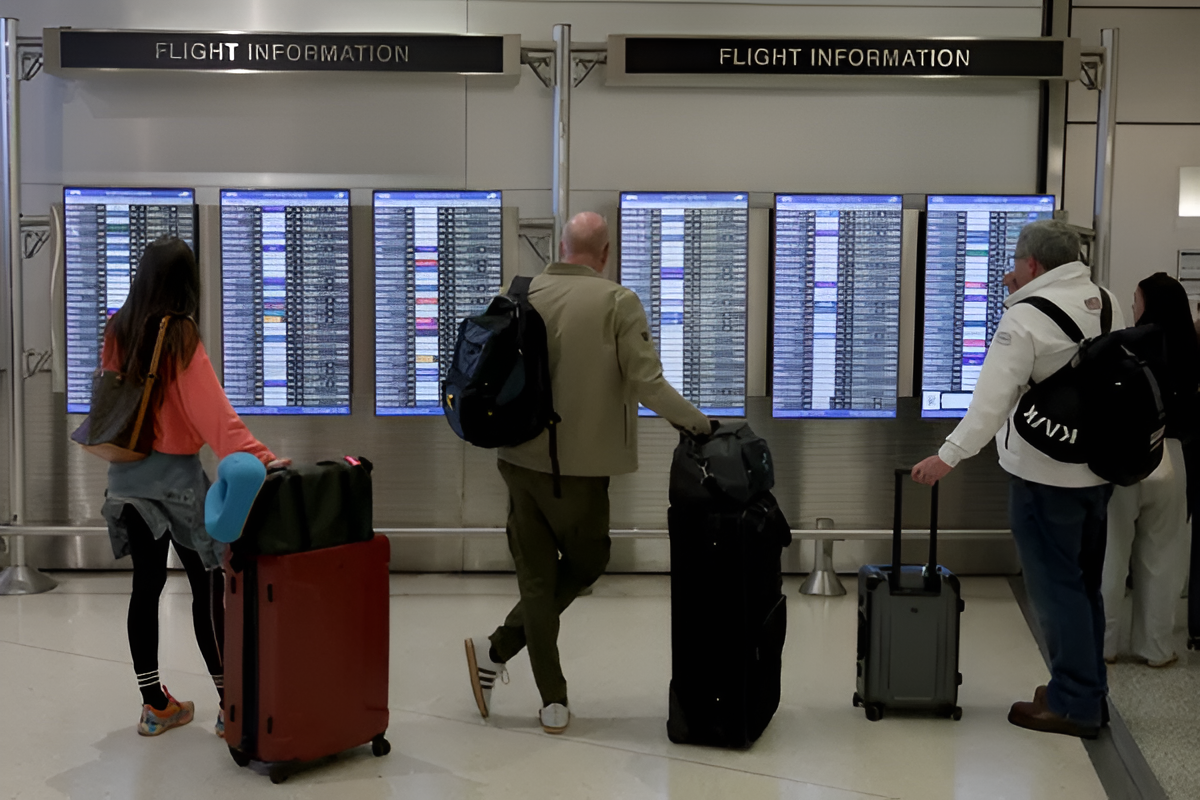
A federal investigation is examining a router and its installation after work by L3Harris Technologies preceded a communications cascade that halted domestic departures for hours on November 13. According to the Federal Aviation Administration’s incident update, instability reached 17 of the agency’s 22 regional air-traffic control centers and spread into several terminal-control facilities, disrupting thousands of flights and the plans of tens of thousands of travelers.

The ground stop began after a technical problem emerged at approximately 3:30 p.m. Eastern Time. The FAA stabilized the system and resumed traffic at 8:15 p.m., although airline recovery continued afterward. Approximately 3,500 aircraft already airborne landed safely, and some radio frequencies and radar feeds remained available. The FAA said it had no indication of a cyberattack.
The suspected path through the network
The investigation is focusing partly on a data-broadcast function associated with routers at two locations: a radar site in Amarillo, Texas, and a radio communications site in El Dorado, Arkansas. L3Harris had been performing routine work at El Dorado, including deployment of a new router.
The FAA said data flooded its telecommunications network at a rate of 1,000 connection attempts every four to five seconds. Legacy equipment then became unstable, affecting aircraft communications and radar feeds. Investigators are examining whether the initiating problem involved the router, its configuration, the installation process or an interaction among those elements and older equipment.
Engineers isolated the two locations, after which the network stabilized. The broadcasting function was disabled on the new routers, and the same function was switched off as a precaution on approximately 60 similar units. Those actions identify the area of technical concern, but investigators have not assigned a final root cause.
Why an ordinary replacement carried national consequences
The incident illustrates a central systems-integration problem: replacing equipment inside an always-on network is fundamentally different from upgrading an isolated office system. Air-traffic communications cannot simply be shut down nationwide while engineers install and validate a new generation of hardware. New components must operate alongside equipment built to earlier standards, using older interfaces and assumptions, while controllers continue handling live traffic.
That mixed-generation environment makes compatibility and change control as important as the individual router. A device can function as designed in isolation yet produce an unacceptable system response when connected to older equipment. The open investigation therefore needs to distinguish among hardware performance, configuration control, installation procedures, predeployment testing and the network’s ability to contain abnormal traffic.
The scale of propagation is especially significant. Work at a remote facility preceded instability across most regional control centers, showing how an interconnected national network can turn a local change into a broad operational constraint. Resilience in such a system depends on segmentation, monitoring and isolation measures that prevent one abnormal data source from consuming resources elsewhere. The FAA’s decision to block the two locations and disable the function on similar routers was a containment response, not a final determination of fault.
Responsibility crosses the contractor-agency boundary
Transportation Secretary Sean Duffy publicly criticized L3Harris’s performance and said the department was examining whether contractor “incompetence” or equipment failure was responsible. L3Harris said it is cooperating, takes the disruption seriously and had followed an FAA-approved installation plan. People familiar with the project said an FAA representative was present; the agency said its representative helped the technician enter the facility.
Those facts create a shared accountability question rather than a settled case against one organization. Contractor responsibility includes equipment, technician performance and compliance with approved procedures. FAA responsibility includes approval authority, operational risk acceptance, network architecture, oversight and the conditions under which work is performed. An approved plan does not by itself identify why the system failed, while agency presence does not remove a contractor’s obligations.
Timing is also under review. Major-facility maintenance is usually performed at night, when traffic is lighter, but the FAA said routine replacements at remote sites have long been conducted during the day without systemwide effects. The agency now plans to reevaluate when this work occurs. Moving all maintenance to low-traffic periods could reduce operational exposure, but it would not replace the need to test configurations and limit propagation across the network.
Modernization cannot pause while the cause is investigated
L3Harris’s contract to build and maintain the FAA Telecommunications Infrastructure dates to 2002. The company is conducting thousands of upgrades, including replacing obsolete copper connections with fiber, and says that work is about 70% complete. The broader modernization is scheduled for completion by the end of 2028.
The policy tension is that aging equipment raises failure risk, while replacing it can introduce transition risk. Slowing the work leaves unsupported technology in service longer; accelerating it increases the number of simultaneous changes that must be supervised and validated. Effective oversight must therefore measure more than installation totals. It must also track configuration control, compatibility testing, rollback capability, containment performance and lessons from each operational event.
FAA policy already requires air-traffic facilities to maintain, exercise and update operational contingency plans. After qualifying disruptions, facilities must document lessons learned and implement improvements. For this incident, the consequential next step is a root-cause finding that separates the initiating fault from the conditions that allowed it to spread. Until that work is complete, criticism of L3Harris remains stronger than the government’s final technical conclusion.
| More aerospace and engineering stories, right in your MSN feed. Follow AMI on MSN |
By Thomas Caldwell — AMI’s senior editor for mechanical and mobility engineering, covering vehicle electronics, systems integration, electrification, chassis systems, propulsion, and safety policy.