Sweden Investigates Norwegian 737 MAX Takeoff That Crossed Runway End at 70 Feet
About 70 feet separated a Boeing 737 MAX 8 from Umeå Airport’s runway end as the jet crossed it after takeoff on October 1. The aircraft had begun its takeoff roll with approximately 1,170 metres ahead barely half of the runway’s listed 2,302-metre length while its performance calculation was based on a different starting point.

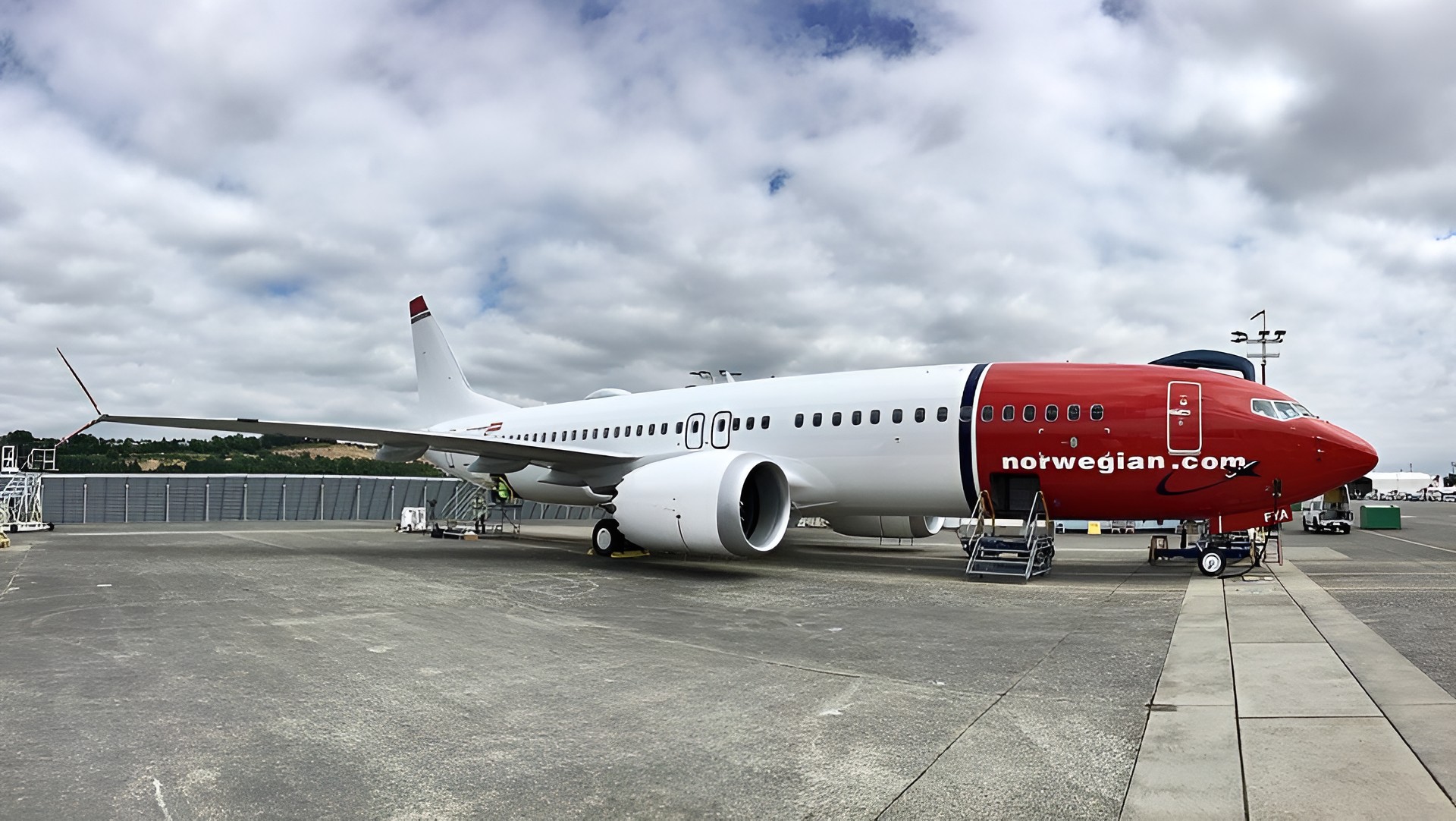
Sweden’s Statens haverikommission, or SHK, classified the occurrence as a serious incident on November 6. The agency said there were “limited remaining safety defences between the occurrence and a potential accident.” The Aviation Herald and AeroCorner identified the aircraft as Norwegian Air Sweden 737 MAX 8 SE-RTE, operating flight D84016 from Umeå to Stockholm; the SHK notice itself did not name the airline or flight.
According to The Aviation Herald, the aircraft entered runway 14 at taxiway C and began its takeoff without first backtracking toward the threshold. It reportedly became airborne approximately 500 metres before the runway end and crossed the end at about 70 feet.
Those figures show why the starting-point mismatch matters. An intersection departure is not inherently abnormal: airlines routinely use them to reduce taxi time and improve runway capacity. The performance figures, however, must correspond to the distance actually available from that intersection. When calculations assume a different starting point, the resulting thrust and takeoff-speed settings may not be suitable for the shorter runway segment.
The missing runway changes more than the liftoff point
A successful liftoff does not by itself mean that the planned safety margins were preserved. Commercial-aircraft takeoff calculations account for the distance needed to accelerate, continue after an engine failure under the applicable assumptions, or stop following a rejected takeoff. Removing more than 1,100 metres of physical runway from the available roll can sharply narrow those options if the calculation does not reflect the shorter distance.
The aircraft’s earlier movement that day adds an important operational contrast. The Aviation Herald reported that SE-RTE previously entered runway 14 through the same taxiway C but then backtracked to the threshold and used the full runway. On the later departure, it reportedly began its roll from the intersection instead. Investigators have not said why the takeoff position differed from the one used for the performance calculation, nor have they identified which intersection or runway position the calculation assumed.
That distinction between a valid intersection takeoff and a position mismatch is central to the investigation. Published intersection distances allow crews to calculate performance for the runway remaining ahead. The risk arises when the aircraft’s actual position and the position represented in those calculations diverge, leaving the jet to accelerate on less pavement than its settings anticipate.
A known error class with proposed technical defenses
The Umeå investigation comes as European regulators move toward an additional technical layer for this broader category of event. In Opinion No. 07/2026, the European Union Aviation Safety Agency proposed requiring takeoff-performance monitoring systems on large commercial aircraft produced six years after the rule enters into force.
The proposed systems would check takeoff parameters, compare the aircraft’s position with the planned takeoff position and, for some aircraft, monitor acceleration in real time. EASA said errors involving performance data and aircraft position are regularly reported and can produce longer takeoff rolls, reduced climb margins or insufficient distance to stop.
EASA examined 118 accidents and incidents worldwide from 1998 through 2023 involving erroneous takeoff parameters or position errors. The agency concluded that nearly 90% of those occurrences could have been prevented by the proposed monitoring functions. Its plan is aimed primarily at future production: the published proposal does not establish a general retrofit mandate for aircraft already in service.
The technology would add another barrier, but the Umeå case still depends on conventional investigative work. SHK must determine how the calculated and actual starting points became misaligned and what procedural, operational or technical defenses were available. The confirmed geometry is already stark: roughly 1,170 metres lay ahead when the takeoff began, and the 737 crossed the far end of the runway at only about 70 feet.
| More aerospace and engineering stories, right in your MSN feed. Follow AMI on MSN |
By David Whitaker — Associate editor for AMI’s aerospace and drone systems desk, translating flight systems, aircraft programs, spaceflight, and UAV developments into accessible technical stories.