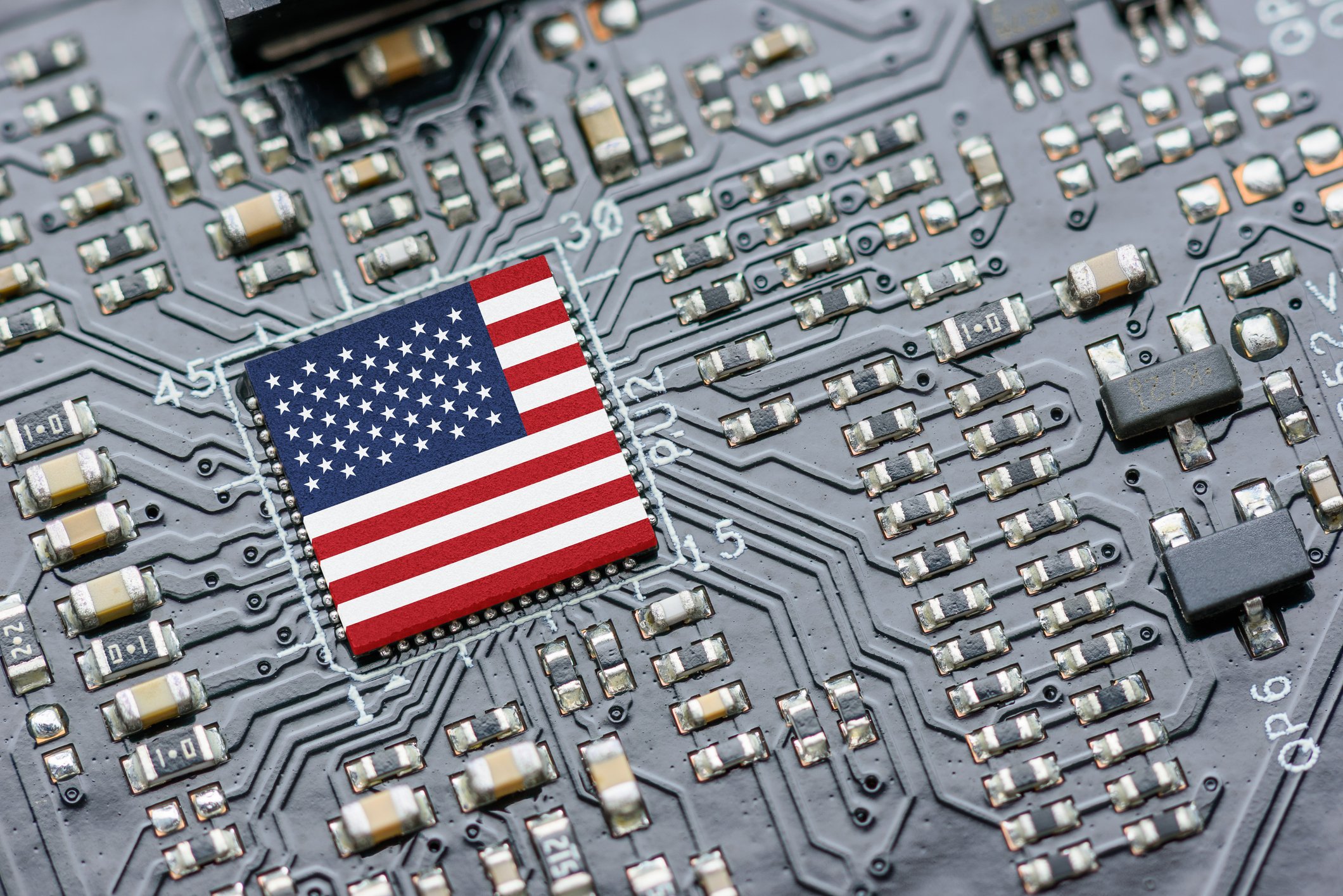
Commerce Requires AI-Chip Licenses in Five Countries After Alleged Enforcement Stall
The U.S. Department of Commerce has imposed new licensing requirements on advanced-semiconductor transfers involving five intermediary countries after former officials alleged that key enforcement actions had stalled for about a year. The rule, issued November 16, covers exports, re-exports and in-country transfers involving Brazil, Indonesia, Malaysia, Singapore and Thailand.
The immediate purpose is to make it harder to route restricted artificial-intelligence chips through third countries before they reach users in China or other controlled destinations. The new requirements also address overseas data centers that provide substantial computing capacity remotely to companies headquartered in China, Russia, Iran, Macau or specified controlled countries.
A license requirement adds a checkpoint, not a physical barrier
Destination-based licensing changes where scrutiny begins. Instead of relying only on the identity of the declared buyer, the rule subjects specified transactions involving the five countries to government review. That matters because an intermediary can appear commercially legitimate even when the ultimate user or destination would make the transaction restricted.
The measure is broader than placing individual companies on Commerce’s Entity List. An Entity List designation imposes additional license requirements on transactions involving a named party and restricts access to many license exceptions. The new country-based requirements can trigger review before the government has identified or designated every company participating in a diversion network.
That wider coverage carries a tradeoff. Manufacturers, foundries, data-center operators and exporters handling legitimate business in the five countries may face more documentation, longer reviews and added compliance costs. The rule provides an exception for chips destined for companies headquartered in the United States, or whose ultimate parent is based there, when specified reporting conditions are met. That exemption narrows the burden, but companies still need reliable information about ownership, end users and intended use.
Licensing also depends on institutional capacity. Applications must be evaluated, suspicious transactions investigated and restrictions updated as corporate structures and shipping routes change. Commerce’s Office of Export Enforcement describes export-control cases as technically complex investigations that can take years and require coordination among special agents, analysts, licensing officials and policy staff.
The Entity List gap is documented; its causes remain disputed
Four former Commerce officials, speaking anonymously to CBS News because they feared professional reprisals, alleged that the department stopped adding companies to the Entity List and failed to act after enforcement officers identified suspicious activity involving Nvidia chip deliveries in Southeast Asia. Commerce did not respond to CBS News, which also sought comment from the White House.
The underlying pause is visible in the public record: entities were last added on October 9, 2025. The previous yearlong gap in additions occurred in 2008. The absence of additions does not identify why particular candidates were not listed, but it shows that one of the government’s principal end-user controls went unused for an unusually long period.
Former staff members attributed the slowdown to centralized decision-making, internal communication failures and the departure of up to 50 skilled employees over 18 months. Federal personnel records also showed vacancies in several senior Bureau of Industry and Security positions. Those explanations are allegations by former officials rather than formal agency findings. Treasury Secretary Scott Bessent separately told CNBC that Commerce had not followed through on chip-ban enforcement supported by Treasury, the State Department and other agencies.
Commerce characterized the new rule as having been written by and at the direction of the Treasury Department and National Security Council. That description suggests an interagency response, but it does not resolve whether Commerce has enough experienced technical and investigative personnel to process licenses and pursue suspected diversion consistently.
The scale estimates show why implementation matters
An April 2026 study by Epoch estimated that between 290,000 and 1.6 million cutting-edge AI chips were smuggled into China during 2024 and 2025. Separately, The Information reported that at least $7.5 billion in Nvidia chips allegedly reached Chinese companies through firms connected to one intermediary. The estimates come from separate analyses and should not be treated as a single verified shipment total, but both point to the scale of the enforcement challenge.
The new rule gives regulators an earlier checkpoint for shipments and remote computing arrangements involving known intermediary jurisdictions. Its practical effect will depend on license-review speed, access to accurate end-user information, investigative follow-through and the government’s ability to update named-entity restrictions. A broader regulatory net can capture more risky transactions, but only a staffed and functioning enforcement system can determine which ones should be stopped.
| More aerospace and engineering stories, right in your MSN feed. Follow AMI on MSN |
By Thomas Caldwell — AMI’s senior editor for mechanical and mobility engineering, covering vehicle electronics, systems integration, electrification, chassis systems, propulsion, and safety policy.