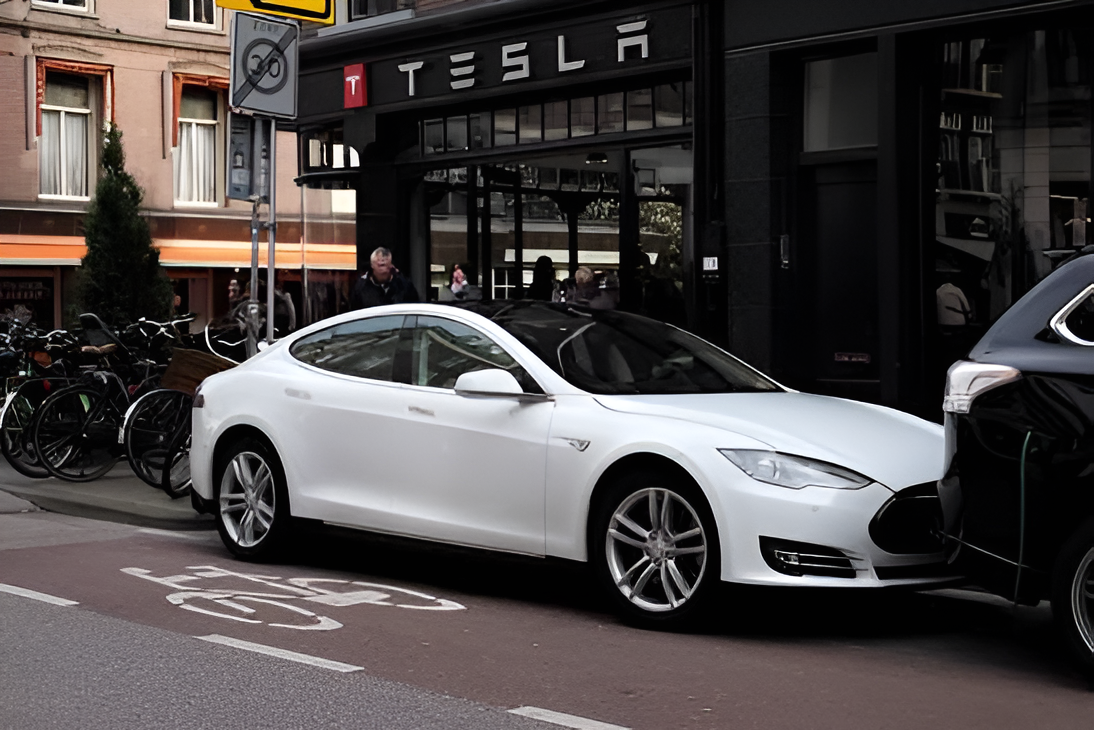
Tesla Owner Replaces Flat Tire and Questions Specialized Service Costs
A Tesla owner took her car to one of the automaker’s service centers after a flat tire, then questioned why the replacement appeared to involve different tires and specialized pricing. Her experience captures a common point of confusion around electric vehicles: whether an ordinary tire problem actually requires an automaker-specific part or service channel.

The available account does not identify the Tesla model, replacement tire, total charge or reason the damaged tire had to be replaced rather than repaired. It also does not establish that Tesla directed the owner to use its service center. Those missing details prevent a direct price comparison, but the broader compatibility question has a clearer answer: a replacement tire must meet the vehicle’s specifications, while an EV label, acoustic foam and service-center installation are separate considerations.
What a Tesla tire must match
The starting point is not the name on the building or an “EV” marking on the tire. It is the specification assigned to the exact vehicle and wheel configuration. Tesla’s wheel and tire guidance lists dimensions by wheel position and explains standardized sidewall markings, including tire width, aspect ratio, wheel diameter, load index and speed rating.
Owners should verify those values against the tire-information label on the driver’s door pillar and the manual for their particular model, model year and wheel package. Matching the diameter alone is insufficient. A replacement also needs adequate load capacity and the appropriate speed rating, construction and seasonal performance. Tire pressure should come from the vehicle label, not the maximum pressure molded into the tire’s sidewall.
This is especially relevant for an electric car because battery mass can place substantial loads on the tires. Strong acceleration, vehicle weight, alignment, pressure and driving style can also affect wear. Research comparisons have produced different estimates of how much faster EV tires wear, partly because vehicles, routes and driver behavior vary. In one controlled comparison cited by InsideEVs, the difference largely receded after researchers accounted for the electric vehicle’s additional weight.
EV-oriented features are not all mandatory
Tires marketed for electric vehicles may combine higher load capability, low rolling resistance, wear-focused compounds and tread patterns intended to limit cabin noise. Some include acoustic foam bonded inside the tire because road noise is more noticeable without a combustion engine masking it.
Those features can influence range, comfort and durability, but they do not make every EV-branded tire universally interchangeable or every non-EV-branded tire unsuitable. A conventional tire can be compatible if it satisfies the required dimensions, load capacity and other specifications. Conversely, an EV-marketed tire with the wrong load index or size is not an acceptable substitute merely because it carries electric-vehicle branding.
Foam is also primarily a noise-control feature. Replacing a foam-lined original tire with an otherwise compatible tire lacking foam may change cabin sound, but foam by itself does not establish whether the tire can safely carry the vehicle. Owners comparing quotations therefore need the complete tire designation and performance specifications, not just a description such as “Tesla tire” or “EV tire.”
Independent service is possible, but documentation matters
Tesla’s published maintenance information acknowledges that owners may use Tesla, perform eligible work themselves or enlist an independent repairer. It also warns that damage or failures caused by maintenance or repairs performed by non-Tesla-certified technicians are not covered by warranty. That is different from saying all outside tire work is prohibited.
A qualified tire shop can ordinarily evaluate a puncture, confirm whether repair is permissible and source a compatible replacement. The repair-versus-replacement decision depends on factors such as the location and extent of damage and the tire’s condition. Because those facts are absent from this owner’s account, there is no basis to conclude that her tire could have been repaired.
Price comparisons require similar discipline. A useful quotation should identify the exact tire, installation labor, balancing, disposal fees, taxes and any additional service. Comparing one bundled invoice with an advertised tire-only price can make identical work appear far more different than it is.
Tesla’s specialized image can make a routine flat seem proprietary, but the governing engineering information remains conventional and visible: the correct size, load rating, speed rating, pressure and vehicle-specific fitment. The unanswered question in this owner’s case is not whether every Tesla needs exclusive tire service, but what tire and services were actually included in her replacement.
| More aerospace and engineering stories, right in your MSN feed. Follow AMI on MSN |
By Thomas Caldwell — AMI’s senior editor for mechanical and mobility engineering, covering vehicle electronics, systems integration, electrification, chassis systems, propulsion, and safety policy.