U-2 Dragon Lady Reaches 70,000 Feet but Struggles Near the Runway
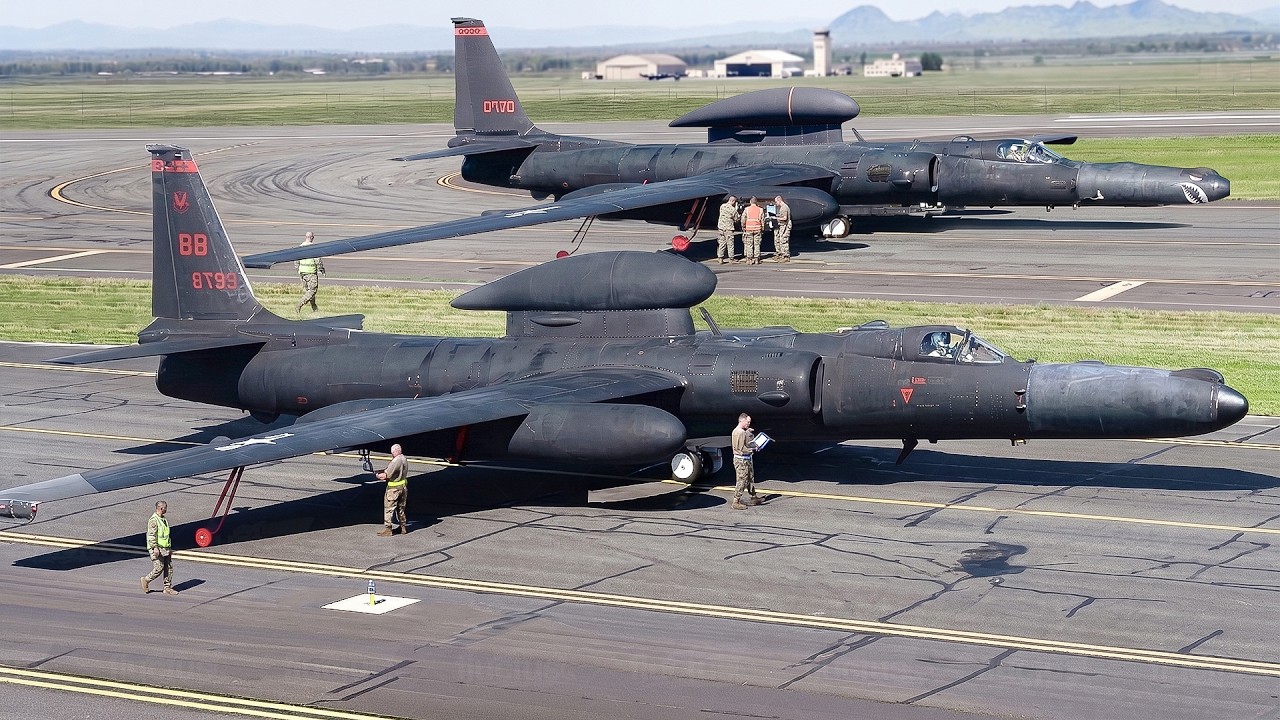
The Lockheed U-2 Dragon Lady is at its most capable around 70,000 feet and among its most awkward near the runway. A completed flight from Beale Air Force Base reached approximately that altitude, where the darkened sky and visible curvature of Earth underscored the aircraft’s extraordinary operating environment. Returning to the ground exposed the other side of the design: a 105-foot wing, bicycle-style landing gear and a landing process that requires help from another U-2 pilot driving a chase vehicle.
That tension is built into the airframe. The long, lift-efficient wing helps the U-2 climb above 70,000 feet for high-altitude intelligence, surveillance and reconnaissance work. The Air Force describes the aircraft as an all-weather surveillance and reconnaissance platform capable of operating day or night. But the same wing continues producing substantial lift at low altitude, making it unusually difficult to settle the aircraft onto a runway.
A high-altitude wing creates a low-altitude problem
Conventional aircraft generally place landing-gear assemblies to support the fuselage and both sides of the airframe. The U-2 instead uses an inline arrangement resembling a bicycle, with its principal wheels positioned along the aircraft’s centerline. This saves weight and fits the U-2’s slender, glider-like configuration, but it does not hold both wings level when the aircraft slows or stops.
One U-2 representative described the result as a “105-foot teeter-totter.” During the approach, a mobile officer follows in a chase vehicle and helps the pilot judge the aircraft’s position above the runway. The vehicle can travel between 100 and 140 mph depending on the aircraft configuration. The officer performing that job is another U-2 pilot, bringing direct knowledge of the aircraft’s sightlines and landing behavior to the guidance provided from behind.
The wing’s lift also means the pilot must reduce speed enough to get the aircraft firmly onto the runway rather than allowing it to continue floating above the surface. An unidentified U-2 pilot summarized the contrast: She flies beautifully. But down low, it’s a little more challenging, so you’ve got to wrestle the dragon to the ground. Landing gear and speed brakes add drag during the descent, but the final touchdown still demands precise energy management.
Pogos support the wings but only on the ground
Once the U-2 comes to a stop, ground crews install removable supports called pogos beneath its wings. These supports level the aircraft for taxiing and ground handling. They are removed before takeoff, leaving the U-2 to depart on its inline wheels.
After landing, decreasing airspeed eventually removes enough aerodynamic support that one wingtip settles toward the pavement before the pogos are restored. A titanium skid plate protects the wingtip when it touches the ground. The arrangement is not an incidental oddity: chase vehicle, ground crew, pogos and skid plates form an operating system around an airframe optimized for a very different environment.
The pilot needs a pressure suit above 60,000 feet
The human requirements become just as specialized at mission altitude. U-2 pilots wear full-pressure suits because cockpit depressurization above roughly 60,000 feet would create an immediately dangerous environment. NASA places the Armstrong line near 63,000 feet, where atmospheric pressure is low enough for unconfined water to boil at room temperature. A full-pressure suit maintains an artificial atmosphere around its occupant if cabin pressure is lost, while remaining connected to the aircraft for oxygen and cooling.
Preparation for the Beale flight included a physical examination, aircraft academics, ejection and bailout instruction, and basic parachute-navigation training. Those requirements reflect an aircraft that operates in an environment hostile to an unprotected person, even though 70,000 feet is not the literal boundary of space.
The U-2 originated as a 1950s reconnaissance aircraft and was operated by the CIA before entering Air Force service. Its continuing utility rests on the ability to remain over an area, deploy on short notice and be redirected. Yet every return from altitude still exposes the fundamental bargain behind that capability: the enormous wing that carries the Dragon Lady into the stratosphere also requires a chase car, removable supports and a protected wingtip to bring it safely back to the flight line.
| More aerospace and engineering stories, right in your MSN feed. Follow AMI on MSN |
By David Whitaker — Associate editor for AMI’s aerospace and drone systems desk, translating flight systems, aircraft programs, spaceflight, and UAV developments into accessible technical stories.