Pentagon’s 21-Day Missile Demand Meets a $1.6 Billion Patriot Order
A 21-day Pentagon demand for faster weapons-production plans has now been followed by a specific, funded commitment at one of the Patriot interceptor’s critical suppliers. On Nov. 16, Northrop Grumman said it received a $1.6 billion order to increase production of solid rocket motors and ignition-safety devices for the Army’s advanced Patriot interceptor.

The award turns part of the wider missile-capacity campaign into contracted propulsion work. It does not erase the timing problem that prompted the Pentagon’s directive: industry can prepare a production plan in three weeks, but expanding qualified output and rebuilding interceptor inventories remain multiyear jobs.
Deputy Defense Secretary Steve Feinberg issued the directive on Aug. 5, giving major manufacturers until Aug. 26 to propose substantially faster deliveries or higher production across 16 critical programs. Companies were asked to identify required capital investments, factory expansions and government actions, with their responses intended to inform the fiscal 2028 budget request. By Sept. 21, the Pentagon had not publicly disclosed how many companies responded, what schedules they offered or whether the exercise changed planned procurement quantities.
Propulsion funding addresses a real production constraint
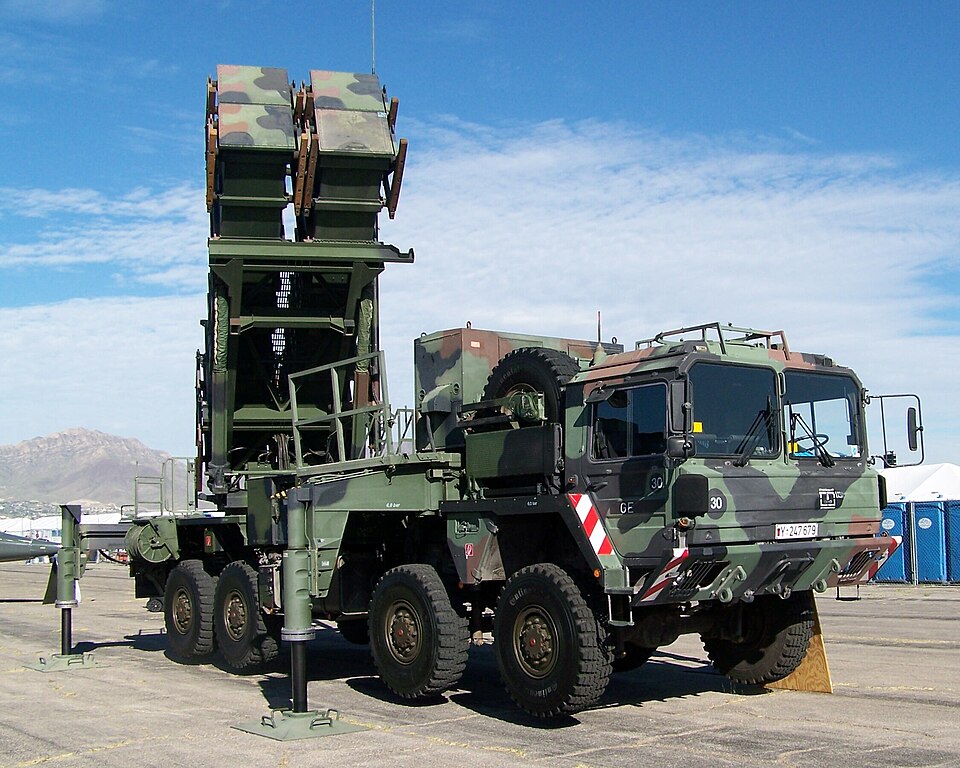
Northrop Grumman’s order covers the dual-pulse solid rocket motors used by the Patriot Advanced Capability-3 Missile Segment Enhancement interceptor, commonly called PAC-3 MSE, along with associated ignition-safety hardware. These are essential parts rather than optional production improvements: final interceptor output cannot rise beyond the supply of accepted propulsion units and other qualified components.
The company said the award forms part of broader multiyear agreements announced in August. It also reported that it has doubled solid-rocket-motor capacity at its Utah facilities since 2021, nearly tripled capacity at Allegany Ballistics Laboratory in West Virginia and increased capacity by 25% at its Elkton, Maryland, site. Those are company figures, but they show where the industrial response is moving toward additional equipment, facilities and supplier capacity rather than administrative schedule changes alone.
Missile propulsion is not easily scaled like a conventional automotive component. New tooling must be installed, energetic-material processes controlled, workers trained and production lots tested. Suppliers must demonstrate repeatable quality before their hardware can enter accepted interceptors. Increasing motor capacity therefore removes one potential bottleneck, but guidance electronics, housings, other specialized parts and final integration must also keep pace.
That system-level constraint was visible in another expansion effort. Lockheed Martin said GM Defense delivered its first Patriot housing components only 22 days after the companies signed a production contract, drawing on automotive casting and machining expertise. The fast housing delivery showed how outside manufacturing capacity can help. It did not mean complete interceptors could move through the line at the same speed; the slowest qualified component can still govern final deliveries.
Demand still runs ahead of accepted missiles
The pressure extends across Patriot and Terminal High Altitude Area Defense, or THAAD, inventories. Exact Pentagon holdings are classified, so publicly circulated inventory figures remain estimates rather than confirmed government counts. Analysis based on public budget and acquisition records has placed the production timeline at roughly 42 months for an advanced Patriot interceptor and 53 months for a THAAD interceptor.
Before the conflict with Iran, contractors were producing about 620 Patriot interceptors and 96 THAAD interceptors annually, according to estimates cited in subsequent reporting. The same analysis indicated that restoring prewar inventory levels could take until at least mid-2029. Higher production targets can improve that outlook, but only after added capacity begins delivering completed and accepted missiles.
The Pentagon has separately announced goals to triple advanced Patriot production capacity and quadruple THAAD capacity, subject to annual congressional funding. Long-term agreements for propulsion and other missile components provide suppliers with the demand visibility needed to invest in equipment and labor. Northrop Grumman’s $1.6 billion order is therefore more consequential than another request for ideas, but it represents one segment of a larger supply chain.
Output must also serve more than the U.S. inventory. Patriot operators include Ukraine and numerous allied countries, all drawing on a production base that cannot immediately satisfy every requirement. Ukraine’s president has said the country holds only a fraction of the interceptors it needs. Even licensing or local-production arrangements would require facilities, qualified processes and a sustained component supply before producing operational hardware.
The Pentagon’s three-week deadline may have accelerated decisions, but the measure of progress is now hardware: motors completed, components qualified and interceptors accepted. The $1.6 billion propulsion order puts money behind that process. Its effect on available Patriot supplies will be measured on the factory calendar, not the memorandum’s 21-day clock.
| More aerospace and engineering stories, right in your MSN feed. Follow AMI on MSN |
By David Whitaker — Associate editor for AMI’s aerospace and drone systems desk, translating flight systems, aircraft programs, spaceflight, and UAV developments into accessible technical stories.