Chinese Lab Finds 10% Stealth Coating Loss Nearly Doubles Reflection
Removing 10% of a radar-absorbing coating produced approximately 1.97 times as much reflected microwave power in a Chinese laboratory test. The result, detailed in a study of an organosilicon-resin microwave-absorbing coating, shows how a relatively small area of complete detachment can materially alter a sample’s electromagnetic performance.
The researchers measured a change in minimum reflection level from -12.73 to -9.78 decibels after 10% of the coating was removed. That 2.95-decibel increase corresponds to a power ratio of about 1.97, meaning the damaged sample reflected nearly twice as much microwave power at the measured minimum. It does not mean that an aircraft losing 10% of its coating would have twice the radar cross-section or could be detected at twice the distance.
A one-millimetre coating over titanium
The test material was a one-millimetre-thick composite of carbonyl iron powder and silicone resin applied to titanium-alloy plates. Carbonyl iron supplied the microwave-absorbing component, while the resin formed the coating matrix. Researchers introduced scratches, surface wear and complete detachment, varying the affected area, depth and position before measuring reflection across frequencies from 2 to 18 gigahertz.
The different damage types did not produce equal results. Scratches had a relatively limited effect even when they covered half the sample. Surface wear also caused limited deterioration when it affected no more than 20% of the area and penetrated no deeper than 0.4 millimetres.
More extensive wear changed the response more sharply. When wear covered 50% of the surface and reached a depth of 0.6 millimetres, the minimum reflection level rose to -7.37 decibels. The researchers attributed that deterioration to variations in coating thickness, which disrupted the electromagnetic conditions needed to minimise reflection.
Complete detachment was more damaging because it exposed the underlying metal. A microwave-absorbing layer depends on more than the presence of absorptive particles: its composition and controlled thickness determine how incoming and internally reflected waves interact. Scratching that leaves much of the designed layer intact therefore differs mechanically and electromagnetically from debonding that removes the layer altogether.
Durability becomes part of system performance
The experiment gives coating durability a direct operational relevance. Radar-absorbing coatings are one element used to reduce aircraft detectability, and their performance depends on retaining the required surface coverage and thickness. Chipping, peeling and debonding are established degradation modes in military coating systems, often requiring the affected hardware to be stripped and recoated.
That creates a maintenance constraint extending beyond the coating formulation itself. Inspection must identify damage, repair work must restore the intended thickness and continuity, and the repaired material must bond reliably to the substrate. Manufacturing precision therefore has to be reproduced during maintenance rather than only when the aircraft is built.
Those requirements can become harder to satisfy at forward bases or during wartime operations, where specialised materials, controlled facilities and repair capacity may be constrained. The laboratory result does not quantify that burden, but it explains why apparently limited surface deterioration could demand attention: the tested coating responded much more severely to complete loss than to shallow scratches or modest wear.
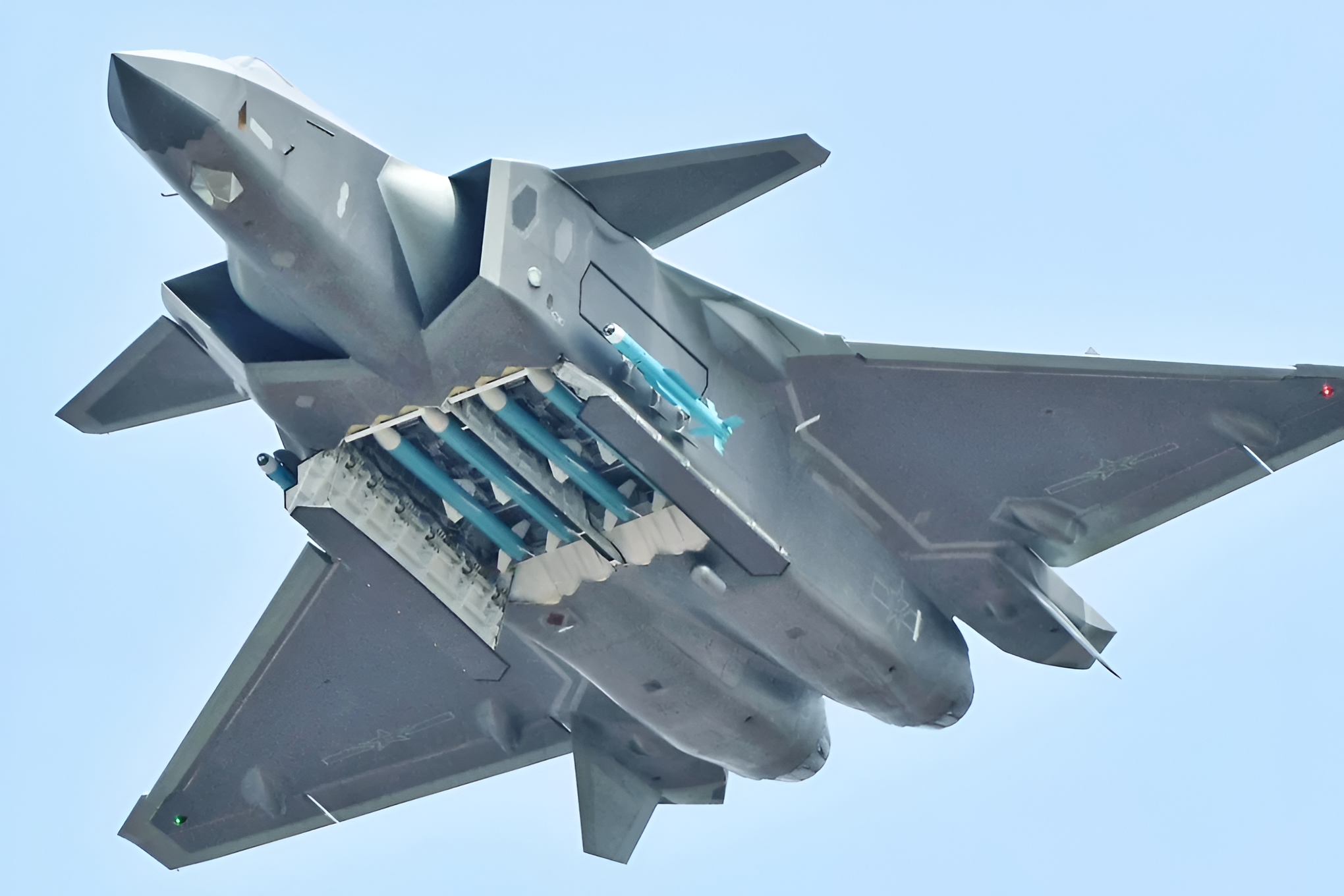
The issue has broad relevance to China’s military-aircraft programs. The J-20 and J-35 fifth-generation fighters are in production, while the country also has multiple stealth-drone types in service and testing and a strategic stealth bomber in advanced development. The study did not test the operational coating used on any of those aircraft.
Nor did it measure the radar cross-section of a complete airframe. Aircraft geometry, coating distribution, frequency, viewing angle and many other system-level factors sit outside this plate experiment. Its defensible conclusion is narrower but still significant: on the tested carbonyl-iron and silicone-resin material, losing 10% of the coating nearly doubled reflected microwave power, making coating adhesion and precise repair part of maintaining the material’s designed performance.
| More aerospace and engineering stories, right in your MSN feed. Follow AMI on MSN |
By Edward Collins — Senior editor for AMI’s performance systems and mechanical design coverage, focused on powertrains, drivetrain systems, manufacturing precision, materials, and high-performance engineering.