Artemis II’s First Night Puts Orion Readiness to the Test
Artemis II’s initial 24 hours might involve going around the planet in Earth’s orbit. Nonetheless, this is simultaneously an efficient test of the spacecraft’s preparation with onboard systems checkout, operational capabilities of the crew, as well as trajectory-critical burns determined by orbital mechanics.

Astronauts launched the NASA-sponsored Artemis II from Cape Canaveral Space Force Station in Florida at 6:35 p.m. ET on Wednesday. With that, NASA officially launched the first human deep-space flight from 1969. The spacecraft’s crew consists of Commander Reid Wiseman, Pilot Victor Glover, Christina Koch, and Jeremy Hansen.
Once launched, the rocket’s upper stage will put Orion into high-Earth orbit for a whole day. High-Earth orbit can be viewed as an initial staging area that provides the operators with limited time to analyze the spacecraft’s ability while it is still close enough to the Earth. During this day, the crew will have to perform a certain number of operations aimed at testing the performance of onboard life-support, communication, and navigation systems that create a reliable backbone for successful completion of the second half of the mission.
This particular part is very important due to the fact that Artemis II does not treat the first 24 hours simply as a downtime between launch and the next critical phase of the mission, namely heading toward the Moon. In addition to that, the spacecraft’s operators utilize this period of time to prove that the vehicle is capable of supporting humans on deep space flights. That is to say that this particular step is associated not with keeping the power supply and providing the required internal conditions for survival but with verifying if the Orion is capable of functioning without any issues from the standpoint of the crew.
For example, one of such important tasks is manual steering demonstration. Thus, Wiseman and Glover are expected to demonstrate their capabilities in maneuvering the vehicle in the proximity of the Interim Cryogenic Propulsion Stage, the target, during docking simulation with the help of cameras and observation windows. It should be mentioned that this particular activity does not relate to the mission’s main objectives; however, it is performed to test if the spacecraft can support the required docking maneuvers when Orion is to be docked with the lunar lander in further space flights.
From the engineering standpoint, this fact becomes very important. The fact is that while Artemis II itself is just sending people to orbit the Moon, it simultaneously evaluates if the handling, control, and visual perception functions of the spacecraft are adequate to achieve the goal. In addition, the duration of this activity is estimated at 1.5 hours, and then the craft has to perform the critical engine burn aimed at separating from the stage. Once done, the expended stage will be directed into the Pacific Ocean for controlled re-entry.
There are numerous challenges that have to be overcome, but one seems to become particularly notable for its possible mission-ending consequence. To wit, perigee-raise engine burn, a maneuver aimed at changing the orbit in order to prepare the vehicle for another mission-day burn, is expected to become as critical as launch operations. Consequently, this activity was treated as critical mission that meant mission-end in case of failure. It should be noted, though, that time constraints were dictated by the laws of orbital mechanics. Unfortunately, physics cannot be defied, says mission flight director Jeff Radigan. We have to put the burns where they’re necessary for the trajectory.
At the same time, this fact is a good reminder for all that while crew timelines are important, orbital mechanics comes to the front. To wit, the crew began its mission on Wednesday at 11:30 a.m. ET. After 8.5 hours in flight, sleep period will be initiated. 4 hours after that, the crew will be awakened to perform perigee-raise burn, after which it will go to sleep for 4.5 hours. As Pilot Glover says, We’re going to take a nap.
It appears that this unusual crew schedule represents an interconnection between different processes involved in any space vehicle’s flight. Thus, Orion should prove itself in system tests, docking approach, separation from the target, and, finally, performing another critical burn that would make Orion ready for another day.
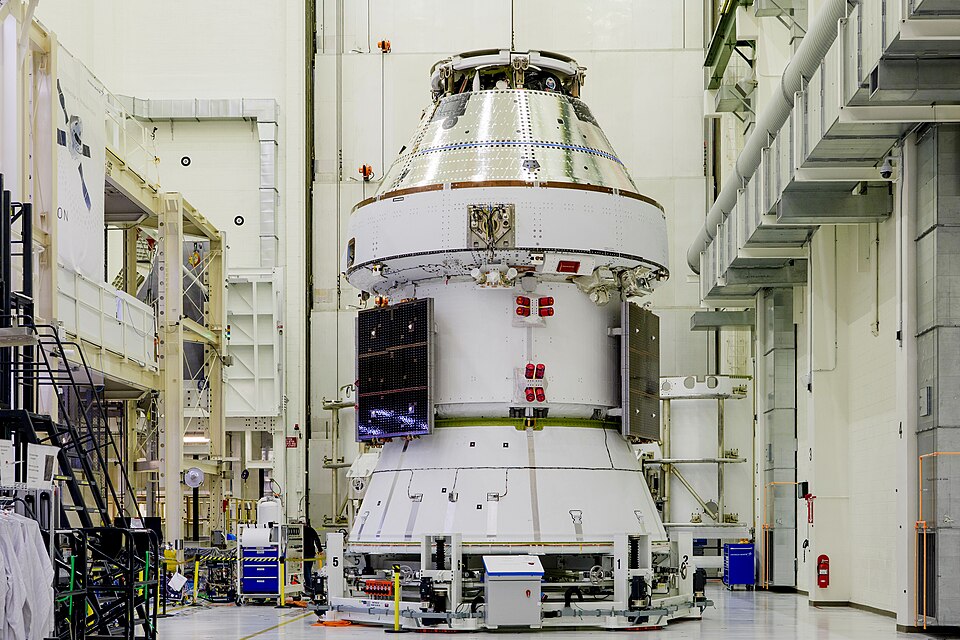
Orion has the propulsion module supplied by the European Space Agency. According to the ESA, this particular component of Orion can be called a heart of the propulsion system as it performs propulsion and guidance with different engines. Therefore, the first 24 hours of Artemis II’s flight represent a test of a complex idea of deep space human operations based on orbital geometry, attitude control, and propulsion.
By David Whitaker — Associate editor for aerospace and drone systems; translates flight systems and UAV developments into accessible technical stories.