FAA Restores Boeing Delivery Certification Authority Under Continued Oversight
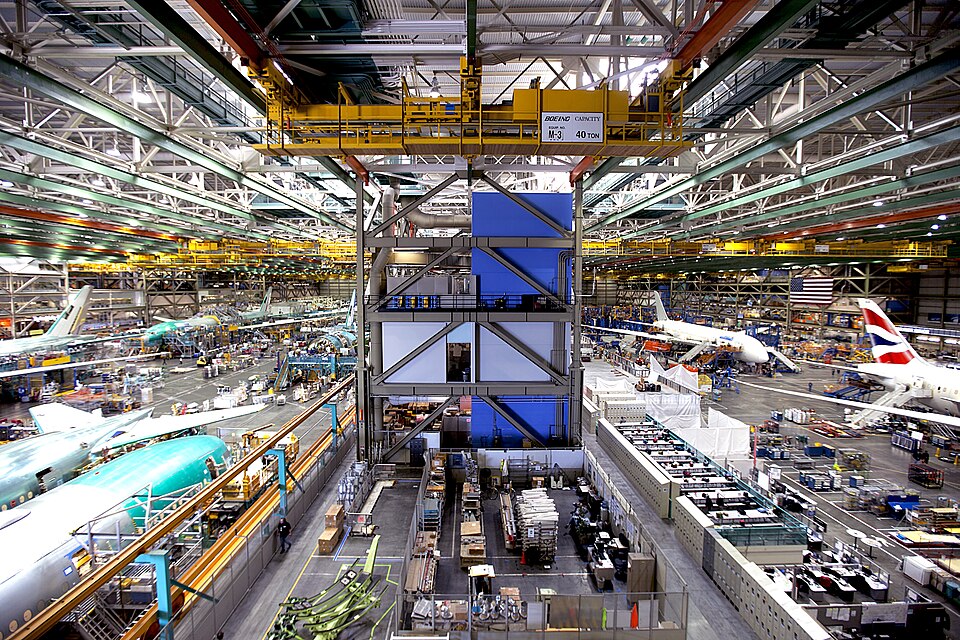
The FAA has restored Boeing’s authority to issue airworthiness certificates for newly built 737 MAX and 787 aircraft, with the change taking effect July 20. In practical terms, that returns a key end-of-line certification function to the manufacturer while preserving a broader oversight structure that remains focused on production quality, engineering compliance, and safety-system performance.

That distinction matters. An airworthiness certificate is the final regulatory approval required before a newly built aircraft can be delivered to an airline. Restoring that authority does not remove the FAA from the process; it changes where one specific approval step is executed within a still-supervised production system.
For the last eight months, Boeing and FAA inspectors alternated responsibility for issuing those certificates. The FAA said data gathered during that period showed no meaningful difference in production quality findings based on whether Boeing or the agency performed the certification step. On that basis, the regulator determined it could safely return the responsibility to Boeing for all newly produced 737 MAX and 787 aircraft.
From an engineering-governance standpoint, this is less a rollback of oversight than a recalibration of it. The FAA has said it will continue close supervision of Boeing’s production system through inspections, audits, and monitoring. That ongoing surveillance will cover manufacturing quality, compliance with approved engineering requirements, and the effectiveness of Boeing’s Safety Management System.
The policy signal is important for U.S. aerospace manufacturing. Delegated authority exists because modern aircraft production depends on a structured division of labor between regulator and manufacturer. Under the FAA’s Organization Designation Authorization framework, authorized organizations can perform certain certification functions on the agency’s behalf. In Boeing’s case, that includes the authority now being restored for individual 737 MAX and 787 deliveries.
But delegated authority only works if the regulator is satisfied that the manufacturer’s internal controls, documentation discipline, and escalation paths are functioning reliably. That is why the FAA’s message pairs restored authority with continued scrutiny. The agency is not treating certificate issuance as a standalone paperwork task; it is tying that step to the health of the larger production system, including critical assembly activities, quality trends, and safety culture.
The background to this decision explains the caution. The FAA had removed Boeing’s authority after a series of manufacturing-quality issues. Scrutiny intensified after the January 2024 mid-air blowout of a door plug on an Alaska Airlines 737 MAX 9. Boeing was already under heavy regulatory oversight following the 2018 Lion Air Flight 610 crash and the 2019 Ethiopian Airlines Flight 302 crash, which led to the worldwide grounding of the 737 MAX for nearly two years. For the 787, the FAA had also intervened earlier over production-quality concerns.
What has changed now is not the historical context, but the regulator’s assessment of current process performance during a controlled comparison period. Alternating issuance between Boeing and FAA inspectors gave the agency a direct way to compare outcomes at the delivery-certification stage. The FAA’s conclusion that findings were comparable suggests it now sees more value in concentrating inspector effort upstream, where manufacturing risks can be identified earlier, rather than having the agency perform every final certificate issuance itself.
That is a systems-engineering choice as much as a regulatory one. Final inspection is important, but stable aerospace quality depends more fundamentally on process control, configuration discipline, requirement traceability, and effective reporting channels when something does not conform. Continued FAA attention to Boeing’s Safety Management System is especially notable because SMS is intended to move organizations from reactive correction toward earlier hazard identification and risk management.
For airlines and the production system, the immediate effect is straightforward: a more normalized delivery path for new 737 MAX and 787 aircraft. For the broader U.S. aerospace sector, the more meaningful takeaway is that certification delegation is being treated as conditional on measurable production performance, not as a permanent entitlement. The FAA’s move restores a key manufacturer role, but it also reinforces a higher bar for how production governance, engineering compliance, and safety oversight must work together on the factory floor.
That is the real significance here. The regulator is signaling that efficiency in aircraft delivery can return only when it is anchored to auditable process control and sustained surveillance. In aerospace manufacturing, confidence is not a press statement or a schedule target; it is a systems outcome that has to be maintained every build cycle.
By Thomas Caldwell — AMI’s senior editor for mechanical and mobility engineering, covering vehicle electronics, systems integration, electrification, chassis systems, propulsion, and safety policy.