NATO Drill Links Three Nations’ F-35s for Shared Eastern-Flank Air Defense
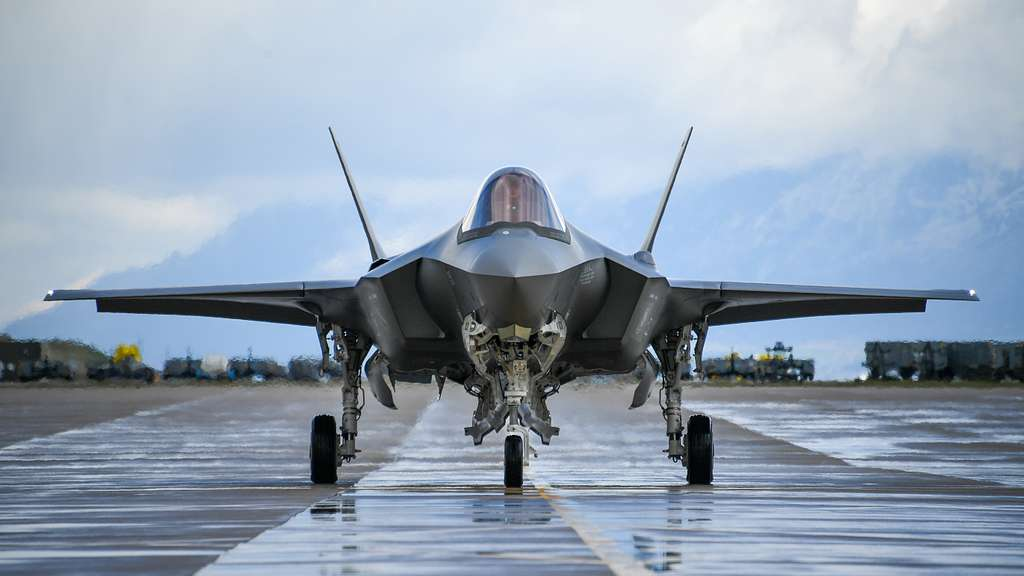
NATO linked F-35 fighters from Denmark, the Netherlands and the United Kingdom with surveillance, refueling, command, naval and land elements during a multinational air-defense activity over the Alliance’s eastern flank on July 23, 2026. NATO Allied Air Command, which led the training under the enhanced Vigilant Activity Eastern Sentry framework, said participants practiced detection, tracking and coordinated response through a shared operating picture. The important result was the assembly of carrier- and land-based F-35 units inside one broader multinational architecture not proof of combat performance or flawless interoperability.

The British F-35s operated from the Royal Navy aircraft carrier HMS Prince of Wales, while Danish and Dutch F-35s joined from land bases. NATO did not disclose the land operating locations, the number of aircraft involved or measured performance results. French Air and Space Force Rafale and Mirage fighters also participated, expanding the activity beyond fleets using the same aircraft type.
Connecting unlike forces was the central engineering task
Multinational air defense depends on more than placing several fighters in the same airspace. Sensors must generate useful observations, command elements must combine and distribute information, and operational units must receive that information in time to coordinate their actions. Different aircraft, ships and land formations also arrive with national procedures, support chains and communications constraints.
The July 23 activity addressed that systems problem at a high level by connecting sensors, command elements and operational units across the air, maritime and land domains. Participants practiced NATO’s Find, Fix, Track and Target process, abbreviated F2T2. In this context, the value of the F-35 was not simply its individual flight capability; it was its inclusion in a larger information and command structure involving aircraft from three operators and two different basing models.
Carrier aviation adds a distinct integration burden. HMS Prince of Wales supplied a mobile operating base for the British F-35 force, while the Danish and Dutch aircraft entered from fixed land infrastructure. Those arrangements have different launch, recovery, maintenance, fuel and command considerations. Bringing both into the same activity gave NATO a chance to practice coordinating forces whose operational support systems are not identical, although no public data establish how effectively each part performed.
The RQ-4D supported the common picture
A NATO RQ-4D Phoenix remotely piloted aircraft provided intelligence, surveillance and reconnaissance support. The aircraft is operated by the NATO Intelligence, Surveillance and Reconnaissance Force, which runs a fleet of five RQ-4Ds and also receives, processes and fuses surveillance information from other sources.
That processing role matters as much as the air vehicle. A common operating picture is not a single sensor feed; it is a managed product assembled from multiple inputs and distributed to decision-makers and participating units. NATO says the RQ-4D uses radar for high-altitude, long-endurance surveillance, while the force’s analysts and operators turn collected data into intelligence products. During the July activity, that capability helped participating forces maintain awareness across the air, land and maritime domains.
The exercise also incorporated tanker aircraft from France, Türkiye and the Multinational Multi Role Tanker Transport Unit. Refueling support extends fighter range and endurance, but it also introduces another layer of scheduling and coordination. Tanker availability, compatible procedures and timing can determine how long a multinational fighter package remains available, regardless of the sophistication of the combat aircraft themselves.
A wider command framework
Naval Striking and Support Forces NATO’s Neptune Strike activity supported the Eastern Sentry event. The broader Neptune Strike 26-3 exercise ran from July 17 through July 23 and connected carrier groups, maritime forces, air assets and surveillance capabilities through a multinational command framework.
For U.S. aerospace readers, the drill illustrates the operating environment into which the American-designed F-35 has been exported: allied fleets are expected to function as nodes in a multinational system, not as isolated aircraft inventories. That places continuing demands on data handling, command-and-control procedures, tanker support, carrier and land-base logistics, and training among units that may not routinely operate together.
The limits of the public account are equally important. NATO released no aircraft counts, response times, simulated threat details or quantified outcomes for the July 23 activity. It is therefore reasonable to conclude that the event exercised a broad integration chain, but not that every connection was validated under all conditions. The technical takeaway is narrower and more useful: NATO assembled three national F-35 forces, two basing models and several supporting domains around a shared air-defense picture the type of systems-level coordination on which multinational readiness ultimately depends.
By David Whitaker — Associate editor for AMI’s aerospace and drone systems desk, translating flight systems, aircraft programs, spaceflight, and UAV developments into accessible technical stories.