Telstra Expands Starlink Apps, but Authentication and Emergency Gaps Remain
Telstra activated access to selected smartphone apps through SpaceX’s Starlink direct-to-cell network on July 28, 2026, expanding a service that had carried text messages for 13 months. The Australian carrier’s official service update confirms that eligible customers outside terrestrial coverage can now use optimized mapping, messaging, weather and fitness apps. The advance demonstrates practical app-level satellite data on ordinary phones, but it remains constrained by limited capacity, terrestrial authentication and no ability to call or text Australia’s Triple Zero emergency service.
The service supports Apple Maps, Google Maps, AllTrails, iMessage, WhatsApp, Facebook Messenger, Signal, Google Messages, Apple Weather, AccuWeather, Google Weather and Google Fitness. It is not unrestricted mobile internet. Each application must be separately enabled and optimized by its developer for a light-data connection that can be slower and more intermittent than a terrestrial fourth- or fifth-generation mobile network.
App access is a capacity test, not full mobile broadband
Moving from text messages to app data is a meaningful technical step because maps, weather products and messaging platforms generate more varied network traffic than basic texting. Yet Telstra is deliberately limiting the service to applications and functions that can operate within a narrow data budget. Real-time audio and video features may appear in some supported apps, but Telstra says their performance is likely to be inconsistent and should not be relied upon.
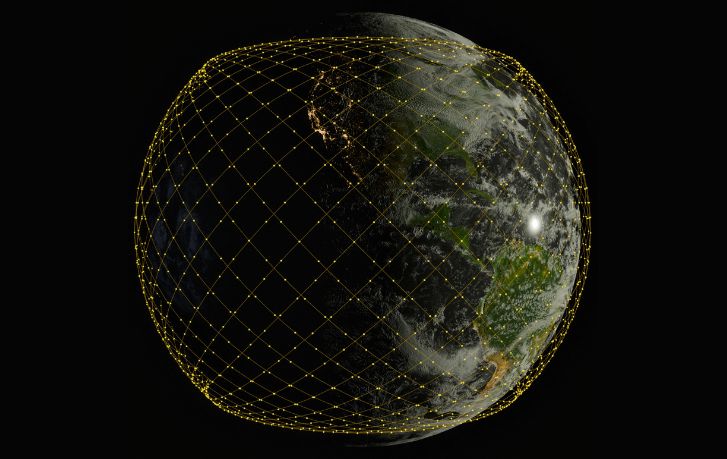
That boundary reflects the radio and capacity problem facing direct-to-cell systems. A standard handset has a much smaller link budget than a purpose-built satellite terminal, while available satellite capacity must be shared among users within the coverage area. Telstra waited until Starlink had roughly 640 to 650 direct-to-cell satellites in orbit before concluding that Australia had the geographic coverage needed for the service. More spacecraft can improve availability and capacity, but they do not turn the current connection into a substitute for terrestrial broadband.
The handset requirement is another practical gate. Select Satellite Apps currently require an eligible Telstra consumer or business plan and either an iPhone 13 or newer model or a Samsung Galaxy S26-family device. Additional Samsung phones are expected by the end of 2026, while Pixel devices already support parts of Telstra’s satellite messaging service and are expected to receive broader support. Compatibility depends on device software and network integration, not simply whether a phone can receive an ordinary cellular signal.
Authentication creates a terrestrial failure dependency
Customers must install, update and sign into supported apps before leaving mobile coverage. The satellite connection cannot download applications or complete standard web authentication. That restriction matters operationally: a compatible phone and visible satellite are not enough if an app requires a fresh login or update after the user has already entered a coverage gap.
There is also a network-level dependency. Telstra’s satellite service failed during the carrier’s July 2026 terrestrial outage because customer authentication still passed through its ground network. In engineering terms, the satellite radio path adds geographic reach, but it does not yet provide a fully independent service architecture. That distinction is particularly important when satellite connectivity is discussed as a backup during widespread infrastructure disruptions.
Telstra has reported more than 26 million satellite text messages since launch, with average daily connections rising from about 80,000 to more than 200,000. Approximately 2.9 million customers have connected at least once. Connections tripled around Longwood and Harcourt during Victorian bushfires after fire damage and power failures disrupted parts of the mobile network, showing the value of an additional radio path during localized outages. It does not establish that the service will remain available when Telstra’s authentication systems are unavailable.
Emergency access remains the firmest operating boundary
Users cannot call Triple Zero through Telstra Satellite, and they cannot text Triple Zero directly. App-based communications such as WhatsApp also do not support Triple Zero calls, whether connected through satellite, cellular service or home Wi-Fi. Telstra therefore describes satellite-to-mobile access as an additional connection option rather than an emergency service.
Voice, faster data and machine-to-machine connectivity remain prospective capabilities, with no implementation date provided. For SpaceX and its carrier partners, the immediate achievement is narrower but still significant: direct-to-cell has progressed from basic messaging to useful application data without requiring a dedicated satellite handset. The present limits show the next engineering work clearly. Capacity must grow, more devices and apps must be integrated, authentication must become more resilient, and emergency access must be addressed before this architecture can be treated as a comprehensive communications fallback.
By David Whitaker — Associate editor for AMI’s aerospace and drone systems desk, translating flight systems, aircraft programs, spaceflight, and UAV developments into accessible technical stories.