Golden Dome Contracts Advance While Most 2027 Funding Remains Unsettled
Golden Dome contract money is reaching satellite, sensor, interceptor and engineering programs, but the Pentagon still lacks a stable path for most of the roughly $17.5 billion requested for fiscal 2027. That leaves the U.S. homeland missile-defense effort in an unusual position: previously approved money is accelerating work now, while contractors cannot assume that the same funding pace will continue into the next budget year.
A 2025 reconciliation law supplied about $24 billion for integrated air and missile-defense capabilities associated with Golden Dome. For fiscal 2027, regular defense appropriations provide about $400 million, while nearly all the remaining request depends on separate reconciliation legislation that has not been enacted. Northrop Grumman executives said previously released funds began moving onto contracts more quickly during the second quarter, but the company is still monitoring congressional action.
Early money favors work already underway
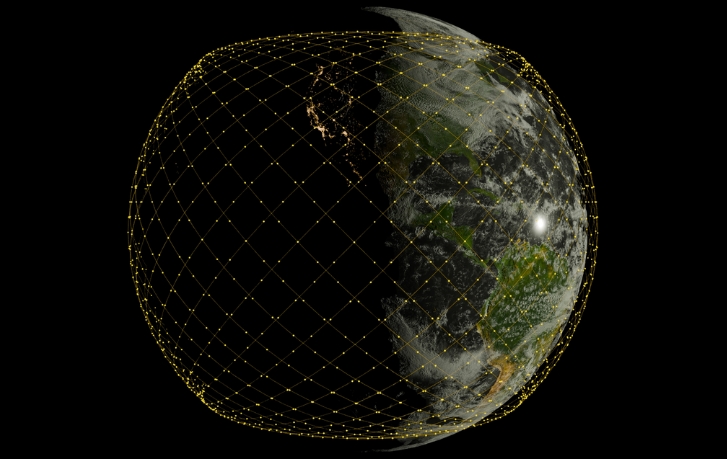
The spending pattern matters because Golden Dome is not a single new spacecraft, interceptor or command center. The Defense Department describes it as a layered architecture connecting sensors, interceptors and command systems across land, sea, air and space. Early awards therefore can be added to established programs, competed directly or passed through prime contractors to component suppliers.
That structure favors technologies with existing contracts, production facilities and engineering teams. Current activity includes missile-warning and tracking satellites, infrared sensors, ground-based and hypersonic interceptor work, command-and-control systems, rocket-motor production, directed-energy demonstrations, systems engineering and testing. Northrop, for example, characterizes Golden Dome as building on warning satellites, infrared tracking, interceptors and propulsion work already in development.
The supply chain extends beyond companies holding visible program-level awards. Teledyne supplies mercury-cadmium-telluride infrared detectors used in space sensing. Voyager Technologies participates through teams led by larger contractors. Parsons received a two-year, $514 million option for broader Missile Defense Agency engineering and support work that includes Golden Dome-related activity. These arrangements show how federal money can reach specialized sensor, propulsion, electronics and engineering providers without every payment carrying a standalone Golden Dome label.
This approach can accelerate acquisition because the government is not waiting for an entirely new contracting structure before buying useful hardware and services. It also makes public cost accounting more difficult. When Golden Dome work is mixed into existing satellite, missile-defense and engineering contracts, separating architecture-specific spending from upgrades that serve other missions becomes less straightforward.
Development is not the same as an operational shield
The most mature sensing and ground-system work should not be confused with completion of the full architecture. A large operational constellation of space-based interceptors remains developmental. Northrop is teamed with Apex on one orbital interceptor concept, while other contractors are pursuing competing approaches, but prototype and competition spending does not establish that a design is affordable, scalable or ready for production.
That distinction creates a major industrial-planning boundary. Suppliers can expand engineering work or produce components for established programs against funded contracts. Committing to new factories, specialized tooling, long-lead materials or a larger trained workforce is harder without a multiyear acquisition profile showing quantities and delivery schedules. Contractors must weigh the possibility of substantial future production against the risk that requirements, architecture or annual funding will change.
Classification adds another constraint. Protecting the system’s design is necessary, but limited access makes it harder for potential suppliers to understand requirements and decide where to invest. KBR has identified possible software, artificial-intelligence and digital-systems opportunities without disclosing a material award. Its executives have also described how classified discussions restrict engagement outside cleared channels.
The Pentagon is trying to broaden participation through the new Golden Dome for America Ecosystem Hub, intended to connect program officials with traditional contractors, commercial companies, laboratories and other potential suppliers. An unclassified entry point may improve access, but it cannot by itself resolve classified requirements, contracting-office backlogs or the absence of dependable future appropriations.
The funding split shifts risk downstream
For taxpayers, the central issue is not whether early contracts can produce useful hardware. Many are tied to established warning, tracking, propulsion and engineering programs. The issue is whether billions in initial funding will lead into a coherent, affordable acquisition plan rather than a collection of partially connected developments whose future depends on repeated one-time financing measures.
Large prime contractors can distribute that uncertainty across multiple defense and space portfolios. Smaller suppliers have less room to absorb delayed awards, shifting quantities or investments made before production is authorized. Staffing shortages and contracting backlogs reported by Parsons add another practical delay between congressional funding and work reaching engineering teams.
Golden Dome can continue advancing near-term programs with the approximately $24 billion already provided. Its longer-term architecture, especially developmental orbital interceptors and future production capacity, depends on a clearer fiscal 2027 decision. Until most of the requested $17.5 billion has an enacted path, contract activity will demonstrate momentum—but not a stable multiyear buildout.
By David Whitaker — Associate editor for AMI’s aerospace and drone systems desk, translating flight systems, aircraft programs, spaceflight, and UAV developments into accessible technical stories.