Ukraine Says Russia Accelerates Rassvet Toward 292 Satellites for Persistent Coverage
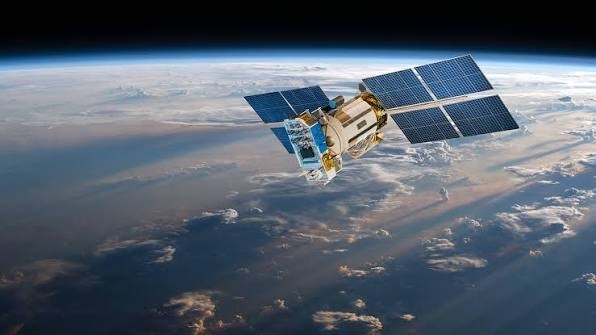
Sixteen satellites are not enough to make Russia’s Rassvet broadband network continuously available. A proposed 292 could substantially change that geometry. Ukrainian military intelligence says Russia is accelerating deployment of the low-Earth-orbit system, with the larger constellation targeted for 2027 and a further expansion to 924 satellites by 2035.

Those numbers and dates have not been independently confirmed. Major General Vadym Skibitskyi, deputy chief of Ukraine’s GUR military intelligence service, attributed 16 operating satellites to the network and said launches were proceeding “much faster than originally planned.” For now, he said, Rassvet provides only intermittent service over Ukraine when a satellite passes within view. The central consequence of adding spacecraft would be more frequent passes and, eventually, more persistent connectivity.
Why 292 satellites would be different
Low-Earth-orbit satellites move rapidly relative to users on the ground. Their lower altitude can reduce signal delay compared with geostationary spacecraft, but each satellite covers a smaller area and soon travels beyond a terminal’s usable field of view. Continuous service therefore depends on having another properly positioned satellite ready to take over the connection.
That makes satellite count important, but count alone does not establish capability. Coverage also depends on orbital altitude, inclination, the number and spacing of orbital planes, antenna limits and the minimum elevation angle at which terminals can maintain a useful link. A constellation with hundreds of spacecraft can reduce gaps only if those satellites are distributed in an orbital design suited to the intended service area.
Rassvet developer Bureau 1440 describes its system as an 800-kilometer-altitude broadband constellation using laser links between satellites. The company advertises data rates of up to 1 gigabit per second and latency below 70 milliseconds, but those are company-stated design claims rather than independently demonstrated performance for an operational 292-satellite network.
Inter-satellite laser links matter because they can move data across the constellation before routing it to terrestrial networks, reducing dependence on a nearby ground gateway for every connection. That architecture still requires working user terminals, gateway infrastructure, network software, spectrum access and reliable handovers. Putting spacecraft into orbit is only one layer of a functioning broadband service.
The schedule has conflicting public signals
Skibitskyi’s stated target of 292 satellites in 2027 is notably more aggressive than another publicly reported schedule. After Bureau 1440 acknowledged losing one spacecraft from its first 16-satellite operational deployment, reporting based on Russian plans put 292 operational satellites at the end of 2030, with 383 total launches scheduled. The company reportedly said 15 of those first 16 remained in orbit, alongside six experimental spacecraft.
That discrepancy leaves both the present “operating” count and the 2027 target in need of clarification. It could reflect a revised acceleration plan, different definitions of operational and experimental spacecraft, or inconsistent reporting. No basis is available to choose among those possibilities. Launch manifests, successful orbital insertions and sustained service tests will be more useful measures than a target date alone.
Rassvet remains far smaller than established broadband networks
Even at 292 satellites, Rassvet would remain far below Starlink’s reported fleet of more than 10,000 operational spacecraft. A closer scale comparison is Eutelsat’s OneWeb network of more than 600 satellites, arranged across 12 synchronized orbital planes. OneWeb demonstrates that a broadband constellation does not need Starlink’s satellite count to provide broad service, but network architecture, orbital geometry and market objectives differ substantially.
For U.S. readers, the direct industrial comparison is SpaceX: Rassvet is an attempt to develop an independent Russian counterpart to a U.S.-built communications network that has become important in Ukraine. Starlink is banned in Russia, and unauthorized terminals used by Russian forces in Ukraine were reportedly disabled earlier in 2026 after coordination between Kyiv and SpaceX.
Rassvet’s next meaningful milestone is therefore not simply another launch. It is evidence that Bureau 1440 can move from brief coverage windows to repeatable handovers and sustained broadband service as the constellation grows. Until launches, orbital status and network performance substantiate the accelerated schedule, the gap between 16 and 292 satellites remains both the program’s promise and its largest unresolved constraint.
By David Whitaker — Associate editor for AMI’s aerospace and drone systems desk, translating flight systems, aircraft programs, spaceflight, and UAV developments into accessible technical stories.