Alabuga Polytech Recruits Ukrainian Teens Into Russia’s Drone Manufacturing Pipeline
Half a day in class and half a day on a factory floor: that is the mechanism Alabuga Polytech is using to turn technical education into an industrial workforce pipeline. Promotional materials reviewed by Kyiv Post target applicants ages 15 to 21 from Russian-occupied parts of Luhansk, Donetsk, Kherson, Zaporizhzhia and Crimea, connecting paid training with factories in Russia’s largest Shahed-derived drone manufacturing complex.
The four-year program advertises instruction in industrial robotics, welding, aeronautics, web programming, business informatics and programming for unmanned aircraft. It also promises factory employment beginning in the first year, including for students as young as 15. Applicants generally need to have completed grades nine through 11, while a high-school diploma or equivalent is described as desirable rather than mandatory.
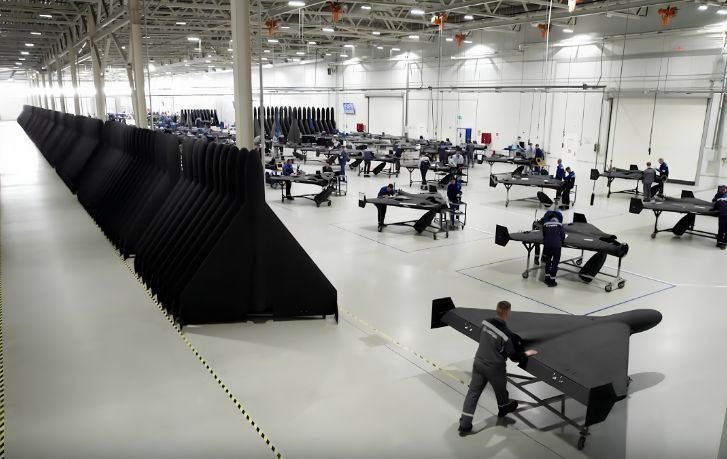
That combination matters because large-scale drone manufacturing requires more than an assembly line. It depends on a repeatable supply of workers who can operate production equipment, join structures, handle electronics and software tasks, and progress into more specialized technical roles. Alabuga’s model places those skills inside the same institutional system that supplies labor to JSC Alabuga and associated factories.
Education and production are integrated
Alabuga Polytech director Elvira Fomina described the model during a July 22 broadcast, saying students are involved in production tasks from their first year and gain practical experience. She did not directly say those students work on drones, an important boundary when assessing individual placements. The program advertises employment across more than 60 production facilities, so the available material does not establish that every recruit is assigned to weapons manufacturing.
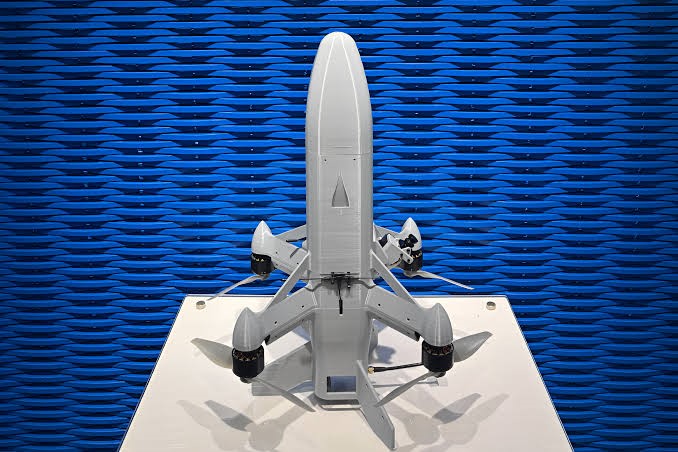
The wider institutional connection is clearer. Alabuga Polytech is identified as the principal training organization for workers entering the Alabuga industrial zone in Tatarstan, where Russia began mass production of Shahed-136-derived Geran-2 one-way attack drones in July 2023 with Iranian technical assistance. The technical courses being promoted including robotics, welding, aeronautics and unmanned-aircraft programming align with skills needed across an aerospace production complex, even if a recruit’s precise factory assignment is not publicly documented.
The incentives reduce several barriers that typically limit industrial recruitment. The first year is advertised as free, accompanied by a $330 signing bonus. Ukrainian applicants are reportedly offered transportation from occupied regions and guaranteed employment after graduation, while accommodation is subsidized. Other compensation claims in the promotional material are inconsistent and cannot be treated as verified salary figures.
Labor is becoming a production constraint of its own
The recruitment campaign fits a manufacturing operation expanding beyond its current workforce. Leaked employee records cited in the reporting indicate that the wider operation may employ as many as 10,000 people. Separately, the independent Russian news agency Astra reported in June that housing was being built for 41,000 additional workers as military production around Alabuga expanded.
Those figures do not prove how many new hires will enter drone production, but they show that workforce growth is being planned alongside physical capacity. New buildings and production equipment cannot raise sustained output without trained operators, maintenance personnel, quality-control staff and supervisors. A school-to-factory system can shorten that labor ramp by teaching processes while students are already participating in production.
Ukrainian military intelligence estimated that Alabuga’s output had reached about 170 one-way attack drones per day, or more than 5,000 per month, by May 2026. That remains an attributed estimate rather than an independently audited factory count. It nevertheless illustrates why recruitment is relevant to industrial capacity: at that scale, labor availability, training consistency and worker housing become production-system requirements rather than secondary personnel issues.
Recruiting minors from occupied territory adds unresolved legal questions
The recruitment of people as young as 15 from occupied Ukrainian regions raises questions under Article 51 of the Fourth Geneva Convention, which restricts an occupying power from compelling protected people to serve in its armed or auxiliary forces and from using pressure or propaganda to secure voluntary enlistment. Determining whether the advertised program violates those restrictions would require authoritative findings about recruitment conditions, legal status and the work assigned to individual students.
No such determination is established here, and claims of coercion should not be inferred solely from the advertisements. What is documented is a state-supported offer aimed at teenagers in occupied territory, combining technical instruction, financial incentives, transportation and early factory placement inside Russia’s principal Shahed-derived drone production hub.
For Alabuga, the model’s industrial value is its continuity: recruitment feeds training, training feeds factory work, and factory experience can produce more skilled workers. The unresolved tension is equally concrete. Applicants as young as 15 are being offered an education pathway that is structurally intertwined with a complex built to expand Russia’s production of one-way attack drones.
| More aerospace and engineering stories, right in your MSN feed. Follow AMI on MSN |
By Stephen Wallace — Editor for AMI’s aerospace integration and unmanned mobility coverage, focused on drone manufacturing, VTOL systems, autonomous networks, and air-ground mobility links.