Ursa Ag Reportedly Triples Simpler Tractor Production at Half Deere’s Price
A tractor can remain mechanically usable yet become difficult for its owner to repair when a sensor, connected control or restricted software tool stands between diagnosis and a return to work. Canadian manufacturer Ursa Ag is pursuing the opposite design philosophy: It is reportedly tripling production of basic tractors that omit much of that electronic architecture, with a reported price around half that of a new John Deere.
The price comparison requires an important qualification. The reporting does not identify the John Deere model, configuration or transaction price used as the benchmark, so it should not be read as a direct model-for-model comparison. Deere’s own U.S. tractor catalog spans numerous power classes, applications and option packages, with pricing and availability varying by dealer.
Simplicity changes the maintenance equation
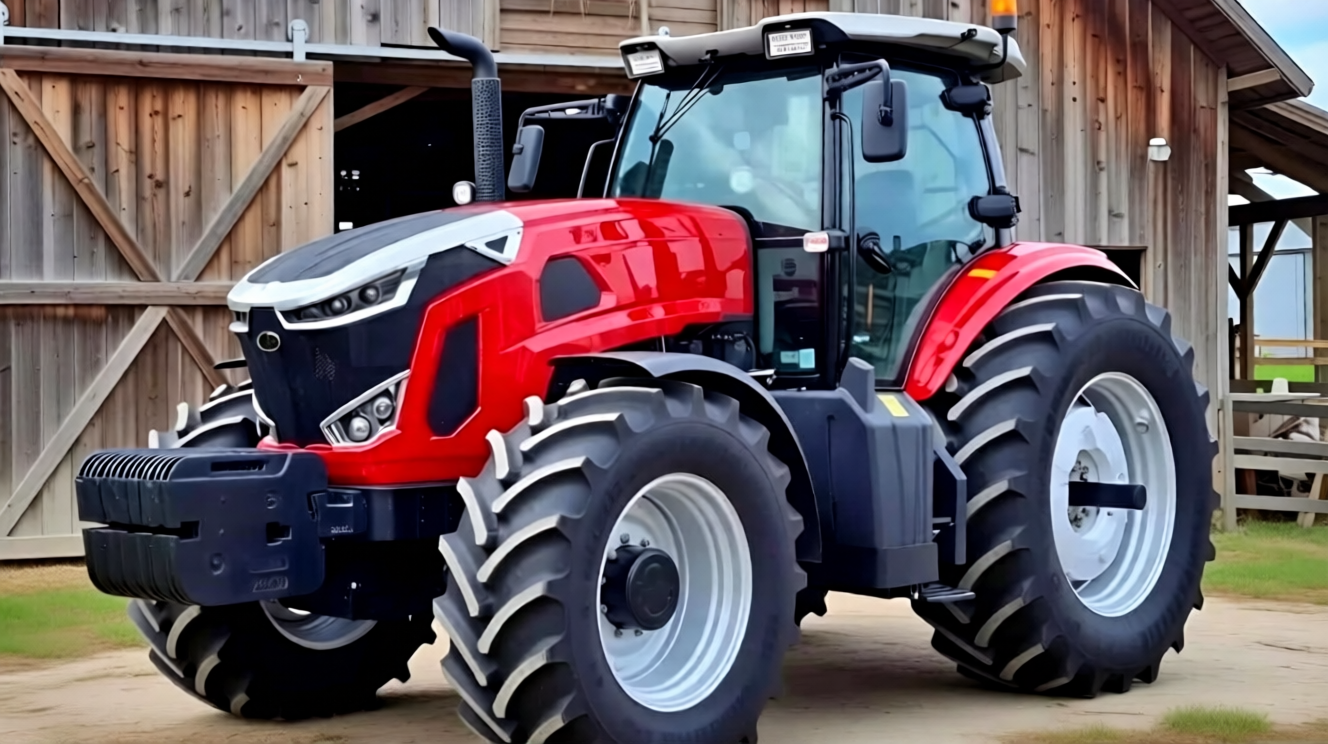
Ursa Ag’s tractors emphasize basic operation rather than complex software, autosteer, GPS and connected functions. Its three identified models the 150, 180 and 260 are rated at the corresponding horsepower levels, putting them well beyond the category of small garden or compact machines.
Removing electronic features does not automatically make every repair easy, nor does it eliminate the need for parts, documentation and mechanical expertise. It does, however, reduce the number of maintenance decisions that may depend on electronic diagnostics or access to proprietary software. For an operator facing a narrow weather window, the practical distinction is whether a service interruption can be investigated with conventional tools or requires an authorized digital process.
That is the central systems tradeoff. GPS guidance, autosteer, sensors and connectivity can support repeatability, machine monitoring and automated operation. The same functions add controllers, data links and software-controlled service procedures to the equipment architecture. Ursa Ag is betting that many buyers would rather forgo those capabilities in tractors assigned to work that does not require them.
Doug Wilson of Ursa Ag told 404 Media that advanced agricultural technology has a place but is needed for only 5% of farm work. “There are so many applications for tractors on farms that don’t require technology,” he said. That 5% figure is Wilson’s assessment, not an independently established measurement across the agricultural industry. It nevertheless explains the company’s product strategy: reserve more advanced machines for tasks that benefit from automation while using simpler equipment elsewhere.
Repair access is now a policy issue
The timing also reflects a broader change in U.S. repair policy. On July 8, 2026, the Federal Trade Commission and five states secured a settlement in their antitrust case against Deere & Company intended to ensure that farmers can repair their own John Deere tractors and farm equipment. That action addresses repair access within an established connected-equipment ecosystem; Ursa Ag’s approach attempts to reduce dependence on that ecosystem through the machine’s initial design.
The two approaches are not mutually exclusive. Modern tractors can retain automation while manufacturers, dealers and regulators improve access to diagnostic and repair resources. Simpler tractors can also coexist with highly automated machines on the same farm. Reported interest in Ursa Ag’s products includes smaller farms as well as large operators in the U.S. dairy industry, suggesting that the choice is not solely about farm size.
Cost pressure strengthens the case for offering that choice. Crop-farm profit margins have been cited at around 5% in recent years, while Kim Rominger, then CEO of the North American Equipment Dealers Association, agreed in 2024 that technology was contributing to higher equipment prices. Purchase price is only one part of machine economics, but electronic complexity can also influence technician requirements, diagnostic access and the operator’s control over downtime.
Ursa Ag’s reported production increase still needs firmer public detail, including unit volumes, U.S. availability, specifications, service coverage and comparable transaction prices. Those points will determine whether the company’s repairability pitch can scale beyond early demand. For now, tripling production represents a notable manufacturing test: whether North American farms will buy a new tractor partly because it does less and therefore asks less of software when work stops.
| More aerospace and engineering stories, right in your MSN feed. Follow AMI on MSN |
By Thomas Caldwell — AMI’s senior editor for mechanical and mobility engineering, covering vehicle electronics, systems integration, electrification, chassis systems, propulsion, and safety policy.