FAA Investigates American Airlines Laptop Fire After Crew Contains Device
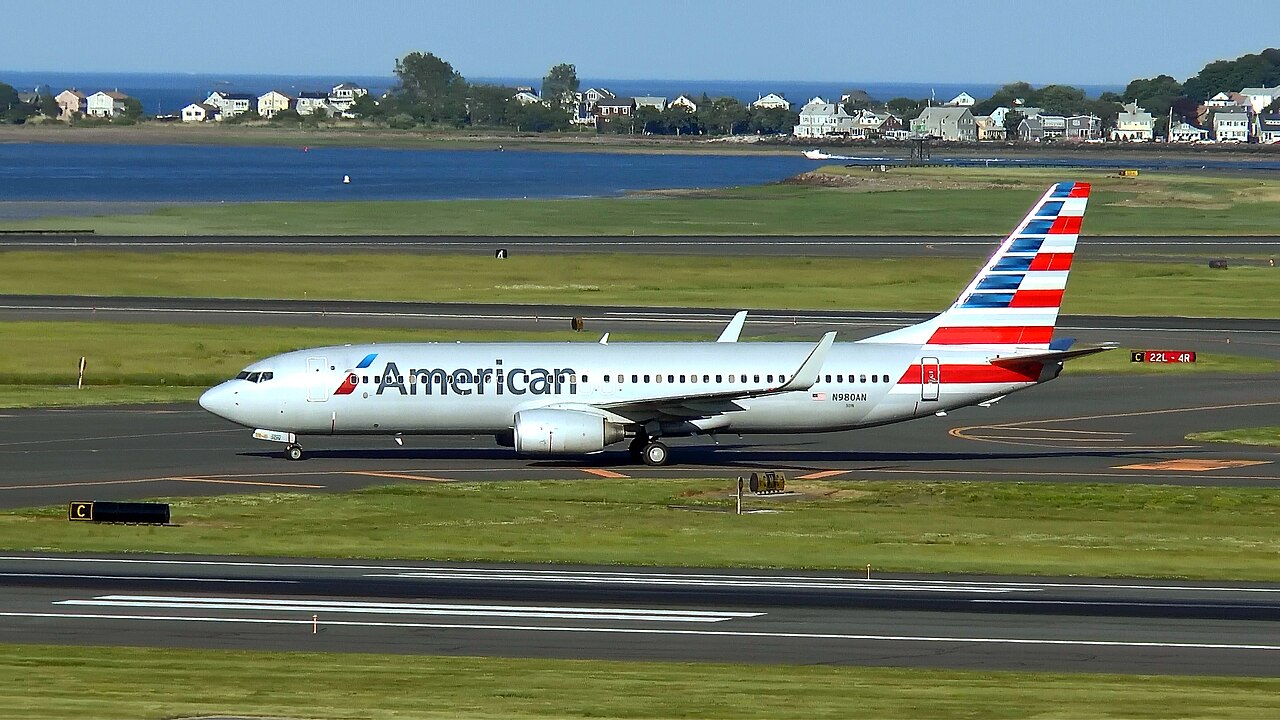
The Federal Aviation Administration is investigating after a passenger laptop reportedly caught fire aboard American Airlines Flight 2398, turning an ordinary cabin device into an in-flight fire hazard. The Atlanta-to-Dallas Fort Worth flight landed safely after crew members contained the device, but the cause remains undetermined.

The event was reported as the aircraft approached Dallas Fort Worth International Airport on Friday, August 21. American Airlines said smoke came from a customer’s device during landing and credited the crew with a swift response. Emergency personnel attended the aircraft after it landed.
Air traffic control audio obtained by CBS News records a pilot reporting a cabin fire and saying flight attendants were trying to extinguish it. The pilot estimated that four or five passengers might have been burned, but that preliminary figure was not independently or officially confirmed. Dallas Fort Worth International Airport said one passenger was treated and released. The FAA said the fire was contained with a thermal containment bag; available accounts also place the burning device in that bag during the event, but they do not establish a detailed sequence.
What the FAA investigation still must establish
No FAA finding has identified a battery defect, ignition source or handling error. The condition and history of the laptop battery also remain unknown. That distinction matters because smoke or fire from a battery-powered device does not, by itself, establish why the event began.
The investigation can examine the device and battery, the reported progression of smoke and fire, the crew response and the containment equipment used. Until that work is complete, the possible causes listed in general battery-safety guidance should not be applied to Flight 2398 as conclusions.
Lithium-ion cells store substantial energy in compact packages. According to the FAA’s passenger battery guidance, they can overheat and enter a process called thermal runaway. In that condition, rising temperature drives further internal reactions and heat generation, potentially producing smoke or fire.
The FAA identifies damage, overheating, water exposure, overcharging, improper protection and manufacturing defects as possible factors in thermal-runaway events. It also warns that the process can begin without warning. Those are general mechanisms, not findings about the American Airlines laptop.
Why battery location matters in an aircraft
The cabin rule for spare batteries is fundamentally about access. Spare lithium-ion and lithium-metal batteries including power banks, portable chargers and phone charging cases must remain in carry-on baggage rather than checked luggage. If a carry-on bag is checked at the gate or planeside, passengers must remove those items and keep them in the cabin.
That placement does not prevent every failure. It gives passengers and trained crew members a better opportunity to notice warning signs such as overheating, expansion, smoke or burning and to reach the device before the event develops out of sight in the cargo system. The Flight 2398 investigation has not determined whether any baggage rule was relevant to this incident; the laptop was a device, not necessarily a spare battery.
Installed batteries are treated differently. A laptop or other portable electronic device may generally travel in checked baggage if it meets the applicable capacity limits, is completely powered off and is protected against accidental activation and short circuits. The FAA nevertheless permits most such devices in carry-on baggage, where abnormal heating is more readily observable.
Battery terminals on spares must be protected against contact with metal that could create a short circuit. Standard lithium-ion batteries are generally limited to 100 watt-hours each. With airline approval, a passenger may carry up to two larger spare lithium-ion batteries in the 101-to-160-watt-hour range. Lithium-metal batteries are generally limited to two grams of lithium per battery, with airline approval required for up to two larger spares in the two-to-eight-gram range. Airlines may impose stricter limits.
The FAA also maintains a database of reported lithium-battery events involving smoke, fire or extreme heat, while cautioning that it is not a complete record. Flight 2398 now presents a specific question for investigators: not whether lithium batteries can become hazardous, but what initiated this event and how effectively the aircraft’s human and containment systems limited its escalation.
| More aerospace and engineering stories, right in your MSN feed. Follow AMI on MSN |
By Thomas Caldwell — AMI’s senior editor for mechanical and mobility engineering, covering vehicle electronics, systems integration, electrification, chassis systems, propulsion, and safety policy.