U.S. Northern Command Says 350-Plus Installations Have Uneven Drone Defenses
More than 350 U.S. military installations face the same broad requirement protection from potentially hostile drones but they do not have the same defensive capability. U.S. Northern Command describes varying levels of protection and criticality across homeland sites as the military continues assessing and improving its counter-drone readiness.
That disparity matters because installing a radar, camera or electronic countermeasure does not automatically create a complete defense. A credible architecture must detect an object, maintain a track, help operators identify it and connect that information to an authorized means of stopping it. Pentagon testimony has acknowledged remaining vulnerabilities across those functions.
No single sensor completes the chain
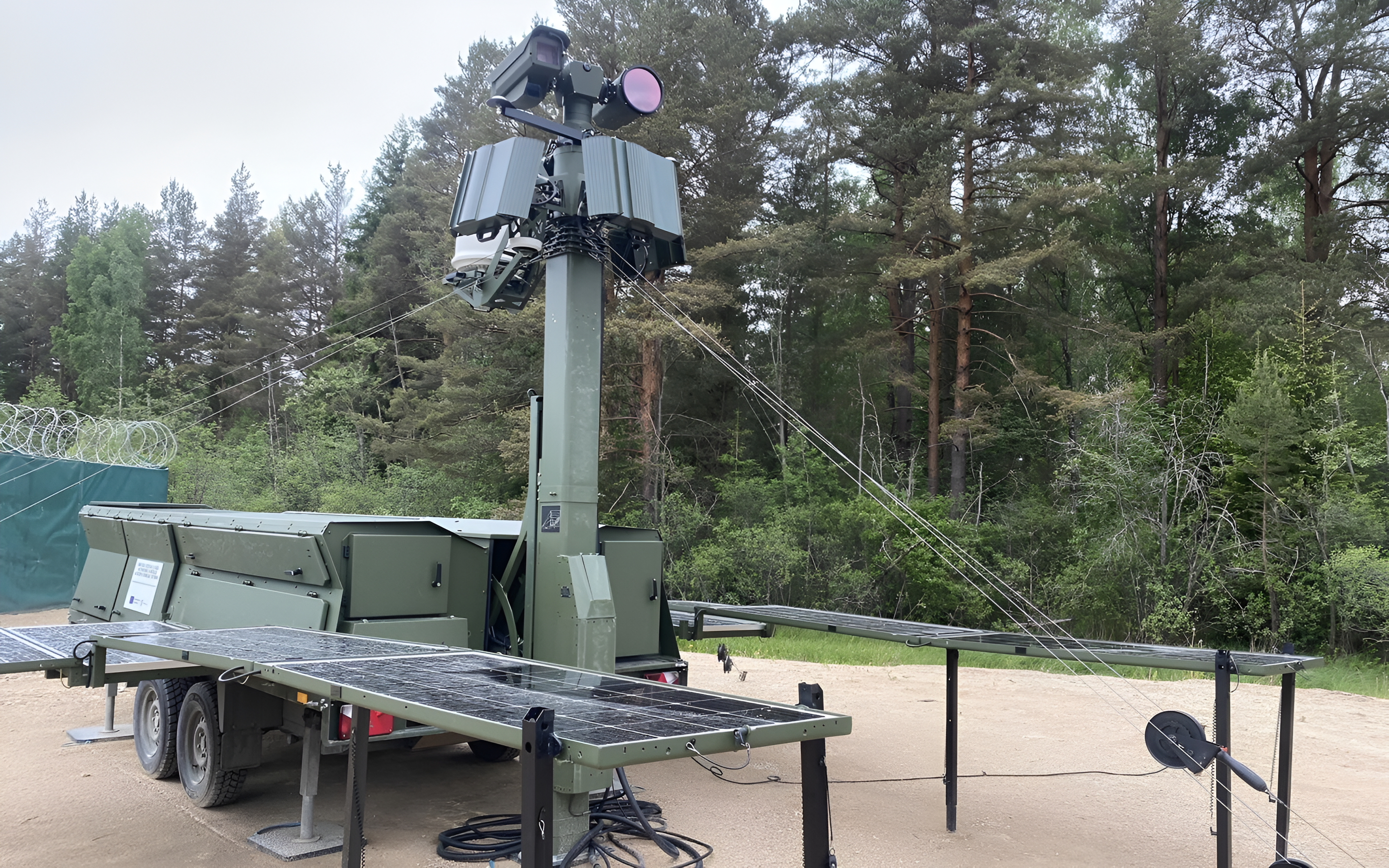
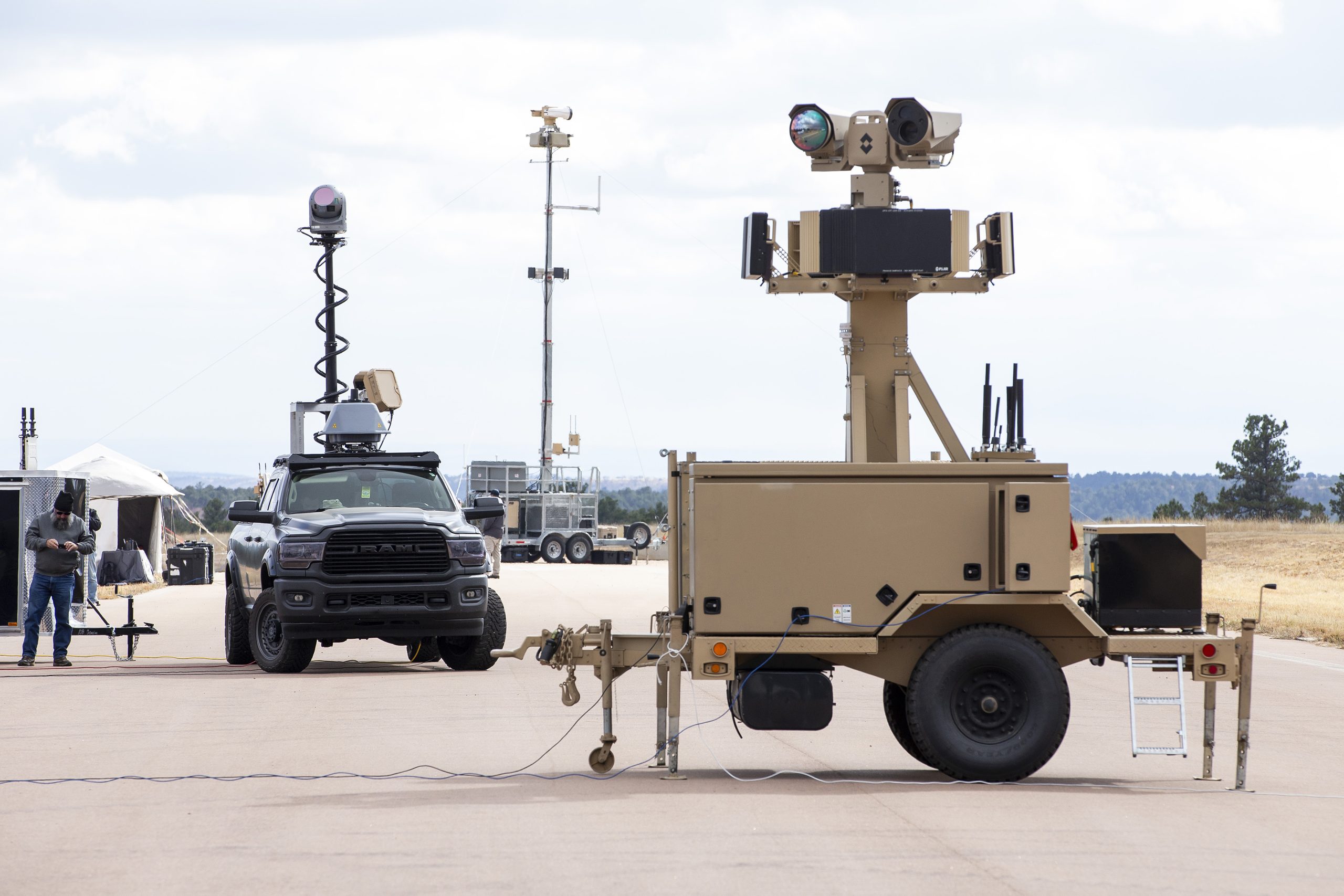
Small unmanned aircraft create a difficult sensing problem because their size, flight profile and commercial availability differ from the aircraft traditional base defenses were designed to monitor. The military’s high-level response is a layered architecture incorporating radar, optical, acoustic and radio-frequency capabilities.
Each layer contributes different information. Radar can support detection and tracking, while optical equipment can help classify what has been detected. Acoustic sensors may provide another source of identification data, and radio-frequency equipment can detect or respond to certain control links. None is presented as a universal answer, and conditions can affect what any individual sensor contributes.
The more important engineering problem is therefore integration. Data from separate products must be correlated quickly enough to produce a useful common picture without overwhelming operators with duplicate tracks or false alerts. The command-and-control layer also has to connect sensing with an appropriate response while respecting authorization, safety and airspace constraints inside the United States.
This is why the number of installed devices is an incomplete measure of readiness. Two installations could own similar hardware but have very different protection if one has validated interfaces, trained operators, sustainment support and an established command structure while the other operates its components separately. The unresolved nationwide question is how consistently those pieces have been assembled and tested across the 350-plus installations.
Procurement is shifting toward vetted systems
The Defense Department is trying to shorten one part of that process through a new online marketplace for vetted counter-drone technology. Joint Interagency Task Force 401 developed the restricted platform so approved government buyers can examine products, review performance information and submit acquisition requests. Kaizen Laboratories received a $15 million agreement in May 2026 to build it.
A more efficient catalog can help agencies find qualified equipment, but purchasing speed does not remove the integration burden. Product performance must still be verified in the intended operating environment, interfaces must work with existing systems, and users need training, maintenance and software support. Counter-drone technology also evolves rapidly, increasing the importance of upgrade paths and configuration control.
A separate Department of Homeland Security procurement reinforces that point. Its counter-drone contracting effort has a ceiling of up to $1.5 billion and divides work between technology providers and comprehensive-service contractors. The latter group is explicitly responsible for system integration and interoperability, illustrating that the government is purchasing engineering and support services alongside physical equipment.
Testing must represent an architecture, not a product demonstration
The Army is also expanding industry access to designated testing facilities for drones and counter-drone systems. Such ranges can help developers validate performance and expose integration problems before equipment reaches an operational installation. Testing is especially useful when it examines the full detection, identification and defeat chain rather than demonstrating one component under controlled conditions.
Scaling that process across hundreds of sites brings a manufacturing and sustainment challenge. Agencies must decide which capabilities can be standardized, which must be adapted to local missions and how replacement parts, software updates and operator qualifications will be maintained. A system that performs well during acceptance testing can lose effectiveness if sensors fall out of calibration, software versions diverge or specialist support is unavailable.
The U.S. military’s counter-drone effort is consequently both an acquisition program and a systems-integration campaign. The new marketplace and expanded testing access may accelerate the flow of technology, but neither establishes complete protection by itself. Readiness across more than 350 installations will depend on whether multiple sensors and response systems can be connected, validated, maintained and operated as one defensive architecture.
| More aerospace and engineering stories, right in your MSN feed. Follow AMI on MSN |
By Stephen Wallace — Editor for AMI’s aerospace integration and unmanned mobility coverage, focused on drone manufacturing, VTOL systems, autonomous networks, and air-ground mobility links.