Ukraine Says Four-Day Russian Barrage Nears 1,500 Drones, Pressuring Interceptor Production
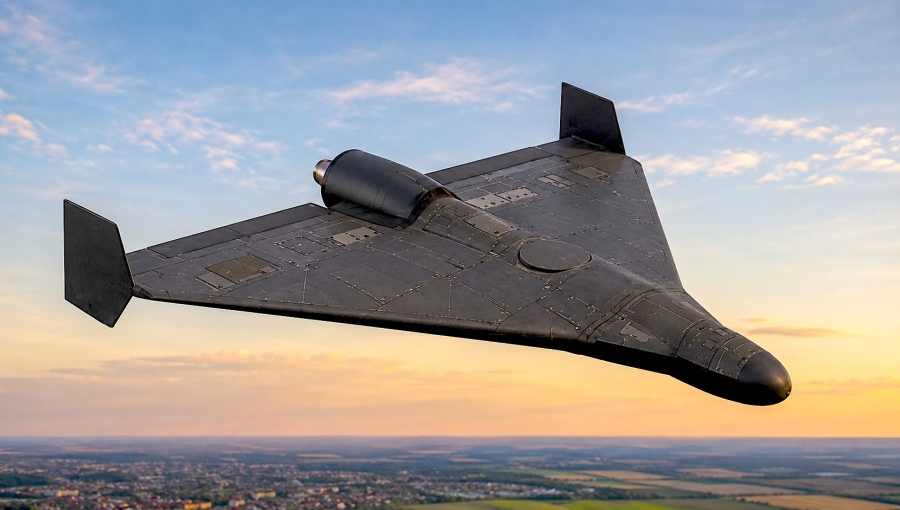
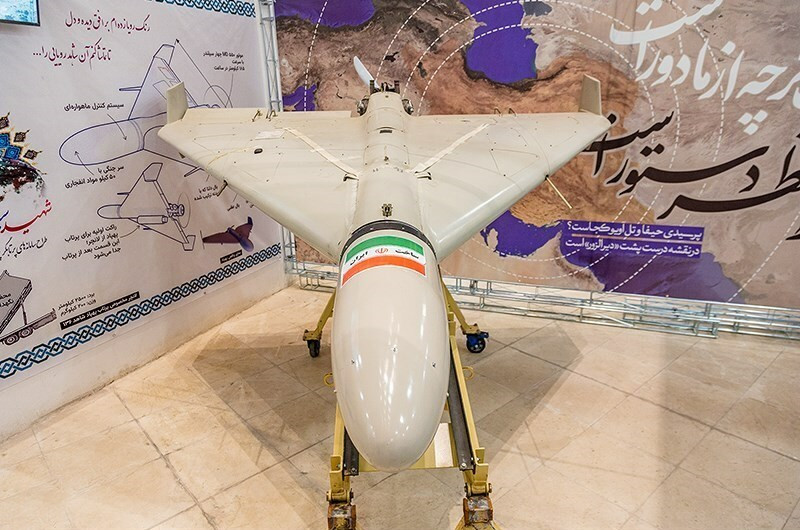
Nearly 1,500 drones in four days is the figure now defining Ukraine’s interceptor-production challenge. President Volodymyr Zelensky said Russia launched that many drones of all types at Ukraine, including about 800 jet-powered aircraft, during a four-day period ending August 30. Those totals are attributed to Zelensky and have not been independently verified.

The industrial consequence is clearer than the precise attack count: Ukraine has four interceptor-drone candidates for the faster aircraft, but it has not yet demonstrated that it can manufacture and field them at the required scale. Zelensky said one company has produced what he called the most successful design, without identifying the company, system, production rate or delivery schedule.
Four candidates are not yet a production system
Ukraine’s defense minister separately said the four potential interceptors have undergone field testing. The immediate task is to refine them and expand production into the thousands, according to an account of the minister’s update.
That distinction between a tested design and a fielded product matters. Scaling an unmanned aircraft requires more than duplicating an airframe. Manufacturers must secure repeatable supplies of propulsion units, flight-control electronics, communications hardware, sensors and batteries while maintaining consistent assembly and test standards. Operators also need compatible detection, command-and-control and training capacity. The available information does not establish how far any of the four candidates has progressed across those steps.
Multiple designs can be useful during development because they allow different engineering approaches to be evaluated. At the production stage, however, variety can complicate purchasing, maintenance, spare-parts support and operator training. Selecting a leading design or clearly assigning different roles to several designs can reduce that burden. Zelensky’s reference to one especially successful candidate suggests a possible production focus, but no selection or procurement decision was announced.
Faster drones change the capacity requirement
Zelensky described jet-powered drones as the most difficult group to intercept and said combat aircraft currently carry most of the responsibility for defending against them. That creates a readiness incentive to add an unmanned interception layer: every mission transferred to a suitable drone could reduce demand on crewed aircraft and their associated maintenance, fuel and support pipelines.
It does not follow that an interceptor drone can simply replace a combat aircraft. Faster targets impose tighter demands on detection, tracking, launch timing, propulsion and control reliability. An interceptor also has to be available where and when it is needed. The relevant measure is therefore not only how many units factories can complete, but how many serviceable systems can be distributed, supported and connected to the wider air-defense network.
Ukraine already has experience producing interceptors for other drone classes. Earlier in 2026, Ukrainian authorities said interceptor drones accounted for more than 70% of Shahed downings over Kyiv during February. They also reported that the country produced 100,000 interceptor drones in 2025 and had expanded overall production capacity eightfold. Those figures indicate an existing manufacturing base, but they do not prove that the newer, faster candidates can immediately use the same components, factories or operating model.
The broader economic case for interceptor drones is that they can offer a more scalable response to mass-produced aircraft than relying exclusively on expensive missile systems. Yet favorable unit economics only matter if production yield, reliability and field availability remain adequate as output rises. A cheap interceptor that cannot be delivered consistently or integrated with detection systems does not solve the capacity problem.
The 90% goal remains unproven
Zelensky set a goal of raising Ukraine’s drone shoot-down rate above 90% this fall. It is a future target, not a confirmed current capability. No present interception rate was supplied, and there was no technical breakdown showing how the four candidates, existing defenses and combat aircraft would combine to reach that level.
The reported four-day barrage illustrates why the missing production details matter. If the attributed total is accurate, the average was nearly 375 drones of all types per day, with about 200 jet-powered aircraft per day. Those averages do not describe the timing or composition of individual waves, but they show the scale that manufacturing and logistics may have to absorb.
Ukraine has moved beyond searching for a concept: it says four interceptor candidates have been field-tested. The unresolved milestone is whether one or more of those designs can progress from promising trials to repeatable production in the thousands while reducing reliance on combat aircraft and whether that capacity can arrive in time to support the stated fall interception goal.
| More aerospace and engineering stories, right in your MSN feed. Follow AMI on MSN |
By Stephen Wallace — Editor for AMI’s aerospace integration and unmanned mobility coverage, focused on drone manufacturing, VTOL systems, autonomous networks, and air-ground mobility links.