Delayed GE Engines Keep Tejas Fighter Deliveries at Zero Despite 30 Airframes
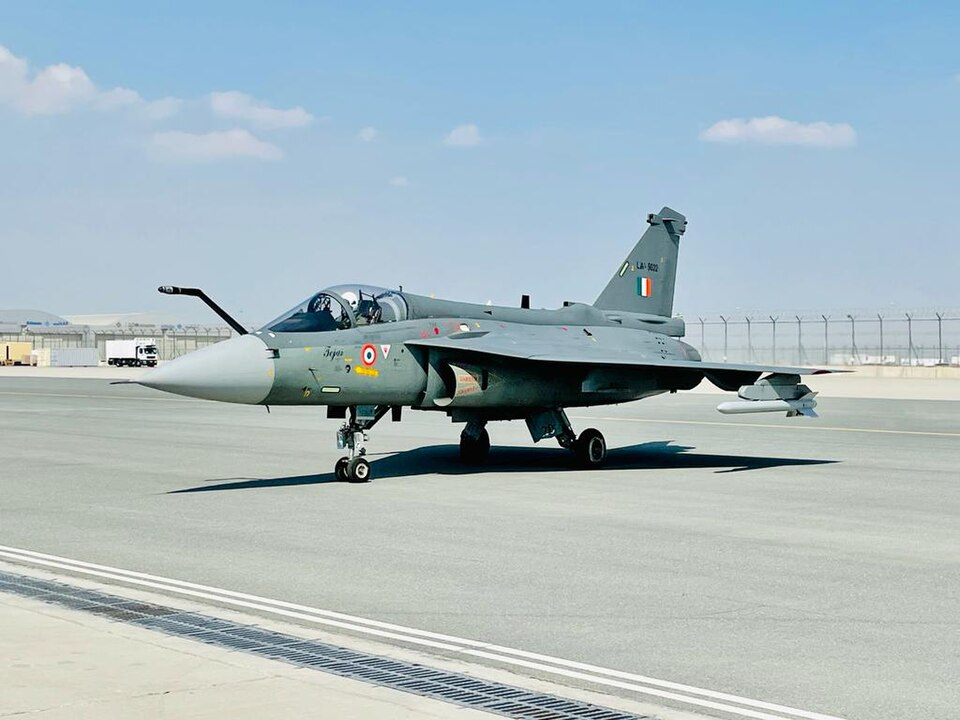
India has made substantial progress assembling its Tejas Mk1A fighter, but aircraft production has moved ahead of the propulsion supply needed to finish the job. By mid-2026, Hindustan Aeronautics Limited had manufactured and tested roughly 30 Mk1A airframes, while formal deliveries to the Indian Air Force remained at zero because of delayed General Electric F404 engines.

That does not mean all 30 aircraft are complete, without engines or incapable of flight. HAL says five are fully built to the contracted standard and ready for handover once their final requirements are met. Other aircraft are at different points in production, integration and testing, and only a handful of the required engines had reached India by the stated cutoff. The distinction matters: a tested airframe represents manufacturing progress, but it is not automatically a delivery-ready fighter.
One imported system governs the delivery pace
The Tejas Mk1A is a single-engine light fighter, so each aircraft requires one GE Aerospace F404-IN20 turbofan for final integration and acceptance work. The U.S.-built engine produces roughly 84 kilonewtons of thrust with afterburner and was customized for the Tejas application. Without a steady engine flow, HAL cannot convert its growing airframe inventory into a corresponding stream of formal handovers.
Engine installation is also more than placing a finished component into an otherwise complete shell. The propulsion system must be integrated with the aircraft’s fuel, electrical, control and monitoring architecture before the completed fighter proceeds through the applicable ground and flight checks. Airframe production capacity can therefore continue building work in process, but it cannot bypass the engine-dependent steps controlling final delivery.
The bottleneck traces partly to an interrupted industrial base. GE had delivered 65 F404-IN20 engines by 2016, then shut the variant’s production line because no additional orders were pending. After HAL ordered 99 more engines in 2021, GE had to restart a line that had been dormant for five years and re-engage its global supplier network during the pandemic. GE described that restart when it announced delivery of the first engine from the new order.
Restarting a military turbofan line is not equivalent to switching ordinary factory capacity back on. Specialized tooling, qualified suppliers, controlled materials and tightly documented manufacturing processes must all return at acceptable quality and repeatability. In this case, the consequence has extended beyond GE’s factory: delays at the engine level have constrained an entire aircraft delivery program after HAL’s airframe work had advanced.
More assembly lines cannot remove the engine constraint
HAL has three dedicated Tejas production lines, including two in Bengaluru and one in Nashik. That added capacity can increase the number of airframes moving through assembly, but it cannot independently resolve a propulsion shortage. Until engine receipts approach the airframe production rate, additional factory throughput risks expanding the queue of aircraft waiting for final integration rather than increasing Air Force deliveries at the same pace.
A batch of engines expected by the end of March 2026 missed that deadline, and HAL imposed liquidated damages on GE over delayed supplies. HAL has characterized the F404 dependency as having “no Plan B,” a concise description of the program’s immediate industrial exposure. Substituting another turbofan would not be a simple purchasing change; the fighter was designed, tested and configured around the F404-IN20.
HAL’s stated recovery plan depends on GE raising output. The company expects 24 engines during financial year 2026-27 and approximately 30 annually afterward. HAL Chairman and Managing Director Dr. D.K. Sunil said the manufacturer was targeting 12 aircraft deliveries by the end of the financial year because the airframes were ready and tested, leaving engine integration as the central remaining constraint. That target remains dependent on engines arriving and aircraft completing their required acceptance work.
The delay reaches an Air Force already short of squadrons
The Indian Air Force ordered 83 Mk1As in 2021 under a contract worth about ₹48,000 crore, and another 97 aircraft were cleared in 2025. The resulting program of roughly 180 fighters is intended to support fleet modernization as older aircraft leave service. The Air Force operates around 30 fighter squadrons against a sanctioned strength of 42, making each delivery slip consequential to its replacement schedule.
HAL and GE have also committed beyond the initial engine order. A roughly $1 billion agreement signed in late 2025 covers 113 additional F404 engines scheduled for delivery from 2027 through 2032. That contract supports the larger Tejas fleet plan, but it also extends the importance of a stable U.S. propulsion supply chain well into the next production phase.
The next meaningful milestone is therefore not another airframe count. It is whether GE’s planned ramp-up produces a sustained engine flow and allows HAL to turn accumulated manufacturing progress into the program’s first formal Air Force deliveries.
| More aerospace and engineering stories, right in your MSN feed. Follow AMI on MSN |
By David Whitaker — Associate editor for AMI’s aerospace and drone systems desk, translating flight systems, aircraft programs, spaceflight, and UAV developments into accessible technical stories.