After 21 Ukrainian Drone Strikes, Russian Refining Hits Reported 20-Year Low
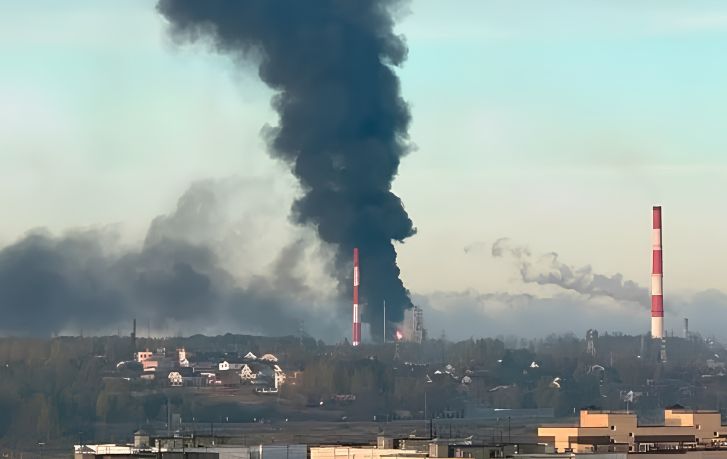
About 3.8 million barrels a day: That is the estimated average volume of oil processed by Russian refineries in August 2026 after at least 21 Ukrainian drone strikes during the month. EA Analytics put throughput at its lowest level in more than 20 years, well below Russia’s typical summer range of 5.3 million to 5.5 million barrels a day.
The estimate does not independently establish how much production each strike removed, and several impact figures remain attributed to analysts or an unnamed Bloomberg source. At the aggregate level, however, the numbers show the industrial pressure associated with a sustained long-range drone campaign: less crude converted into gasoline and diesel during a season when travel and agricultural activity normally raise demand.
A production problem, not simply a damage count
Refining throughput is the more meaningful measure because an attack count alone cannot describe operational consequences. A refinery may continue operating at reduced rates, shut down temporarily or recover after repairs. Conversely, disruption across several facilities can affect the national fuel system even when the status of individual plants remains unclear.
The August estimate represents a decline of roughly 1.5 million to 1.7 million barrels a day from Russia’s usual summer range. For context, the U.S. Energy Information Administration’s Russia profile says the country’s refineries processed 5.4 million barrels a day in 2024. That comparison makes the reported August rate an unusually deep national reduction rather than ordinary seasonal variation.
Public statements from both sides indicated that Ukrainian drones struck Russian refineries at least 21 times in August, the highest monthly count since Russia’s full-scale invasion began. Four of the country’s 10 largest refineries reportedly came under attack, although they were not identified in the aggregate reporting.
The scale matters for unmanned-systems analysis because repeated operations can create effects beyond any single event. Refining is a networked industrial process supported by maintenance crews, replacement equipment, utilities, storage and transportation. When interruptions recur across the network, recovery capacity must compete with continuing production requirements. The available figures do not reveal which constraint dominated, but the depressed national throughput indicates that Russia had not restored enough processing capacity to meet its normal summer level.
Domestic fuel demand took priority
An unnamed source familiar with the data said gasoline production and domestic supply fell almost 20% during the first three weeks of August compared with the same period in 2025. The same source put the decline in diesel production at more than 23% for August. Those estimates should be treated as attributed rather than independently verified, but they align with reports that gas-station lines returned in Moscow, the surrounding region and other parts of Russia.
Russia’s response illustrates how reduced refinery capacity propagates through an energy system. Diesel that might otherwise have been exported was retained for domestic use, limiting the decline in fuel available inside the country while transferring part of the shortage to export customers. Russia supplied about 10% of global diesel before the strikes, making that diversion relevant well beyond its borders.
The export pressure had already been developing before August. The Centre for Research on Energy and Clean Air found that Russian oil-product loadings fell to a record low in July, dropping 23% from June to 4.7 million metric tons. Its analysis said depressed refinery throughput and domestic demand taking priority pointed toward another export decline in August.
For the U.S. fuel system, the connection is indirect but tangible. Removing Russian diesel from international trade forces its established customers to seek replacement cargoes, increasing competition for output from other refining regions, including the United States. That does not mean the August drone campaign alone determines U.S. fuel availability; Middle Eastern disruptions, inventories, refinery closures and demand also shape the market. It does mean a domestic Russian production loss can become a global distillate-supply constraint.
Repeated strikes create a readiness burden
Twenty-one refinery strikes in one month also indicate persistent pressure on protection and recovery resources. At a high level, defending geographically distributed industrial sites requires continuous detection, response and repair readiness. The public data do not establish why particular drones reached particular facilities, so they cannot support conclusions about exploitable weaknesses or specific defensive failures. They do show that the overall protection system did not prevent a simultaneous national decline in processing.
A lull in the second half of July had allowed some recovery from an earlier fuel crisis, underscoring the importance of campaign tempo. Analysts expected throughput to rebound modestly to almost 4.2 million barrels a day in September. Even that would remain substantially below the normal summer range, and they cautioned that continued attacks at August’s pace could send refining lower again. The next decisive number is therefore not another strike tally, but whether Russia can sustain that projected recovery while keeping motorists supplied and diesel at home.
| More aerospace and engineering stories, right in your MSN feed. Follow AMI on MSN |
By Stephen Wallace — Editor for AMI’s aerospace integration and unmanned mobility coverage, focused on drone manufacturing, VTOL systems, autonomous networks, and air-ground mobility links.