Fifth Ukraine Drone Shutdown at Russia’s NORSI Refinery Leaves Lukoil Offline
Five shutdowns in less than five months have turned Lukoil’s NORSI refinery into a measure of cumulative industrial disruption. Reuters reported that crude processing stopped at the Kstovo plant in Russia’s Nizhny Novgorod region on August 26 after a reported Ukrainian drone strike. The outage left all of Lukoil’s major Russian refineries offline while fuel-purchase limits and distribution controls were already affecting several regions.
The earlier drone-related halts at NORSI occurred on April 5, May 20, June 24 and July 2. Ukraine’s General Staff claimed responsibility for the latest strike and said a fire followed. Industry sources told Reuters that processing units and other infrastructure were damaged, but Lukoil did not comment and no repair timetable was available. Those damage descriptions therefore remain attributed rather than independently confirmed.
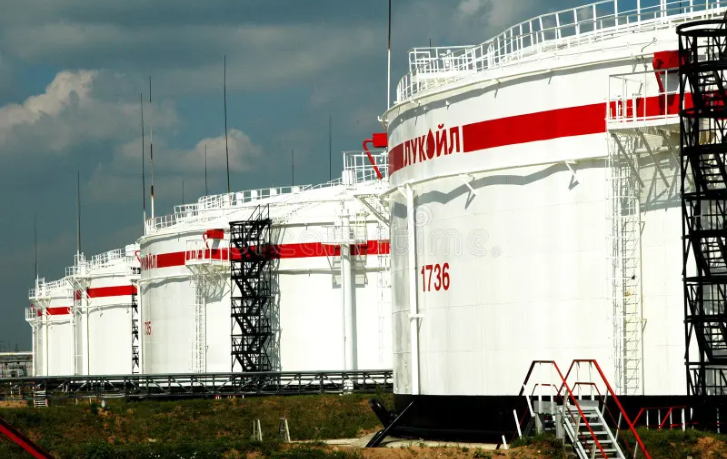
NORSI’s capacity makes the interruption more consequential than the number of shutdowns alone suggests. The refinery is described as Russia’s fourth-largest and its second-largest gasoline producer. It can process about 15 million metric tons of crude annually, producing roughly 5 million tons of gasoline and more than 5 million tons of diesel.
Installed capacity is not the same as available supply
Annual nameplate figures do not establish exactly how much fuel was lost on August 26. Output depends on operating rates, maintenance, inventories and the duration of the outage. But they show the scale of production exposed when a large refinery repeatedly stops, restarts and then stops again.
Refining is a connected manufacturing process, not a single machine that can necessarily resume at full output once an immediate interruption ends. Crude processing, intermediate conversion, product treatment, utilities and movement between plant sections must function together. Without a confirmed account of the affected equipment, it is not possible to assess the repair scope. The absence of a restart date is therefore the most important operational uncertainty.
A commercial signal appeared immediately after the shutdown: Lukoil listed no NORSI-produced gasoline, diesel or other petroleum products for sale on the St. Petersburg International Mercantile Exchange. That does not measure total inventories or prove that every customer went without fuel, but it indicates that output from one of Russia’s largest product sources was unavailable for normal exchange sales.
The company’s other outages compound that loss. Lukoil’s Perm refinery shut completely after an August 21 drone strike, while its Volgograd refinery stopped processing on July 31. The smaller Ukhta refinery remained active, but it did not change the broader status: every major Lukoil refinery in Russia was offline.
Distribution controls show where refinery losses reach motorists
Reported responses included gasoline-purchase limits in Moscow, St. Petersburg, Astrakhan and Orenburg, with a 30-liter cap across Rosneft’s filling-station network and odd-even license-plate rationing in parts of the country. Russia also planned to extend its diesel-export ban through September to preserve more supply for domestic use.
These measures illustrate the difference between national fuel availability and local deliverability. Existing inventories, output from other refiners and reduced exports can cushion a short outage. They cannot guarantee that the correct grade and volume of fuel will reach every regional storage terminal, filling station or public-service fleet on schedule. Distribution controls are intended to stretch available stocks and limit concentrated demand, but they also show that supply planning has moved beyond routine commercial allocation.
The wider refining system was already under substantial pressure. EA Analytics estimates cited by Bloomberg put Russian crude processing at about 3.8 million barrels per day in August, compared with a typical summer range of 5.3 million to 5.5 million barrels per day. That national estimate cannot be assigned entirely to drone-related outages, but it establishes the constrained operating environment into which NORSI’s fifth halt arrived.
Repeated disruptions create a readiness and repair burden
Nizhny Novgorod Governor Gleb Nikitin said Russian forces had repelled more than 40 drones and reported damage to an unnamed industrial enterprise, homes and cars. His statement did not identify NORSI. At a systems level, however, the reported scale shows the continuing demand placed on detection, interception and industrial-response resources without revealing operational methods or site vulnerabilities.
Repeated interruptions also create an industrial-capacity problem separate from the immediate event. Each outage can require inspection, repair planning, replacement components, specialist labor and a controlled restart. The available information does not establish whether the five NORSI shutdowns involved the same equipment or cumulative damage, so no specific maintenance conclusion is justified. What is confirmed is that the refinery’s large gasoline and diesel capacity has again become unavailable, with no public date for its return.
That unknown repair duration now matters more than the August 26 interruption by itself. A brief halt can be absorbed through inventories and redirected supply; an open-ended outage across Lukoil’s major refining network forces fuel distributors and regional services to plan without knowing when one of Russia’s biggest gasoline producers will resume shipments.
| More aerospace and engineering stories, right in your MSN feed. Follow AMI on MSN |
By Stephen Wallace — Editor for AMI’s aerospace integration and unmanned mobility coverage, focused on drone manufacturing, VTOL systems, autonomous networks, and air-ground mobility links.