Drone Attack Shuts Saudi East-West Pipeline Carrying 4% to 5% of Global Oil
A drone attack has forced Saudi Arabia to shut its 1,200-kilometer East-West oil pipeline, closing a strategic route that tracking companies and analysts estimated had been moving 4% to 5% of global oil supply. The pipeline is particularly important because it allows Saudi crude to bypass the Strait of Hormuz, a maritime route already under pressure from the region’s continuing conflict.
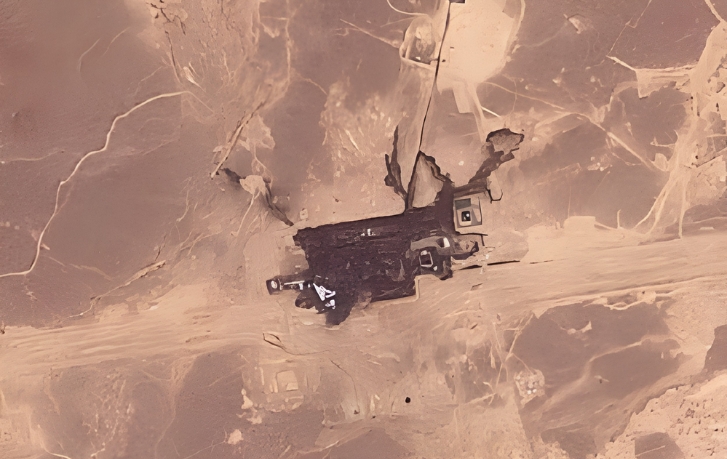
Saudi Arabia’s Energy Ministry confirmed the precautionary shutdown on Friday, September 11, after several drones struck sites in the Riyadh and Medina regions the previous morning. The Foreign Ministry said the attack caused injuries and material damage, but officials had not disclosed the number of people injured, the damaged equipment, the amount of pumping capacity affected or a timetable for reopening.
Emergency and technical teams began securing the system and assessing whether it could operate safely. Calling the closure precautionary does not establish that the entire pipeline suffered extensive damage. It means authorities stopped pumping while inspecting the affected sites and the wider transportation system.
Iraq confirms the drones came from Maysan
Iraqi authorities acknowledged that the drones were launched from Maysan, a southeastern Iraqi province bordering Iran. Iraq’s prime minister’s office said the province’s operations commander was removed after officials confirmed the origin of the attack.
By September 13, Iraqi authorities said security forces had also located and seized a launch platform allegedly used in the attack. Forensic and technical work was continuing to identify those responsible. The confirmed launch location does not, by itself, establish who operated the drones or ordered the attack.
Saudi Arabia said it would not retaliate at this stage following a call from Iraq’s prime minister, although its Foreign Ministry reserved the right to “take all measures necessary” to protect Saudi interests and critical facilities.
A pipeline built to avoid a maritime bottleneck
The East-West pipeline, also known as Petroline, runs about 1,200 kilometers, or 745 miles, across Saudi Arabia. Operated by Aramco, it moves crude from the kingdom’s eastern production and processing region toward refineries, storage sites and export terminals at Yanbu on the Red Sea coast.
That geography is the system’s central strategic value. Saudi Arabia can move oil west without first sending tankers through the Strait of Hormuz. The pipeline therefore serves as an overland alternative when traffic through the strait is restricted or considered too risky.
The system has a stated maximum pumping capacity of approximately 7 million barrels per day, but that figure should not be confused with the amount of oil lost during the shutdown. About 2 million barrels per day of capacity is directed toward western refineries, and tanker-tracking estimates indicate that recent Yanbu loadings remained well below the pipeline’s theoretical maximum.
Vortexa estimated that crude and condensate loadings at Yanbu reached about 3.7 million barrels per day in early September, up from 3.2 million in August. Kpler estimated September loadings at roughly 2.9 million barrels per day, compared with about 1.5 million in August. The difference reflects the companies’ respective tracking and calculation methods.
Those estimates explain why the reported 4% to 5% share of global supply is more useful than simply treating all 7 million barrels of capacity as interrupted exports. Actual effects will depend on how much crude was moving when pumping stopped, how long inspections and repairs take, and how much oil can be managed through storage or other routes.
The alternative route now faces its own constraint
The shutdown arrived while maritime transportation around the Arabian Peninsula was also under strain. Houthi militants claimed control of the Bab al-Mandab Strait, the gateway between the Red Sea and the Gulf of Aden, and asserted that navigation remained safe except for Saudi vessels. Those navigation and control claims have not been independently established.
Oil prices moved above $100 a barrel for the first time since July, although the pipeline closure alone cannot be isolated as the cause amid the broader regional conflict and shipping pressure.
The immediate engineering question is narrower than the market reaction: whether inspections find damage to equipment needed for safe, sustained pumping. Until Saudi authorities disclose the affected capacity and a reopening schedule, the duration of the interruption remains unresolved. For now, a pipeline intended to preserve oil movement when Hormuz is constrained has itself become unavailable at the moment its bypass function matters most.
| More aerospace and engineering stories, right in your MSN feed. Follow AMI on MSN |
By Stephen Wallace — Editor for AMI’s aerospace integration and unmanned mobility coverage, focused on drone manufacturing, VTOL systems, autonomous networks, and air-ground mobility links.