Ukrainian Air Force Says Russian Drone Upgrades Force Continual Defense Changes
Ukraine’s air defenses face a difficult engineering mismatch: defensive systems must remain effective for years, while the drones challenging them can change within months. Gen. Anatolii Kryvonozhko, head of the Ukrainian Air Force, said improved Russian navigation and onboard protection are already forcing Ukraine to revise tactics that worked earlier in 2026.

“Tactics that were used even at the beginning of 2026 are not effective anymore,” Kryvonozhko said at the Swedish Air Force’s Air and Space Power Symposium in Linkoping on Aug. 21. He attributed that loss of effectiveness to Russia’s improved analysis and decision-making as well as technical changes to one-way attack drones, including better navigation, flares and electronic-warfare self-protection.
Drone upgrades shorten the life of a defensive solution
The readiness problem is broader than any single drone model or countermeasure. One-way attack drones now operate alongside first-person-view drones, uncrewed surveillance and logistics aircraft, glide bombs, cruise missiles and ballistic missiles. Each category places different demands on sensors, command networks and interceptors.
From a systems perspective, that means a successful defense cannot be treated as a fixed product. Detection equipment must continue distinguishing changing targets, command systems must distribute usable information quickly, and defensive measures must remain available in sufficient numbers. An improvement in the incoming drone’s navigation or self-protection can weaken one or more parts of that chain without making the entire defensive network visibly obsolete at once.
This adaptation cycle also complicates procurement. A counter-drone system selected against today’s configuration can arrive after the threat has changed. A 2026 analysis of Europe’s planned drone defenses warns that long acquisition schedules and incompatible systems could produce equipment designed around problems that have already moved on. Ukraine’s experience gives that warning an immediate operational context: hardware, software, training and command rules have to evolve together.
Airfield dispersal does not eliminate disruption
Ukraine has distributed aircraft operations across multiple locations to reduce dependence on a small number of major bases. That approach can improve resilience, but it creates another requirement: each operating location needs protection and the people, sensors and communications needed to sustain it.
Kryvonozhko said even a small number of drones can prevent an airfield from operating at full capacity. That does not necessarily require the loss of an aircraft or the closure of a runway. Drone activity can still disrupt the timing, support and local coordination needed to generate flights. As he put it, “You cannot tell that you are safe if you are far away from the front line.”
The practical consequence is a wider protection burden. Dispersing aircraft may reduce concentration risk, but it also spreads demand for local anti-drone defenses across more sites. Every additional location adds requirements for surveillance, trained crews, communications, maintenance and decision authority. Those resources cannot simply be duplicated without cost or delay.
Ukraine is changing command as well as equipment
Ukraine’s response has included delegating more authority to tactical-level air-defense commanders. Kryvonozhko said that change shortened response times and allowed commanders to manage defensive batteries and operating sectors more effectively.
This is an organizational answer to a technical problem. A distributed drone threat can develop faster than information moves through a heavily centralized command structure. Delegation can reduce delay, but it also raises demands for reliable communications, common operating information, training and clear authority. Faster decisions remain useful only when local commanders have an accurate picture and understand how their actions fit into the larger air-defense network.
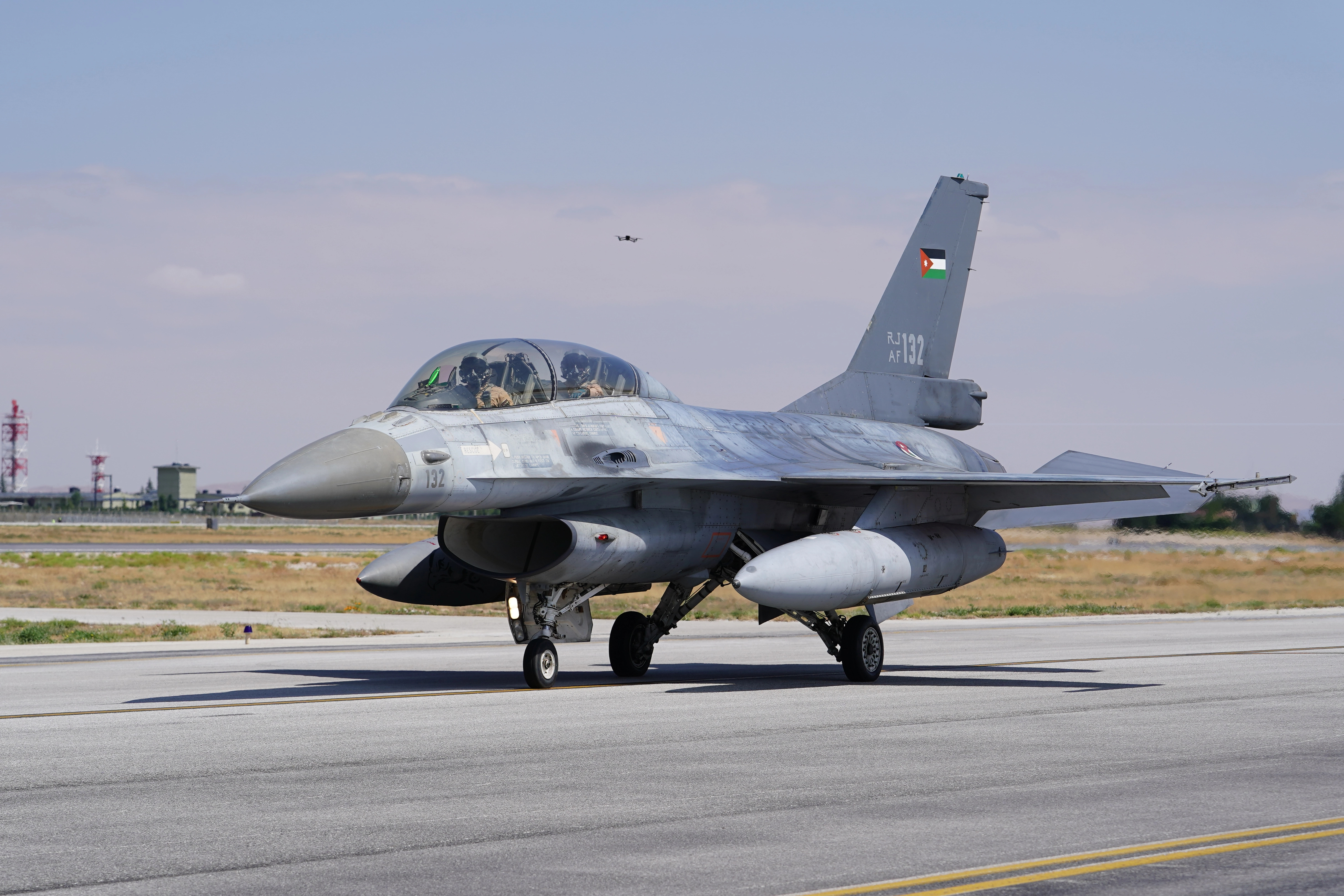
The Ukrainian Air Force is managing that adaptation while operating donated Lockheed Martin F-16s and Dassault Mirage 2000s, which Kryvonozhko said have been tested in combat. Those aircraft add capability, but they also depend on functioning airfields and a broader defensive system able to protect operations across dispersed locations.
Interceptor supply remains another hard limit. Kryvonozhko said shortages of Patriot interceptors are making Russia’s increasing ballistic-missile attacks difficult to engage. Drone defenses cannot substitute for every missile-defense function, while scarce high-end interceptors must be preserved for threats requiring their speed and capability.
The resulting contest is not simply between one drone and one interceptor. It is between two rates of change: how quickly an attacker can alter navigation, protection and operating methods, and how quickly a defender can update sensors, command practices, airfield protection and interceptor inventories. Kryvonozhko’s assessment is that equipment alone is insufficient. Ukrainian air-force readiness increasingly depends on whether the whole defensive organization can adapt before its latest solution reaches the end of its increasingly short useful life.
| More aerospace and engineering stories, right in your MSN feed. Follow AMI on MSN |
By Stephen Wallace — Editor for AMI’s aerospace integration and unmanned mobility coverage, focused on drone manufacturing, VTOL systems, autonomous networks, and air-ground mobility links.