U.S. Missile Delays Could Reach Five Years as Swiss Patriot Cost Doubles
The central tension in the American missile pipeline is no longer just how many interceptors can be built. It is who gets them first and who absorbs the cost when the queue changes. European allies were reportedly warned that deliveries of some U.S. cruise missiles and air-defense interceptors, specifically Tomahawk and Patriot missiles, could slip by as much as five years while American inventories are rebuilt.
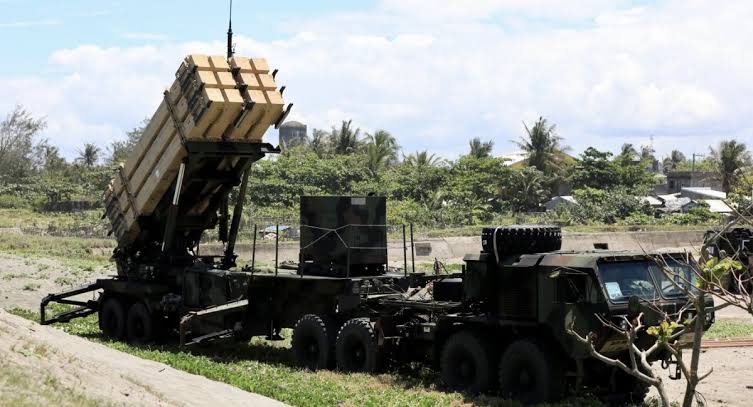
Switzerland shows the buyer-side consequence. It ordered five Patriot air-defense systems in 2021 for $2.5 billion and has reportedly paid more than $800 million in advances. Delivery has since been postponed, while the estimated bill has climbed to $5.88 billion. That is more than double the original figure before the systems have arrived.
A purchase does not remove priority risk
Long-lead defense procurement is often described like an ordinary factory backlog: place an order, secure a production slot and wait. Patriot procurement is more complicated because government priorities can reorder deliveries after an agreement is underway.
Switzerland was reportedly told in 2025 that its delivery would be delayed as Ukraine received priority. Its place in the queue was later moved behind Germany, which had transferred Patriot systems to Ukraine and sought replacements. Swiss efforts to mitigate the delay through Germany subsequently failed, according to Swissinfo’s account of Swiss public broadcaster SRF’s reporting.
The practical distinction is between buying a system and controlling its delivery priority. An allied customer may have made substantial advance payments, but U.S. security decisions and urgent replacement demands can still change the sequence. For planners, that means the nominal delivery schedule is partly exposed to events outside the purchasing country’s control.
Switzerland’s revised timeline illustrates the scale of that exposure. Swiss procurement chief Urs Loher said the systems were not expected before the early 2030s, with the changed situation delaying delivery by at least six years to 2032. The precise final schedule and contract terms remain unsettled.
Foreign Military Sales shift risk differently
The reported cost increase also highlights the structure of U.S. Foreign Military Sales. These are government-to-government transactions rather than direct commercial contracts between the foreign buyer and the manufacturer. The arrangement provides state oversight and access to established U.S. acquisition channels, but it does not necessarily lock the final price at the initial estimate.
That distinction matters when inflation, configuration changes and shortages accumulate across a multiyear delay. A buyer may continue funding the acquisition while the eventual cost moves upward. The arrangement also does not provide the ordinary delay penalties a commercial customer might seek directly from a manufacturer, limiting the buyer’s contractual leverage when government priorities alter the schedule.
For taxpayers, the fairness question is straightforward even if the contract mechanics are not: Switzerland has committed more than $800 million, yet it could receive the systems years later and at a much higher total cost. Walking away could jeopardize money already advanced and complicate relations with Washington. Staying in preserves the acquisition but leaves the government exposed to further schedule and price uncertainty.
Production expansion will take time
The industrial response is substantial, but it does not immediately clear existing orders. On Aug. 31, the U.S. government announced seven-year agreements with General Dynamics and Lockheed Martin intended to triple production capacity for the PAC-3 MSE interceptor used with Patriot and quadruple capacity for THAAD interceptors.
Those frameworks give suppliers minimum annual quantities, supporting investments in workers, bulk materials and facilities. Yet the funding remains subject to annual appropriations, and capacity is not the same as immediate output. Specialized components, qualified labor and production infrastructure must be expanded before higher annual rates translate into delivered missiles.
A Pentagon inspector general assessment adds official weight to the industrial constraint. It identified strategic inventory shortfalls and bottlenecks in replenishment, including solid rocket motors, high-grade explosives, propellants and skilled manufacturing labor. The White House has disputed broader claims that the U.S. lacks enough munitions for its requirements, while the inspector general’s finding addresses shortfalls and resupply constraints rather than publishing exact inventories.
The reported five-year warning should therefore be read as a procurement-risk signal, not a precise delivery date for every allied order. It covers specified scarce missile categories, while exact schedules depend on system, contract and government priority. Claims that the warning also included other missile families remain assessments, not confirmed elements of the notification.
For Switzerland, the next decisive step is contractual: its defense ministry must reach an amended or new arrangement with the United States. Until that is signed, neither the final $5.88 billion estimate nor an early-2030s delivery should be treated as fully settled leaving a buyer that has already advanced more than $800 million without a firm final price or near-term arrival date.
| More aerospace and engineering stories, right in your MSN feed. Follow AMI on MSN |
By David Whitaker — Associate editor for AMI’s aerospace and drone systems desk, translating flight systems, aircraft programs, spaceflight, and UAV developments into accessible technical stories.