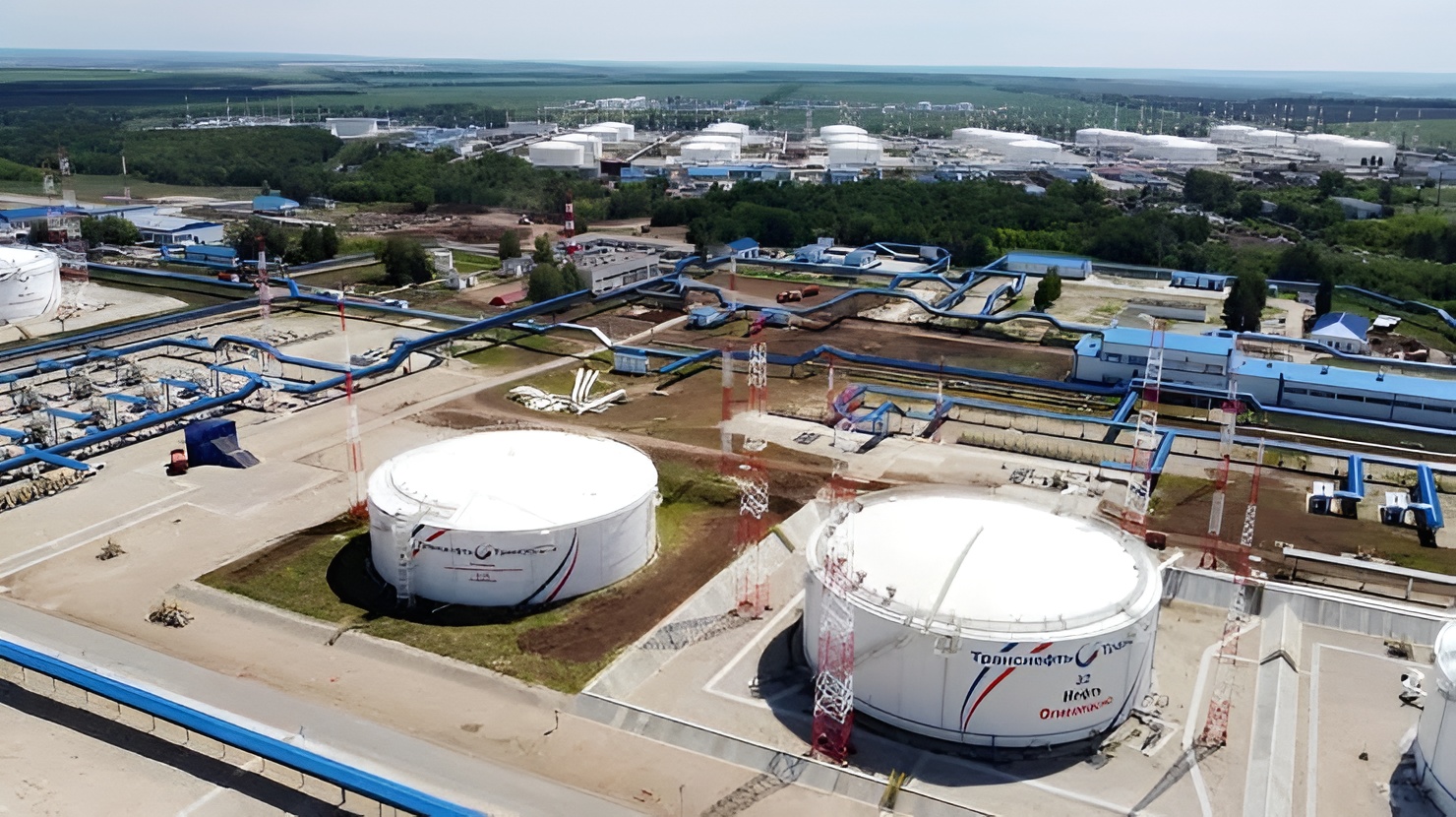
Russian Fuel Imports Hit Record as Drone Strikes Depress Refining
Russia imported a record 172,000 tonnes of refined fuel in August 2026, more than seven times its previous monthly high. The total was also three times the country’s fuel-import volume for all of 2025, according to an August trade analysis by the Centre for Research on Energy and Clean Air.
The import surge followed sustained disruption to Russian refining attributed to Ukrainian drone strikes and expanded Moscow’s efforts to protect domestic supplies beyond export restrictions. Purchases included fuel from South Korea and gasoline made in India from Russian crude, then shipped back to Russia a costly reversal for a country that historically exported large volumes of refined petroleum products.
The composition of the imports shows where the immediate pressure was concentrated. Gasoline represented 74% of Russia’s imported oil products in August, compared with 6% across 2023 through 2025. India supplied 70% of the total import volume and 94% of the imported gasoline, including 120,000 tonnes loaded at the Vadinar refinery. CREA reported that Vadinar sourced all its crude from Russia during the first eight months of 2026.
South Korea provided another 18,000 tonnes of oil products, mostly gasoil. That was 41% above the previous post-invasion monthly record set in July and eight times the three-year monthly average. The Korean trade has a distinct logistical role: it supplies Pacific ports that can be difficult to serve from Russia’s principal refining and distribution centers.
Imports add flexibility, but not replacement capacity
The 172,000-tonne record is significant because Russia usually imports very little refined fuel. Its average seaborne imports were below 5,000 tonnes per month from 2023 through 2025, and no imported cargoes arrived at Russian ports during 13 of those 36 months. August therefore represents more than a routine fluctuation in trade; it marks the use of foreign refining and long-distance transport as an additional layer in the domestic supply system.
Even so, imported cargoes do not replace an operating refinery on equal terms. NORSI, Lukoil’s refinery in Kstovo, can process about 15 million tonnes of crude annually and produce roughly 5 million tonnes of gasoline and more than 5 million tonnes of diesel. Reuters reported that crude processing stopped after a Ukrainian drone strike on August 26, the plant’s fifth drone-related shutdown in under five months. Industry sources reported damaged processing units and infrastructure, but no repair timetable was available, and Lukoil did not respond to a request for comment.
That repeated-stop pattern matters more than any single outage. Refining is a linked production system: crude must first be processed, then upgraded into fuels that meet required performance and quality standards. A plant may restore some throughput without immediately recovering its normal mix and volume of gasoline and diesel. The precise condition of NORSI’s units remains unconfirmed, so the duration and product impact of its latest shutdown cannot yet be determined.
The wider Lukoil network offered limited redundancy at that point. Its Perm refinery had shut after an August 21 strike, while Volgograd had stopped processing on July 31; the smaller Ukhta refinery remained active. After the NORSI stoppage, Lukoil reportedly offered no NORSI-made gasoline, diesel or other petroleum products on the St. Petersburg International Mercantile Exchange. That absence is a direct distribution consequence even before the full repair scope is known.
A supply chain running in reverse
Buying back fuel refined from Russian crude illustrates the industrial cost of losing domestic conversion capacity. Crude can still be exported, but turning it into usable gasoline abroad adds refinery services, freight and handling before the product returns to Russian consumers. Imports can bridge regional gaps and protect priority demand, yet they create longer supply lines and expenses that domestic production would avoid.
The record imports also sit alongside emergency controls. Purchase limits were reported in several regions, including a 30-liter cap across Rosneft’s filling-station network, while Russia planned to extend its diesel-export ban through September. Those measures reserve more domestic output; imports add physical supply. Together they indicate that allocation controls alone were not sufficient to provide the desired buffer.
The International Energy Agency expects the constraint to persist, lowering its forecast for Russian refinery throughput to an average of 4 million barrels per day for the remainder of 2026 and for 2027. That is a forecast rather than a confirmed outcome, and repair progress or further outages could change it. For now, the sharpest verified measure of the reversal is August’s trade flow: 172,000 tonnes imported by a refining power that previously had little reason to buy finished fuel abroad.
| More aerospace and engineering stories, right in your MSN feed. Follow AMI on MSN |
By Stephen Wallace — Editor for AMI’s aerospace integration and unmanned mobility coverage, focused on drone manufacturing, VTOL systems, autonomous networks, and air-ground mobility links.