Ukraine Says Russian Attacks Damaged or Destroyed 500 Locomotives, Straining Rail Freight
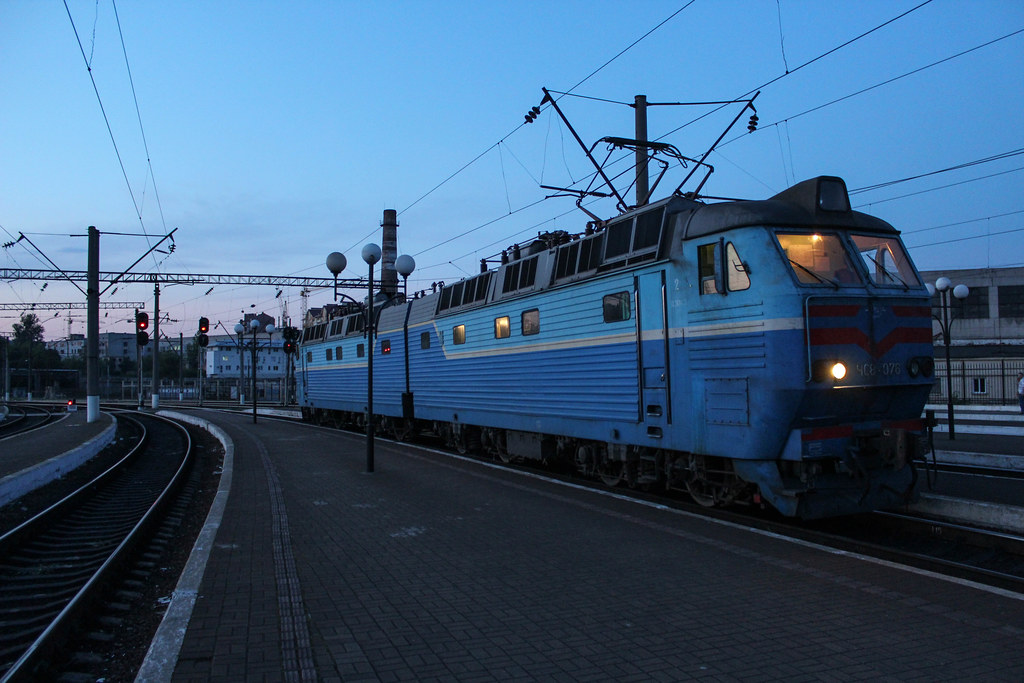
Ukraine’s railway can often route trains around a damaged track or junction. It cannot reroute around a shrinking locomotive fleet. Foreign Minister Andrii Sybiha says Russian attacks have damaged or completely destroyed more than 500 Ukrainian locomotives since the full scale invasion began, with more than half of that reported toll occurring during 2026.

That loss threatens far more than passenger schedules. Around 60% of Ukraine’s freight, roughly 37% of its passenger transportation and an estimated half of its exports move by rail, according to Centre for Transport Strategies director Serhiy Vovk. Locomotives supply the traction capacity connecting all of those movements, so losing them can constrain the network even when the rails themselves remain usable.
The immediate warning came on September 13, when a Russian drone struck the locomotive of a Kyiv–Warsaw passenger train near Yahodyn, approximately two kilometers from Poland. No casualties were reported. National operator Ukrzaliznytsia said its monitoring team detected the threat early enough for the locomotive crew to evacuate.
The casualty free outcome demonstrated the value of monitoring and evacuation procedures, but it did not remove the equipment loss. It also showed why attacks reaching western Ukraine matter at a network level: this region contains border connections supporting passenger traffic and trade, although its route redundancy allows some trains to bypass damaged crossings and junctions.
Route redundancy does not create more pulling power
A railway’s capacity depends on several linked resources: intact track, signaling, terminals, rolling stock and trained personnel. Alternate routes can reduce the effect of losing one physical connection, but every rerouted train still requires a compatible locomotive and crew. A longer diversion can also occupy those resources for more time, reducing how many trips they can complete.
Passenger trains generally receive priority. That protects civilian mobility, but the resulting congestion can accumulate out of public view. “A passenger train may arrive six hours late after an attack, while five or six freight trains behind it can remain waiting for hours for capacity to reopen,” Vovk said.
The distinction is important for businesses and exporters. A passenger delay is visible on a timetable, while delayed freight may appear as missed loading windows, slower deliveries or cargo waiting elsewhere in the supply chain. With rail carrying about 60% of national freight, repeated locomotive losses can spread disruption across routes that were not directly damaged.
European locomotives are not simple drop-in replacements
Ukraine uses a 1,520 millimeter rail gauge, limiting the direct deployment of most European locomotives built for a different gauge. Sybiha has asked international partners to help locate compatible locomotives and finance faster procurement. That compatibility requirement narrows the replacement pool at the same time Ukraine is trying to restore a fleet under continuing pressure.
Hardware is only part of the constraint. Ukraine is also short of about 10% of the locomotive crews it needs, according to Vovk. Drivers require extensive qualification, route knowledge and operating experience. “You cannot train a qualified driver in a year,” he said. Replacement equipment therefore cannot restore full capacity unless enough trained people are available to operate it.
Ukrzaliznytsia is adapting its operations as attacks continue. Rules effective September 18 allow trains to keep moving during lower level air threats rather than stopping automatically. Under the highest threat level, boarding and disembarkation are suspended while passengers and staff move to shelters. The operator is also dispersing rolling stock and passenger flows, developing protected facilities at major junctions and exploring greater use of electronic warfare systems.
Those measures balance two competing risks: keeping trains moving preserves network capacity, while stopping or evacuating can protect people during a serious threat. Each interruption, however, consumes timetable margins and can leave locomotives, crews and freight out of position for later services.
Winter will make that balance more consequential. Vovk warned that a train stopped for hours in freezing conditions can become a safety problem, particularly for children and older passengers. Ukraine’s railway can use alternate tracks to recover from some infrastructure damage, but more than 500 reported locomotive losses and a shortage of qualified crews represent a capacity gap that detours alone cannot solve.
| More aerospace and engineering stories, right in your MSN feed. Follow AMI on MSN |
By Stephen Wallace — Editor for AMI’s aerospace integration and unmanned mobility coverage, focused on drone manufacturing, VTOL systems, autonomous networks, and air-ground mobility links.