Amadeus Outage Grounds Some Southwest Flights, Forces Manual Passenger Processing
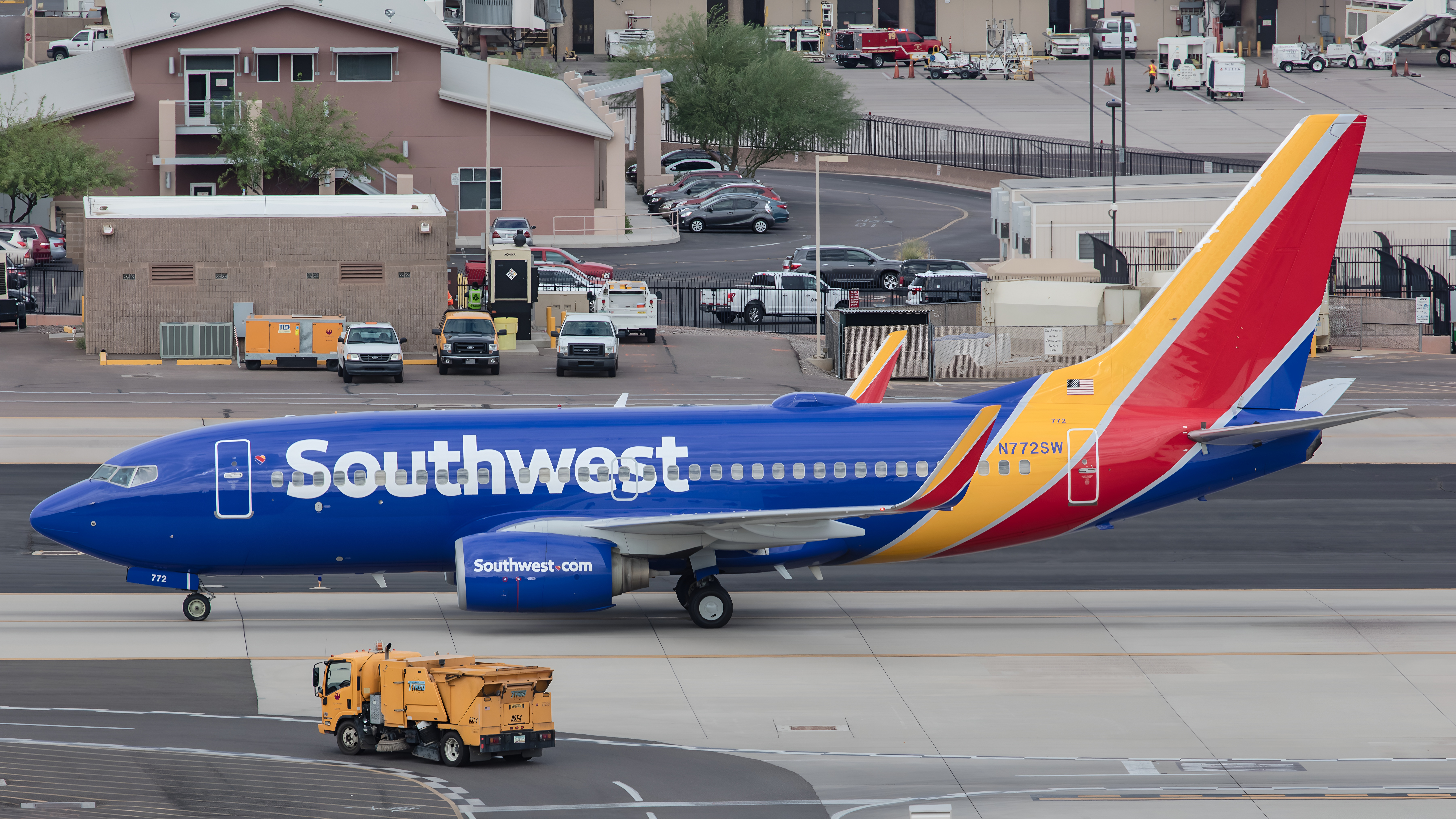
A passenger-service platform connects several airport tasks that travelers experience as separate steps. When that shared digital layer becomes unavailable, check-in, baggage acceptance and boarding can all slow at once. That is what happened Friday when an Amadeus technology interruption affected Southwest Airlines, temporarily grounding some flights and forcing employees to check bags and board passengers manually.

The interruption created long lines and problems with check-in, Southwest’s app, boarding and online baggage payments. Travelers reported that boarding passes could not be scanned and that some baggage tags had to be written by hand. Southwest disputed broader claims that every flight had been halted nationwide, saying flights were instead slowed by the manual procedures. No verified total for grounded, delayed or canceled flights was provided.
Reports collected by outage-monitoring service Downdetector began shortly after 8 a.m. Eastern Time and appeared to peak around 8:50 a.m. before easing. Those reports indicate the timing of customer-visible trouble, not a complete technical record of the failure. Some passenger problems reportedly continued for more than an hour after the disruption began, with temporary outages and airport lines reported in California, Florida, Maryland, Ohio, Tennessee and Utah.
One back-end interruption reached several airport functions
Amadeus supplies back-end technology supporting airline bookings, check-in, boarding and baggage handling. These functions form a connected processing chain: a reservation must be recognized, the passenger’s check-in status must be updated, baggage must be associated with the journey and boarding credentials must be validated. The incident does not establish that every component failed independently. It does show how disruption at a shared provider can become visible at several passenger touchpoints at approximately the same time.
That coupling matters operationally. A traveler may encounter the problem through an app or payment page, while an airport employee experiences it through an unavailable scanning or baggage-processing function. The visible symptoms differ, but they can originate beyond the airline’s passenger-facing software. In this case, Amadeus attributed the issue to an unspecified third-party technology provider and said its teams worked with that provider to restore normal operations.
Neither Amadeus nor Southwest identified the third party or described the precise technical failure. It therefore remains unclear which service became unavailable, whether the disruption affected a communications path or computing service, and how the recovery was validated across the affected functions. Those distinctions would be necessary before drawing conclusions about architecture, redundancy or responsibility.
Manual processing preserved movement, but at lower capacity
Southwest’s fallback procedures allowed employees to continue accepting baggage and boarding flights while full functionality was restored. That is an important form of operational resilience: the automated process was unavailable, but the airline retained a reduced-capability method of moving passengers and bags through the airport.
Manual fallback, however, cannot be assumed to match the speed of automated processing. Scanners and connected systems normally reduce repetitive data entry and keep status information synchronized across multiple workstations. Replacing those functions with handwritten or individually handled transactions adds time to each passenger interaction. Even a short interruption can therefore produce queues that remain after the underlying service returns, because employees must work through the accumulated demand.
The episode also highlights a human-factors constraint. Airport workers must shift from routine automated workflows to procedures that may be used infrequently, while simultaneously managing growing lines and passengers concerned about missing flights. The existence of a fallback is only one part of resilience; staffing, training, communication and the rate at which the manual process can handle passengers determine how useful it is during an actual outage.
Similar vendor-related disruptions were reported at United and Delta earlier in the week, but no common cause has been established. Connecting those events to the Southwest interruption would require additional technical findings from the airlines or their providers.
Normal operations were restored, according to Amadeus, but the central engineering questions remain open: which third-party dependency failed, how widely it propagated through Southwest’s passenger-processing functions, and how much airport capacity the manual procedures could preserve. Friday’s lines demonstrated the practical boundary clearly a manual fallback can keep an airline moving, but it does not make a shared digital outage operationally invisible.
| More aerospace and engineering stories, right in your MSN feed. Follow AMI on MSN |
By Thomas Caldwell — AMI’s senior editor for mechanical and mobility engineering, covering vehicle electronics, systems integration, electrification, chassis systems, propulsion, and safety policy.