U.S. Approval Delay Holds Up Patriot Missiles as Ukraine Reports Few Left
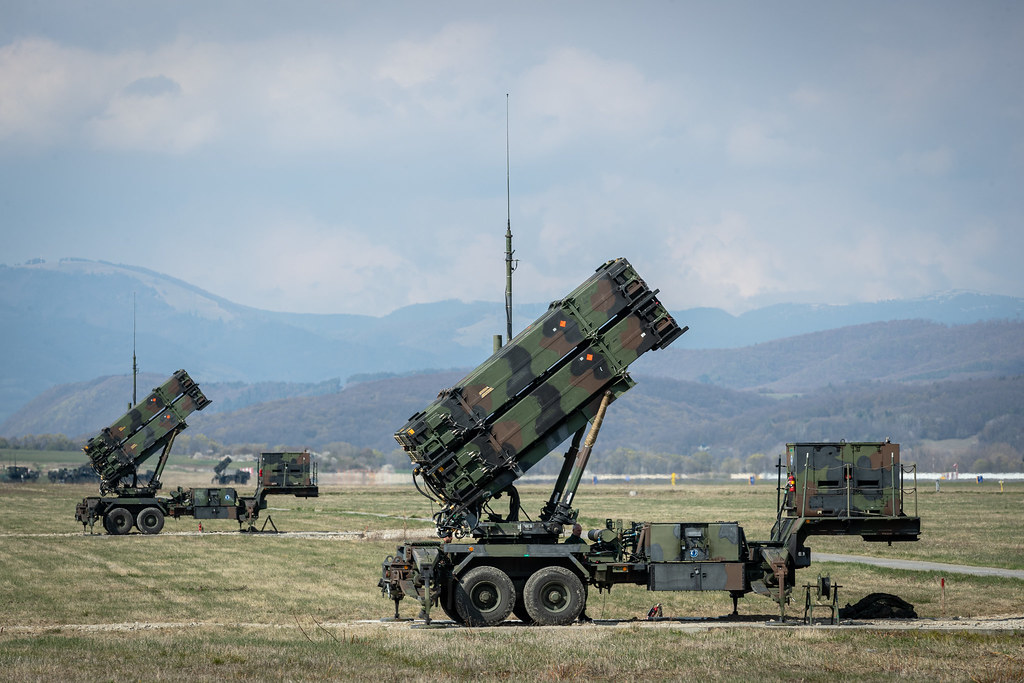
A Patriot interceptor already held by a U.S. ally cannot simply be redirected to Ukraine. Because it is an American-made defense article supplied under U.S. export terms, the country holding it must first obtain written American consent. That requirement has become a delivery bottleneck while a Ukrainian official says “only a couple” of the interceptors remain in the country.

The U.S. administration has not completed approval for at least some proposed transfers from countries willing to provide missiles, according to a U.S. official and three other people familiar with the diplomatic exchanges who spoke on condition of anonymity. Defense Secretary Pete Hegseth has not formally rejected the transfers, they said, but the steps needed to authorize them remain unfinished.
This is the practical effect of America’s control over the secondary movement of exported weapons. The State Department’s third-party transfer process requires recipients to obtain prior written consent before transferring U.S.-origin defense equipment or changing its authorized destination or end use. Requests are reviewed individually through legal, policy and interagency channels.
Ownership does not provide transfer authority
An allied government may hold title to a Patriot interceptor and be willing to release it, but that does not give it unilateral authority to select a new recipient. The government seeking to divest the equipment must submit a formal request identifying the items, their origin, the proposed recipient and intended use. U.S. officials then review the request under arms-transfer laws and the conditions attached to the original export.
That system serves continuing security, end-use and accountability requirements. It also inserts an administrative decision point between an ally’s offer and physical delivery. In this case, missiles reportedly available in other national inventories cannot move until Washington signs off, regardless of the urgency described by Kyiv.
The inventory claim is especially consequential because Patriot is one of Ukraine’s defenses against ballistic missiles aimed at cities and infrastructure. An unnamed Ukrainian official told The Washington Post last week that “only a couple” of interceptors remained. Ukraine has reportedly faced critically low Patriot stocks since the summer, while President Volodymyr Zelensky said Russia launched 16 ballistic missiles on Monday. Those inventory and attack figures are Ukrainian accounts.
Production cannot quickly erase the shortage
Ukraine generally receives newly produced Patriot interceptors in small batches. That delivery pattern has pushed Kyiv and its partners to look for missiles already held in other countries, a potentially faster source than waiting for additional rounds to emerge from production. The outstanding U.S. approval prevents that inventory-balancing approach from producing an immediate readiness gain.
The constraint extends beyond paperwork. Global Patriot inventories are under substantial pressure from the U.S. war in Iran, while the United States and other operators have their own stockpile requirements. Hegseth said the U.S. posture toward Ukraine had not changed, but emphasized that American forces also need Patriot interceptors and that Washington wants to maximize its own holdings. Officials also said he has continued approving some other forms of U.S. assistance to Ukraine.
Those competing demands explain why spare missiles are difficult to identify, but they do not remove the distinction between scarcity and authorization. Production capacity determines how quickly the total pool can grow. Retransfer approval determines whether an interceptor already inside that pool can move from one operator to another. Ukraine is currently constrained by both.
Blanket retransfer arrangements can streamline movement among specifically named participating countries and equipment covered by a particular acquisition case. They are not universal permission to redirect national stocks, add a new recipient or change an end use. Separately purchased missiles remain governed by the export conditions under which each country acquired them.
The immediate next milestone is therefore administrative rather than industrial: completion, approval or denial of the pending transfer requests. Until Washington acts, allied-held Patriot interceptors remain unavailable to Ukraine even as its reported stockpile sits at only a couple of missiles.
| More aerospace and engineering stories, right in your MSN feed. Follow AMI on MSN |
By David Whitaker — Associate editor for AMI’s aerospace and drone systems desk, translating flight systems, aircraft programs, spaceflight, and UAV developments into accessible technical stories.