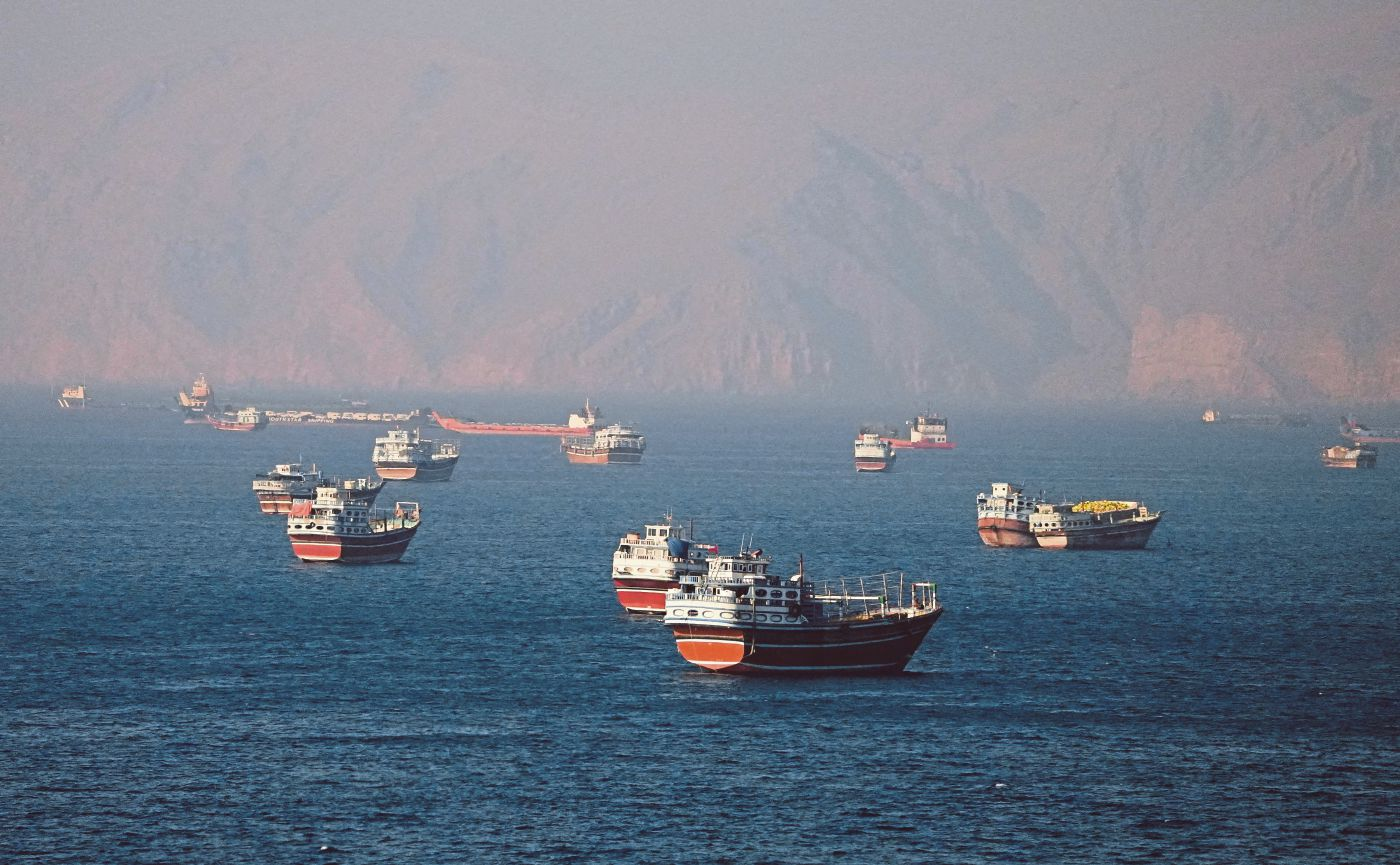
Sinokor Adds 73 Tankers, Handles 47% of September Hormuz Traffic Amid Attacks
Sinokor Merchant Marine’s rapid expansion has created a sharp operational tension in the Strait of Hormuz: one fleet now supplies an unusually large share of the corridor’s crude-tanker capacity, while more of that fleet is exposed to reported attacks. Sinokor vessels handled 47% of Hormuz transits by very large crude carriers in September after the operator took delivery of 73 secondhand tankers during 2026.

The concentration continued into October. Sinokor vessels accounted for more than half of the very large crude carrier transits recorded during the month’s first 10 days, according to an analysis published by Lloyd’s List on October 21. The publication also reported that seven Sinokor-owned tankers had been struck in missile or other projectile attacks as security incidents intensified.
Details including the seven vessels’ condition, damage and operational status were not included in the published abstract. The attack count nevertheless defines the other side of Sinokor’s capacity expansion: deploying more ships in a constrained corridor increases the amount of equipment, carrying capacity and crew exposure concentrated within one operator’s network.
A fleet expansion changed the corridor’s capacity mix
All 73 acquired crude carriers were delivered to Sinokor during 2026, an unusually compressed intake for ships of this scale. Many have entered shuttle services within the Middle East Gulf or export voyages connecting the region with India. Those assignments place the new capacity directly into the trades that depend on passage through or operations around Hormuz.
The result is more than a larger corporate fleet. It is a redistribution of transport capacity across a critical oil route. The Strait of Hormuz carries around a quarter of global seaborne oil trade, according to the United Nations Conference on Trade and Development. When one operator handles 47% of one vessel class’s monthly transits, interruptions affecting that operator can have an outsized effect on ship availability for exporters, refiners and chartering customers.
That does not mean 47% of all oil passing through Hormuz moved aboard Sinokor ships. The figure applies specifically to September transits by very large crude carriers, the largest conventional class used for long-distance crude transport. Other tanker classes and cargo types also use the waterway. Even within that boundary, however, the share shows how quickly Sinokor’s purchasing campaign altered the operator mix.
Scale provides capacity but concentrates operating risk
A large fleet can give an operator flexibility to assign ships across shuttle work and longer export voyages. It can also absorb an individual vessel’s loss of availability more readily than a small fleet. Corridor-level concentration introduces a different systems problem: numerous cargo movements can remain dependent on the decisions, crewing arrangements and available tonnage of the same operator.
Commercial control can be more complex than ownership alone. An October 7 industry account said Sinokor-linked activity included directly controlled vessels as well as ships secured through chartering arrangements. It also cited Windward data indicating that 38 of about 70 very large crude carriers repeatedly passing through Hormuz during roughly a month from mid-July were linked to the Sinokor group. Such arrangements can spread legal and operational responsibilities across owners, managers, charterers and cargo interests, even when the market experiences their combined capacity as one commercial fleet.
The surrounding security conditions have raised the operational burden. Reuters reported that maritime-security sources recorded at least 12 attacks on oil, liquefied-natural-gas and liquefied-petroleum-gas tankers around Hormuz from September 28 through October 5. Separate International Maritime Organization data listed nine incidents for that week, reflecting differences in reporting and verification timing.
For the shipping network, repeated incidents can affect more than hull availability. Crew acceptance, insurance, charter terms and ship-assignment decisions all influence whether nominal fleet capacity is available for a particular voyage. Higher compensation and insurance coverage can price some risk into a movement, but they cannot remove the physical exposure facing ships and crews.
Sinokor’s expansion has therefore delivered two measurable outcomes at once: 73 additional large crude carriers in one year and nearly half of September’s Hormuz transits in that vessel class. With its share rising above half during early October and seven owned tankers reportedly struck, the fleet’s next operating decisions will affect an unusually large portion of the corridor’s available crude-transport capacity.
| More aerospace and engineering stories, right in your MSN feed. Follow AMI on MSN |
By Thomas Caldwell — AMI’s senior editor for mechanical and mobility engineering, covering vehicle electronics, systems integration, electrification, chassis systems, propulsion, and safety policy.