Chery Unveils Omoda X Concept That Spots People and Wildlife 90 Meters Away
Thermal night vision that can identify a person or animal up to 90 meters, or 295 feet, away is not a feature normally associated with a compact SUV. Chery has put that capability on its new Omoda X concept, but it has not confirmed whether the camera will survive the transition from show vehicle to production model.
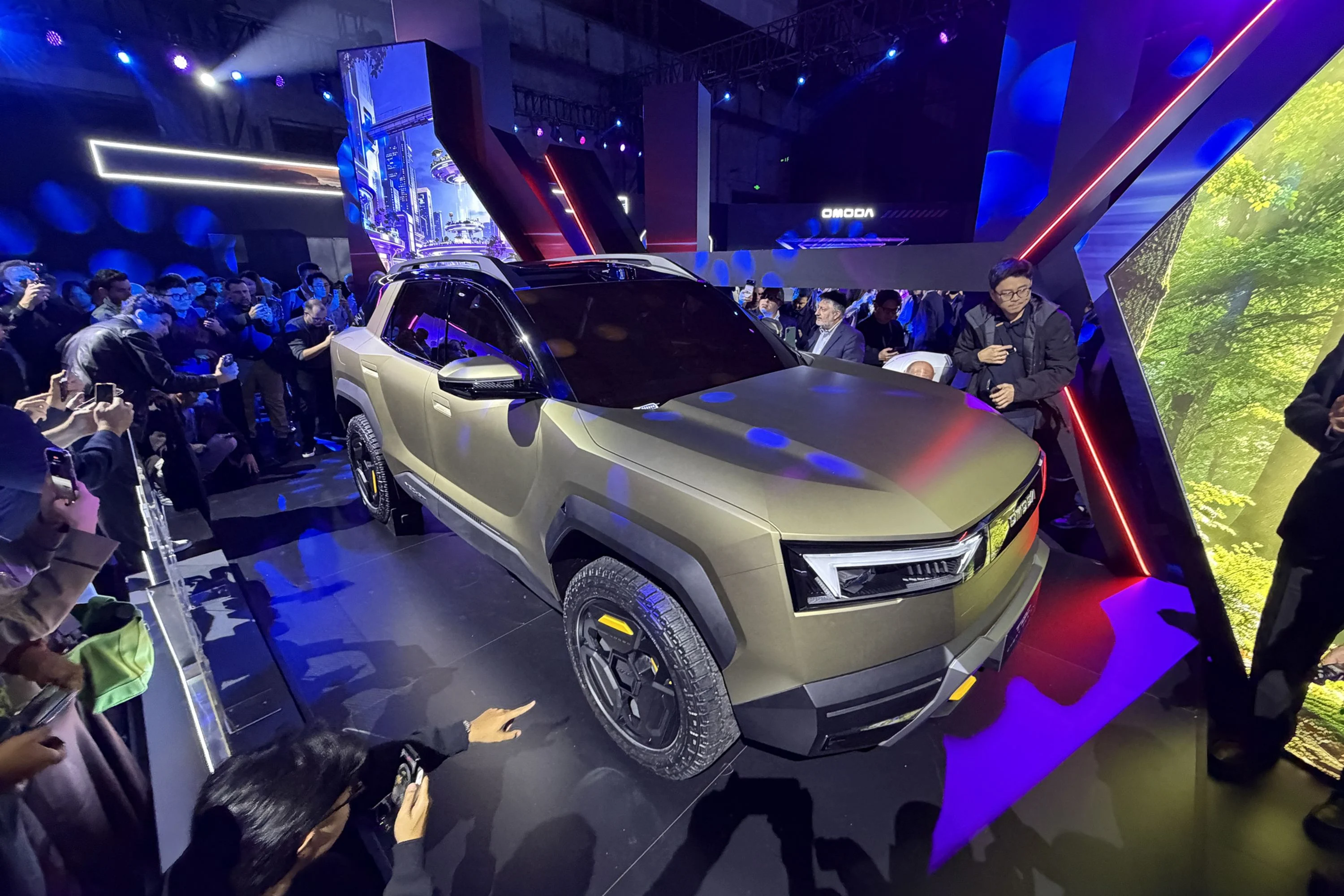
Chery unveiled the RAV4-sized Omoda X during the company’s International User Summit in Wuhu, China. The ruggedly styled concept is planned in fully electric and plug-in hybrid forms, positioning it in a highly competitive part of the market. Its main technical differentiator is an infrared thermal-imaging system designed to detect pedestrians and wildlife in low-light conditions.
This is the first Chery product presented with thermal night vision. The claimed 90-meter detection distance could give a driver more time to respond when a pedestrian or animal is difficult to distinguish against a dark road or background. It also gives the Omoda X an unusual feature for the compact-SUV class, where mainstream competitors such as the Toyota RAV4 do not commonly offer thermal imaging.
Detection is only one part of the safety chain
A thermal camera can improve awareness only if the information reaches the driver or the vehicle’s automated systems early enough and in a useful form. Chery has not detailed whether the Omoda X merely displays detected objects, generates a warning or sends thermal-camera data to its driver-assistance systems. There is no confirmed claim that the camera can initiate braking or steering intervention.
That integration question separates an enhanced night-vision display from a broader active-safety system. Identifying a heat signature at 90 meters is potentially valuable, but detection range alone does not establish how consistently the system classifies an object, presents it to the driver or responds under different road and weather conditions. Chery has not provided test conditions or performance results beyond the stated range and low-light use case.
Recent testing shows why nighttime detection remains a meaningful engineering target. In 2025, AAA reported that nighttime pedestrian automatic-emergency-braking impact avoidance improved from zero percent in its 2019 testing to 60 percent in its 2025 evaluation. The later closed-course tests used four vehicles traveling at 25 mph toward a crossing pedestrian target.
AAA also found inconsistent nighttime results when the target wore high-visibility clothing, with outcomes ranging from improved avoidance to a complete loss of detection. Those vehicles and test procedures were unrelated to the Omoda X, but the results illustrate the wider challenge: pedestrian detection depends on more than whether a vehicle carries a camera. Sensor performance, object classification, warning logic and braking response must work together across changing conditions.
A notable concept feature without a production commitment
For shoppers, the Omoda X presents an appealing combination on paper: a rugged compact SUV with electric or plug-in hybrid propulsion and a sensor normally associated with more specialized or higher-specification vehicles. It also invites an obvious comparison with the Toyota RAV4. If a Chery concept can carry thermal night vision, shoppers may reasonably ask why Toyota and other established compact-SUV manufacturers do not offer an equivalent system in their mainstream models.
The available information does not establish why Toyota omits it, and the Omoda X is not yet a production counterexample. Adding another sensor would also require more than mounting hardware. A production implementation needs a defined driver interface, validated detection behavior and a clear relationship with the vehicle’s other safety functions. Whether Chery intends to complete that integration remains unconfirmed.
Chery has not announced a production date, price, launch market or trim structure for the Omoda X. It also has not said whether thermal imaging would be standard, optional or absent from customer vehicles. Until those decisions are disclosed, the 90-meter system is best understood as a compelling demonstration of what Chery wants its RAV4-sized SUV to represent not a confirmed feature buyers will receive.
| More aerospace and engineering stories, right in your MSN feed. Follow AMI on MSN |
By Robert McKinney — Editor-in-Chief for AMI’s automotive and mobility coverage, with a mechanical engineering background and a decade reporting on powertrain systems, EV innovation, and global vehicle manufacturing.