USS Ronald Reagan Controls Tanker Drone From 2,100 Miles Away
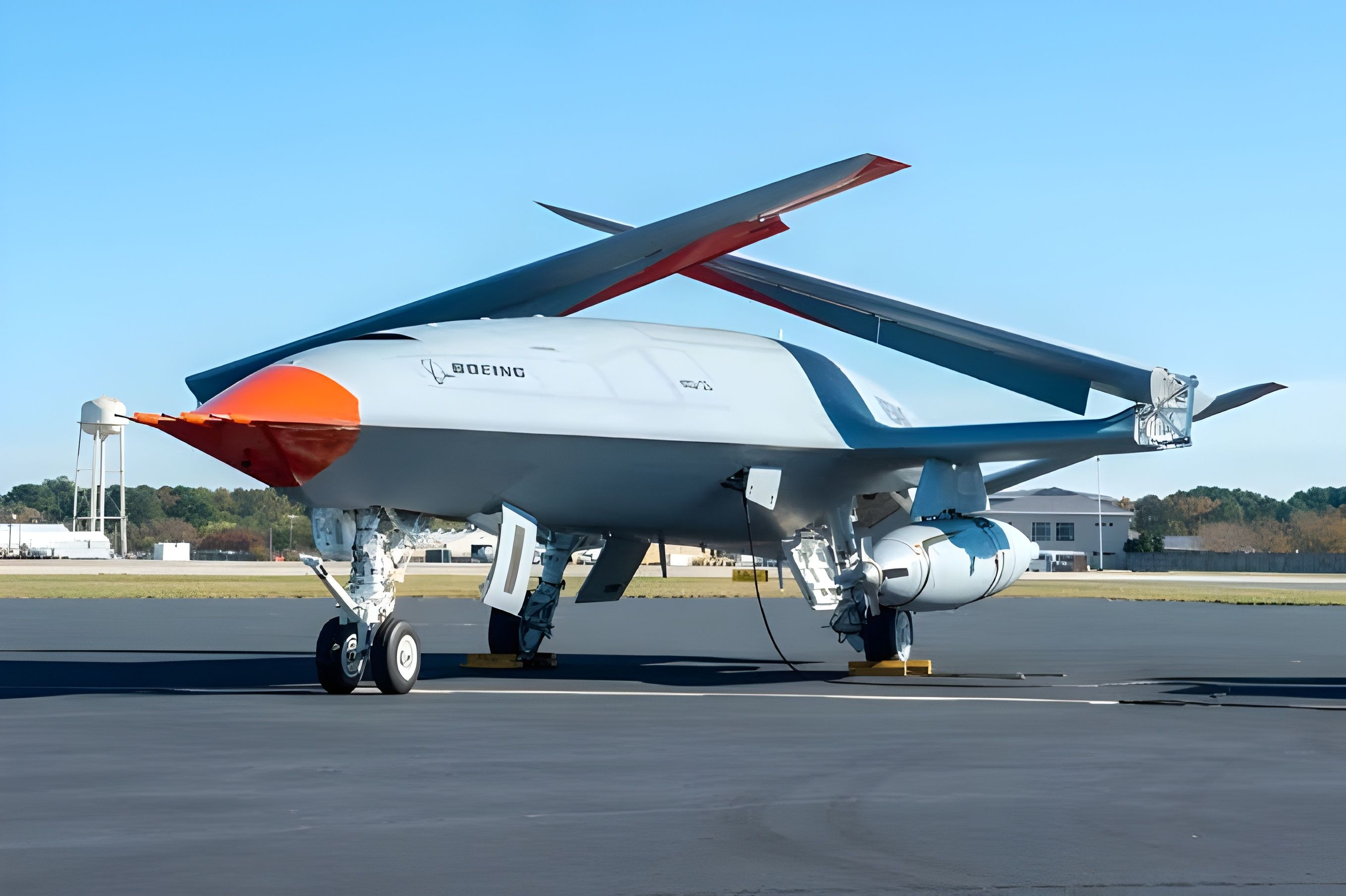
More than 2,100 miles separated the sailors aboard USS Ronald Reagan from the MQ-25A Stingray they controlled. The aircraft was at Boeing’s facility in Mascoutah, Illinois, while the Nimitz-class carrier sailed in the Pacific, according to the U.S. Navy’s October 19 announcement.
The Navy described it as the first underway connection between a carrier-based control center and an MQ-25A. In practical terms, a crew aboard Reagan assumed remote control of a drone parked at Boeing’s Illinois plant through the same broad class of shipboard command-and-communication systems intended to support future carrier operations.
The demonstration did not include a carrier launch, landing or aerial-refueling mission. It established that the ship’s installed equipment could connect to and command the distant aircraft while the carrier was at sea an important systems-integration step, but not a declaration that the tanker is ready for routine missions.
The control room is as important as the aircraft
Operators worked from Reagan’s Unmanned Air Warfare Center, the carrier-based control room developed for unmanned aviation. Its MD-5C Ground Control Station connected to the MQ-25A through a low-Earth-orbit satellite network.
That arrangement brought several separate elements into one operational chain: the aircraft, satellite connection, shipboard networks, control-station hardware and software, and the sailors responsible for issuing commands. The trial therefore tested more than raw communications range. It exercised interfaces and procedures that must work together before an unmanned aircraft can become a dependable part of a carrier air wing.
The MD-5C combines the Navy’s command-and-control network with Lockheed Martin hardware and software and other government equipment. Personnel from the Navy, Boeing and Lockheed Martin participated in the broader test effort, which also included earlier pier-side and at-sea work.
Carrier integration imposes a different problem from operating an unmanned aircraft from a fixed land station. The control equipment must fit into an existing ship, connect with naval networks and support operations while the carrier is underway. The Navy previously installed its first fully operational and integrated Unmanned Air Warfare Center aboard USS George H.W. Bush, creating a shipboard baseline for controlling future MQ-25 airborne operations.
Why the Navy wants an unmanned tanker
The MQ-25A’s planned job gives the control test its operational significance. The Stingray is being developed as the Navy’s first unmanned refueling aircraft, with F/A-18E/F Super Hornets among the aircraft it is intended to refuel.
Super Hornets currently can carry fuel for other aircraft, a role commonly called buddy tanking. Every fighter assigned to that task is carrying fuel for the rest of the air wing rather than being available for its primary multirole mission. Moving part of the refueling workload to the MQ-25A is intended to release more Super Hornets for those duties while allowing carrier aircraft to remain airborne longer and operate farther from the ship.
That is the clearest picture of the carrier air wing the Navy is building: crewed fighters working alongside unmanned tankers, with aircraft operators controlling the uncrewed systems from a dedicated room aboard the carrier. The MQ-25 control architecture is also intended to provide a foundation for other unmanned carrier aircraft later.
The program has progressed beyond laboratory work. Boeing and the Navy completed the first two-hour flight of an operational MQ-25A in April 2026. During that flight, the aircraft autonomously taxied, took off, followed a predetermined mission plan and landed while responding to commands sent through a ground control station in Illinois.
The Reagan demonstration moved a key part of that control chain from a nearby land facility to an aircraft carrier thousands of miles away. Further trials are still planned to evaluate system performance during routine flight operations and missions. Those tests must connect the long-distance command link demonstrated aboard Reagan with the launch, recovery and refueling work that will define the MQ-25A’s actual value at sea.
| More aerospace and engineering stories, right in your MSN feed. Follow AMI on MSN |
By Stephen Wallace — Editor for AMI’s aerospace integration and unmanned mobility coverage, focused on drone manufacturing, VTOL systems, autonomous networks, and air-ground mobility links.