Used Big Bud Tractors Still List for $105,000 to $325,000
A tractor line that ended production in 1991 still carries six-figure asking prices. Working used Big Bud tractors are advertised from roughly $105,000 to $325,000, including a 1979 machine rated at 600 horsepower and listed for $105,000.

Those figures are asking prices rather than records of completed sales. Even so, they illustrate the unusual position Big Bud occupies in the machinery market: it combines the power of a modern high-horsepower tractor with an older, more mechanically oriented architecture. That can put its initial price below the approximately $500,000 cited for a newer John Deere 9R with broadly similar power, but the comparison stops well short of establishing which machine costs less to own.
Older hardware at a modern-equipment price
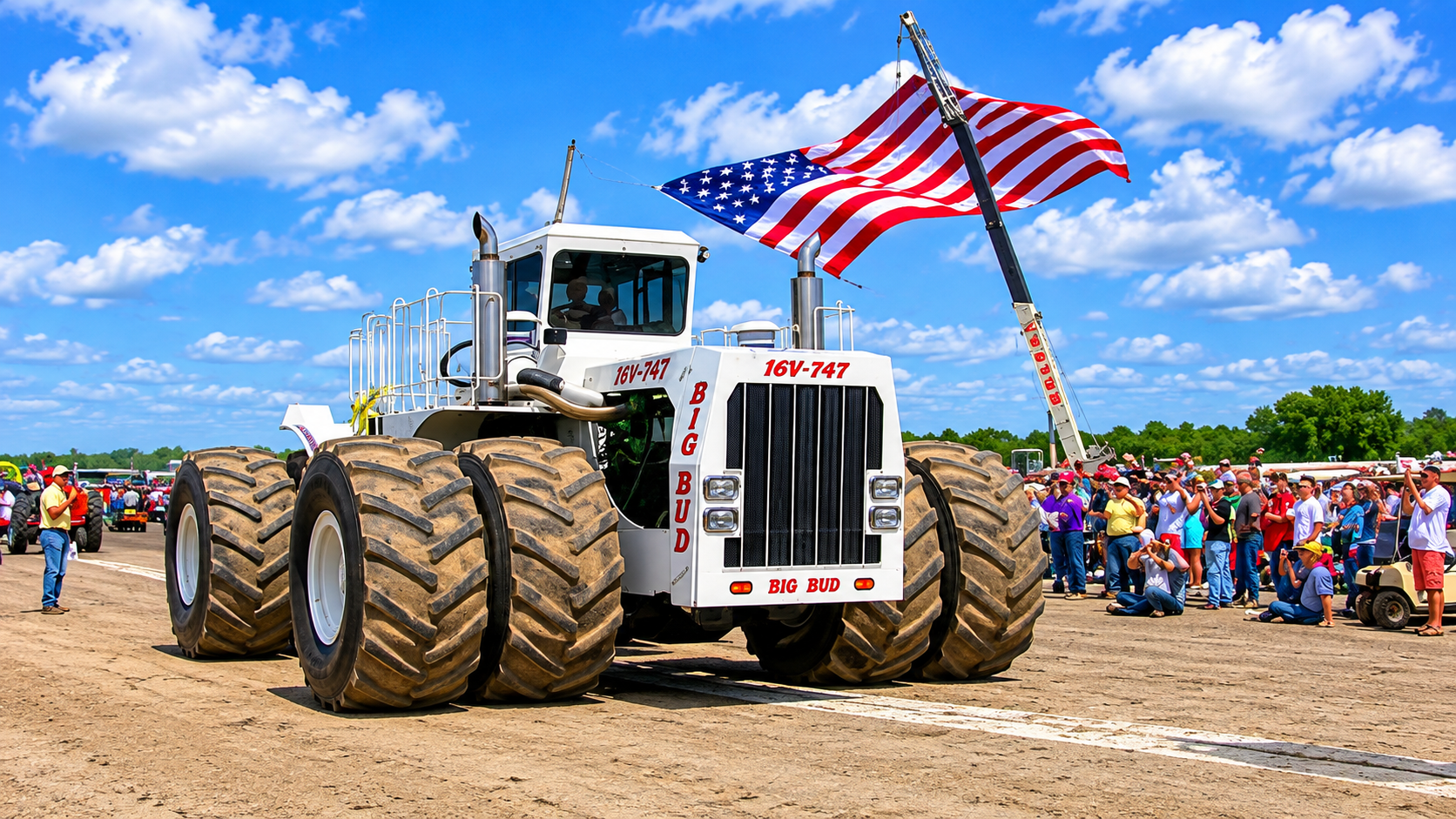
Big Bud was designed by Rossi Brothers in 1977 with the stated goal of replacing a fleet of tractors. The machines were built on a scale suited to that ambition, measuring about 14 feet tall and 20 feet long. Original models were offered with engines producing as much as 760 horsepower.
The most famous example is the custom Big Bud 747, now owned by Montana’s Williams brothers and described as capable of as much as 1,100 horsepower. Its exceptional size also shows why the Big Bud name cannot be treated as one uniform product specification. The 747 was a one-off machine, while used listings cover other models, power ratings, ages and conditions.
A TractorData specification page for the 16V-747 lists a weight of 95,000 pounds, a 195-inch wheelbase and a 1,000-gallon fuel capacity. It also records an original 1978 price of $300,000. Those figures put the machine’s engineering scale into context: this was specialized capital equipment from the beginning, not an ordinary farm tractor that became valuable solely through age or collectibility.
Mechanical accessibility is only one part of ownership
Big Bud’s continuing appeal is partly tied to frustration with the repair complexity of newer agricultural machinery. An older mechanical design may allow an operator or independent technician to approach more service work without navigating the same level of embedded software, electronic controls and connected systems found on current equipment.
That characteristic has practical value, but it does not guarantee easy repairs, readily available parts or low lifetime costs. A discontinued tractor may require substantial work involving its engine, transmission, hydraulic system, articulated chassis or tires. Transportation can also be a significant undertaking for a machine of this scale. None of those costs is captured by an advertised purchase price.
A newer tractor purchases a different package. Current high-horsepower machines can include electronic machine setup, data transfer, guidance-related functions and dealer-supported diagnostic systems. John Deere’s current tractor range spans up to 830 horsepower and offers multiple configurations, while actual equipment and pricing vary by dealer. Those systems add complexity, but they may also support precision, integration and field management capabilities that an older tractor was never designed to provide.
The comparison therefore depends on the work being performed and the infrastructure surrounding the machine. Horsepower alone does not measure implement compatibility, hydraulic performance, fuel consumption, operator environment, downtime exposure or support availability. Two tractors with similar peak power can deliver very different operating value.
The asking-price gap leaves the main cost question open
At the low end, the cited $105,000 Big Bud listing is roughly one-fifth of the approximate $500,000 benchmark given for a newer similarly powered John Deere 9R. At the high end, a $325,000 used Big Bud narrows that initial gap considerably before restoration, maintenance, transportation or operating expenses enter the calculation.
What the listings establish is continued demand for working Big Bud tractors more than three decades after production ended. They do not establish lower total ownership cost, greater reliability or superior productivity. Big Bud’s six-figure market presence reflects both its extraordinary power and the scarcity of a discontinued mechanical platform; whether that premium delivers operating value can only be answered with condition, workload and cost data that the asking price leaves out.
| More aerospace and engineering stories, right in your MSN feed. Follow AMI on MSN |
By Thomas Caldwell — AMI’s senior editor for mechanical and mobility engineering, covering vehicle electronics, systems integration, electrification, chassis systems, propulsion, and safety policy.