Qantas 787 Remains Grounded Nearly Two Weeks After Lightning Strike
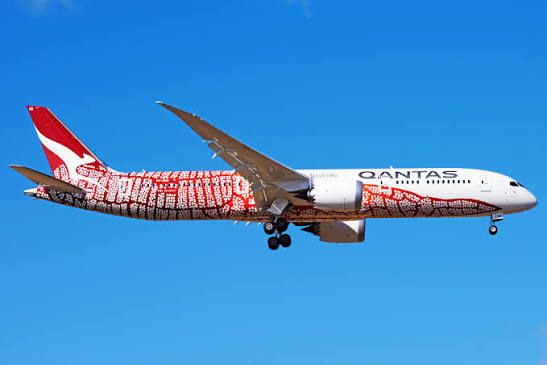
A Qantas Boeing 787-9 landed safely after a lightning strike, yet remained grounded in Melbourne nearly two weeks later with visible damage to its composite fuselage skin and conductive protection mesh. The contrast captures an important feature of modern aircraft engineering: surviving a hazard safely does not mean the aircraft can immediately return to service.

The aircraft, registration VH-ZND, was operating flight QF94 from Los Angeles to Melbourne when it was struck on October 30. Qantas said the Dreamliner completed the journey without incident. Engineers in Melbourne were subsequently inspecting and repairing it, and the airline had not announced a return-to-service date.
Damage visible on the aircraft included charred exterior areas and exposed mesh. Dr. Sonya A Brown, a University of New South Wales professor of mechanical and manufacturing engineering, assessed the work as a “significant repair.” She said the affected area appeared to extend across tens of centimetres, compared with some lightning damage that can cover less than a centimetre of surface.
Why a safe landing can lead to a long repair
Commercial aircraft are designed around the expectation that lightning strikes will occur. The US National Oceanic and Atmospheric Administration says a commercial transport aircraft in regular service is struck an average of once or twice a year. Conductive paths carry the current through and around the airframe, helping keep it away from crucial equipment and fuel.
That task is relatively intuitive on a conventional aluminum airframe, where the metal skin itself is highly conductive. The 787 relies extensively on carbon-fibre composite material, which offers major structural and weight benefits but does not independently provide the same continuous conductive outer surface. A metallic mesh incorporated into the skin supplies a path for the electrical charge.
The mesh is therefore part of the aircraft’s protective architecture, not a cosmetic layer. If a strike burns or disrupts it, engineers must determine how far the damage extends through the protection system and surrounding composite material. The aircraft may have performed exactly as intended during the flight while still requiring substantial work before its structural and electrical protection can be accepted for further service.
Brown explained that aircraft are effectively designed to be hit by lightning, but the variable nature of each event makes inspection necessary. Attachment location, current path and local material response can produce very different damage footprints. NOAA similarly notes that a suspected strike requires an inspection, which can delay an aircraft’s return to operation.
Composite repair must restore more than the surface
Repairing mesh-protected composite skin involves two linked engineering requirements: recovering the integrity of the laminate and re-establishing the conductive path. Research on mesh-protected carbon-fibre composites has found that the electrical continuity of a repaired area affects how it withstands a later simulated strike. That finding helps explain why visible surface dimensions alone cannot define the scope or duration of the work.
The precise repair process being used on VH-ZND has not been disclosed. Qantas has said only that its engineers are inspecting and conducting repairs and that the aircraft will return to service when the work is complete. The airline also has not provided a repair cost.
A previous 787 lightning event shows how widely outcomes can differ. In 2014, a United Airlines 787-8 returned safely to London after a strike affected three cockpit displays. Maintenance found external nonstructural damage at five locations along the nose, restored the systems and approved the aircraft for dispatch under the applicable maintenance and structural-repair criteria, according to the National Transportation Safety Board’s final report. That aircraft resumed its trip; the Qantas jet’s visible skin and mesh damage has required a much longer stay on the ground.
Flight tracking data showed VH-ZND had not moved from Melbourne since the October 30 strike. Its absence potentially adds pressure to Qantas’ long-haul fleet capacity, although no specific flight cancellations or passenger disruption were documented. For now, the operational boundary is straightforward: the Dreamliner landed normally, but it will remain unavailable until engineers finish restoring and verifying the protective composite skin that carried the strike safely around the aircraft.
| More aerospace and engineering stories, right in your MSN feed. Follow AMI on MSN |
By Thomas Caldwell — AMI’s senior editor for mechanical and mobility engineering, covering vehicle electronics, systems integration, electrification, chassis systems, propulsion, and safety policy.