FAA Ground Stop Could Cost Four Major Airlines $345 Million
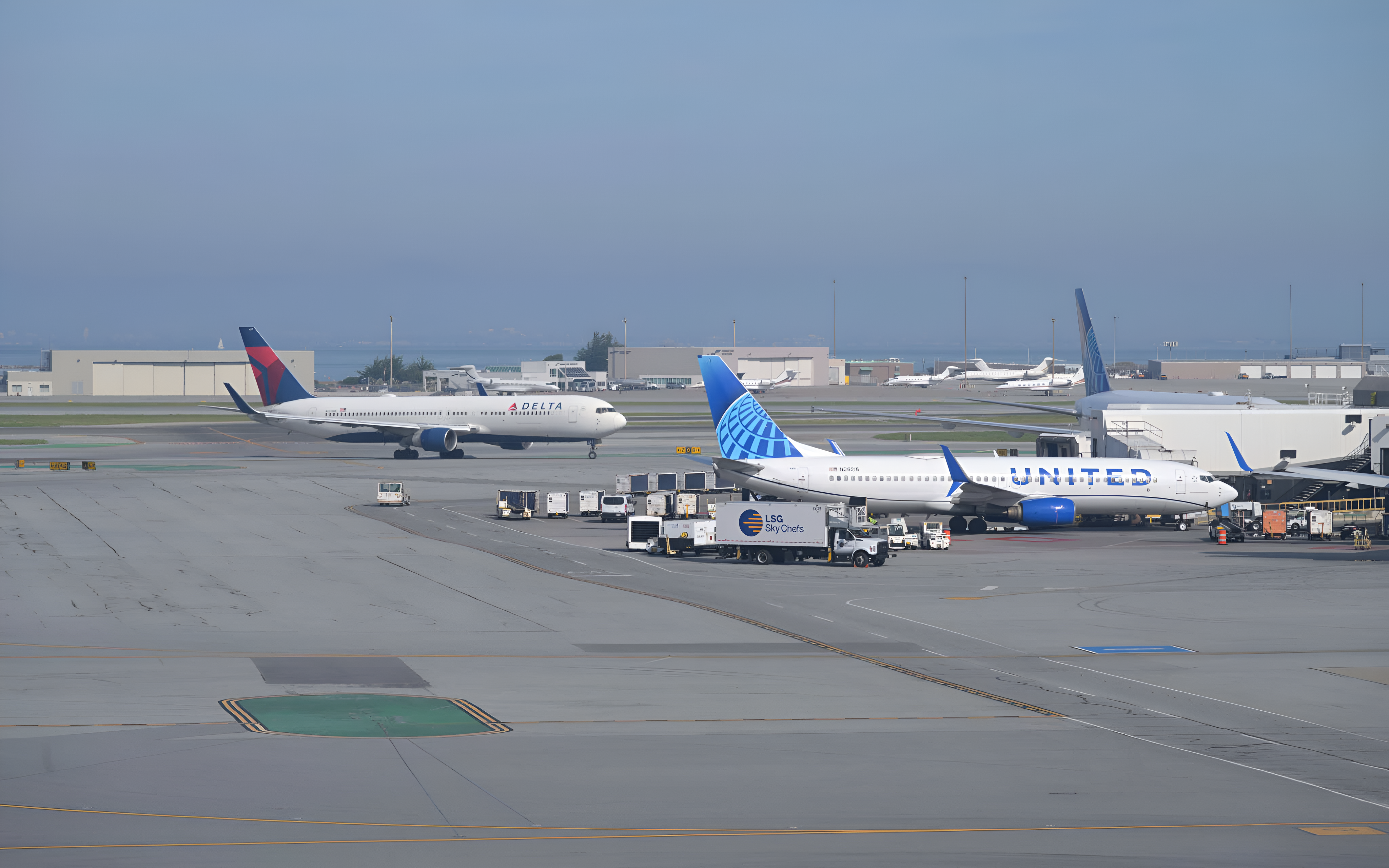
$345 million is the estimated combined pretax earnings loss facing American Airlines, Delta Air Lines, United Airlines and Southwest Airlines after a nationwide Federal Aviation Administration ground stop halted departures for roughly four hours on Friday, November 13. Bernstein’s estimate, reported by Reuters, is a projection rather than a reported financial result; the research firm placed the potential loss between approximately $270 million and $430 million within an 80% probability range.
The scale of that estimate reflects what happened after departures resumed. More than 18,500 flights within, into or out of the United States had been canceled by 8:47 a.m. EST Monday, based on calculations using FlightAware data. The short telecommunications disruption displaced aircraft and crews across an interconnected national network, leaving airlines to rebuild schedules through the weekend.
The FAA issued the nationwide ground stop at approximately 3:54 p.m. EST Friday after instability developed in its telecommunications network. Air traffic resumed at 8:15 p.m., according to the agency’s official account of the disruption and recovery. The FAA said some radio frequencies and radar feeds remained reliable, allowing controllers to communicate with and track aircraft already in flight. Approximately 3,500 airborne aircraft landed safely.
Why four hours became several days
An airline schedule depends on more than an available runway and a cleared flight plan. Each departure requires an aircraft, a qualified crew and an operating window to converge at the correct airport. When departures stop nationwide, aircraft fail to reach the cities where later flights begin, while pilots and flight attendants can end up away from their next assignments.
Restarting air traffic therefore does not immediately restore the planned network. Airlines must reposition aircraft and crews while also accommodating passengers from canceled flights. Available seats on later services become scarce, airport gates and ground teams face uneven demand, and crews remain subject to duty-time limits. Those linked constraints help explain how a disruption measured in hours can produce cancellations and lost revenue over several operating days.
The effects were also uneven among carriers. Bank of America analysts estimated that JetBlue canceled 28% of its scheduled Sunday flights and American canceled 22%. Delta canceled 5%, Southwest 4% and United 3%. JetBlue was not included in Bernstein’s $345 million estimate, which covered the four largest U.S. airlines.
The cancellation total also requires a boundary: the FAA reported approximately 12,462 cancellations on Friday, including 9,082 by major airlines, but said not every cancellation was directly caused by the ground stop. The broader count of more than 18,500 extended through Monday morning and covered flights operating within, into or out of the country.
Network instability, with the root cause still under investigation
The FAA said legacy equipment became unstable when data flooded its telecommunications network at a rate of 1,000 connection attempts every four to five seconds. Instability reached 17 of the agency’s 22 centers responsible for managing aircraft between airports and spread into several terminal-control facilities.
The initial investigation identified facilities in Amarillo, Texas, and El Dorado, Arkansas, as potential origins of the excessive data. L3Harris, the FAA’s network service provider, had been performing work at the El Dorado location, including installing a new router. The FAA and L3Harris continued investigating the root cause, including why the network generated or propagated the abnormal traffic.
Officials isolated the two locations, after which the network stabilized. The FAA also disabled the relevant broadcasting function on approximately 60 similar routers as a precaution. The agency said there was no indication of a cyberattack or other outside actor.
By Sunday, the FAA said the system was stable and operations were returning to normal. Transportation Secretary Sean Duffy expected schedules to normalize by Monday as airlines continued repositioning equipment and personnel, and he called for additional funding to modernize air traffic-control infrastructure.
The financial estimate puts a price on a systems-integration problem: the safety response ended the immediate exposure by holding departures, but the airline network could not reset on the same clock. Until the investigation establishes why instability at potential originating sites spread across most en route control centers, the central engineering issue remains the resilience of a national system in which a localized telecommunications problem can trigger days of operational recovery.
| More aerospace and engineering stories, right in your MSN feed. Follow AMI on MSN |
By Thomas Caldwell — AMI’s senior editor for mechanical and mobility engineering, covering vehicle electronics, systems integration, electrification, chassis systems, propulsion, and safety policy.