Singapore Airlines Reviews Criticized Business-Class Seat in $1.56 Billion Cabin Overhaul
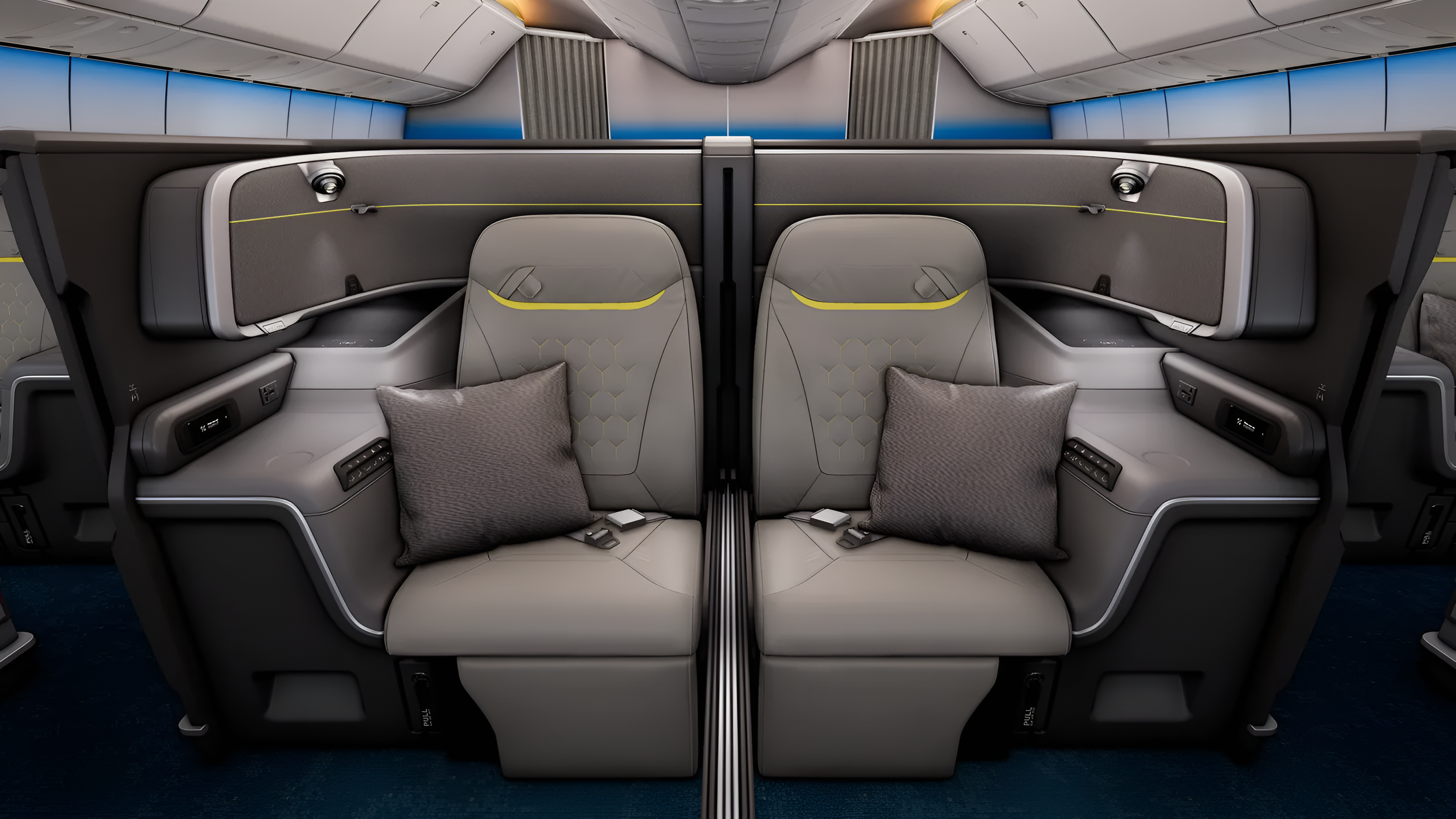
Singapore Airlines is reconsidering a flagship product before a passenger has used it in scheduled service. The airline said it would review its newly unveiled Recaro business-class seat following widespread online and customer backlash, putting an unexpected question mark over part of its S$2 billion, or US$1.56 billion, long-haul cabin overhaul.
No redesign or schedule change has been confirmed. Singapore Airlines still plans to begin introducing the new cabin products in the second half of 2027 on retrofitted Airbus A350-900 aircraft and new Boeing 777-9s. The review nevertheless creates a difficult systems-integration problem: customer expectations can change quickly, while an aircraft seat may take years to design, test, manufacture, certify and install.
The bespoke business-class seat was originally commissioned for the Boeing 777-9, Singapore Airlines’ delayed future flagship, and later extended to its long-haul A350 fleet. Recaro Aircraft Seating is manufacturing it, while Designworks contributed to the business-class design. Singapore Airlines says the broader cabin program was informed by research involving more than 5,000 frequent travelers, customers, employees and industry experts.
That research identified privacy, comfort, intuitive operation, flexibility and connectivity as growing passenger priorities. Yet the backlash shows the limitation of even extensive customer research: a design can reflect the preferences recorded during development and still arrive in a competitive market that has moved on.
A seat review is not a simple styling exercise
An airliner seat is both furniture and certified aircraft equipment. Premium products can incorporate structural supports, restraint systems, electrical functions, controls and in-flight entertainment interfaces. They must also fit within an approved cabin layout and satisfy safety requirements under defined loading and impact conditions.
Consequently, a late change cannot be treated like revising the upholstery or shape of a consumer chair. The scale of any engineering and approval work depends on what is changed. Adjustments affecting structure, occupant geometry or integrated systems can carry different implications from alterations to finishes or other nonstructural details.
The wider seating industry is already operating under pressure. Airbus has identified limited seat-supplier capacity amid strong demand for cabin upgrades, while Boeing has said premium-seat certification challenges have contributed to uneven monthly delivery patterns for the 787. Those constraints reduce the room available for airlines and manufacturers to absorb late revisions without affecting engineering resources, production planning or installation work.
Singapore Airlines has not specified what its review will examine or whether it will produce physical changes. Its immediate options therefore cannot be determined from the announcement. The confirmed action is an evaluation of the seat after customer criticism, not an approved redesign.
The Boeing delay widened the expectation gap
The timeline helps explain how the airline reached this point. Singapore Airlines’ first 777X was originally scheduled for delivery in 2021, but Boeing’s newest widebody remains in flight testing after 13 years of development. The carrier has 31 777X aircraft on order.
Repeated delays mean cabin concepts developed in the previous decade are approaching service much later than first expected. The cabin project itself began in 2015, according to Business Traveller, placing roughly 12 years between its launch and the planned second-half 2027 introduction. During that interval, competitors could introduce new products and passengers could become accustomed to different levels of privacy, space and functionality.
Extending the Recaro product to 41 long-haul and ultra-long-range A350s gave Singapore Airlines a route to deploy its new business-class experience beyond the delayed 777-9. It also increased the seat’s importance: the customer response is relevant to a substantial part of the airline’s long-haul fleet, rather than one aircraft type alone.
The reaction carries added weight because Skytrax ranks Singapore Airlines as the world’s top airline. Branding consultant and longtime customer Martin Roll described the pressure directly: If you are the top of the game, you need to stay at the top of the game. His assessment is an outside view, but it captures the commercial tension. A premium airline is judged against both its previous standard and whatever rivals have introduced while its next product was still in development.
Singapore Airlines now has to balance that reputational pressure against the practical limits of a mature aircraft-interior program. The next consequential milestone will be whether the review leads to a confirmed change and whether the airline can preserve its planned second-half 2027 service entry across both the A350 and 777-9 fleets.
| More aerospace and engineering stories, right in your MSN feed. Follow AMI on MSN |
By Thomas Caldwell — AMI’s senior editor for mechanical and mobility engineering, covering vehicle electronics, systems integration, electrification, chassis systems, propulsion, and safety policy.