Air Force May Keep Half-Available T-38 Trainer Fleet Until 2038
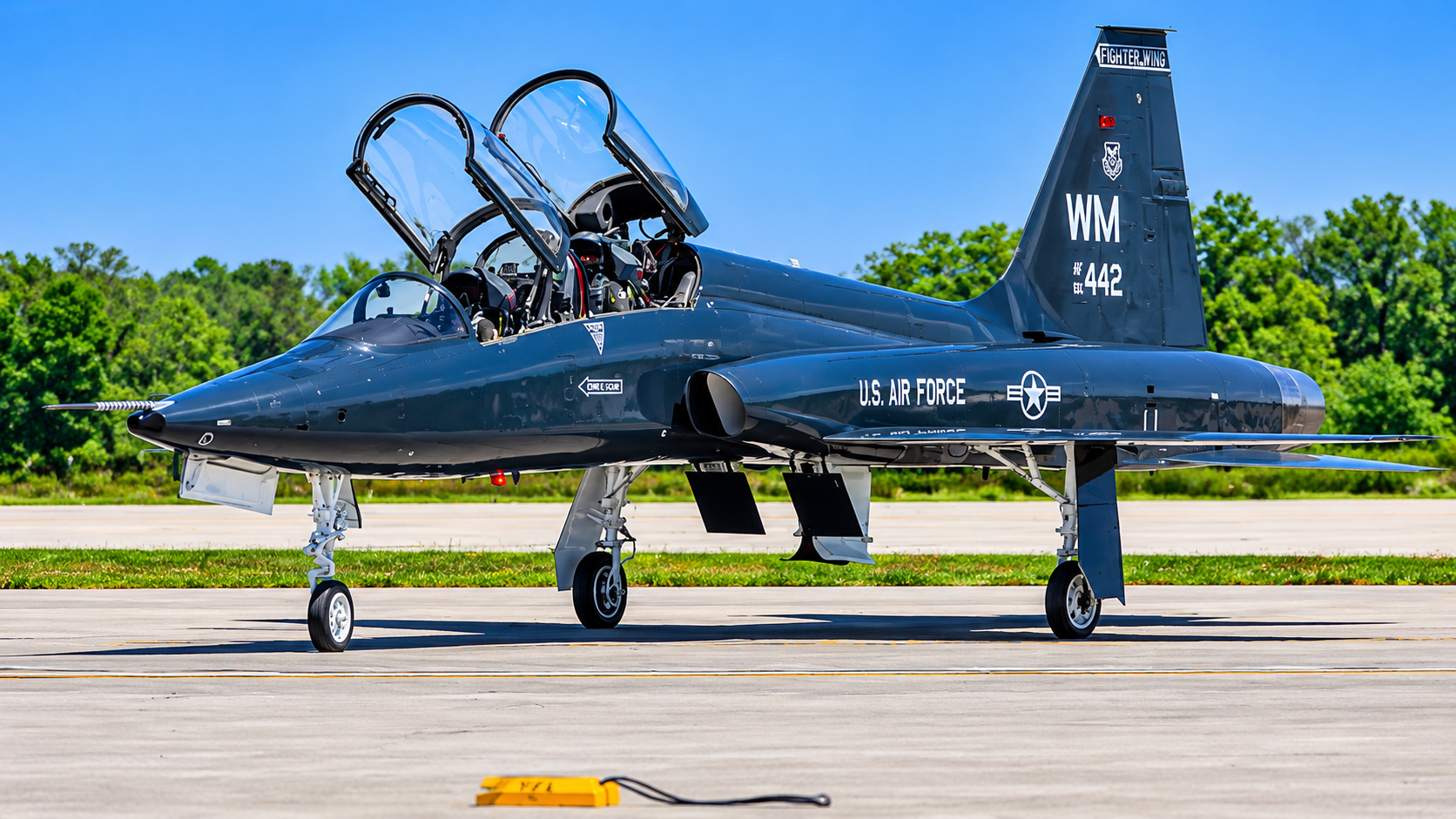
The U.S. Air Force is beginning production of its modern T-7A Red Hawk trainer, yet its aging T-38 Talon fleet may remain in service until 2037 or 2038. The roughly 490 T-38s average nearly 60 years old, and only about half are mission-capable at a given time.

Lt. Gen. Clark J. Quinn, commander of Air Education and Training Command, confirmed the expected retirement horizon during a Nov. 16 meeting with reporters. As FlightGlobal reported, the long overlap reflects more than the pace of aircraft deliveries. Before the T-7A can begin regular training operations, the Air Force needs enough jets, qualified instructors and flight-test approval for the maneuvers students must learn.
That makes the replacement effort a multi-part transition rather than a straightforward exchange of old aircraft for new ones. The Air Force is targeting August 2027 for the T-7A’s initial operational capability, but Quinn acknowledged that the date remains uncertain. Reaching it requires 14 delivered T-7As, 14 certified instructor pilots and an approved flight envelope broad enough to cover required training maneuvers.
Air Education and Training Command currently has only three T-7As. One is being used to train maintenance personnel, reducing the small fleet available for flying. Eight pilots are qualified on the aircraft, but the service still needs additional testing and instructor preparation before it can establish a training operation representative of the T-7A’s intended mission.
Testing and instructors control the schedule
The delivery count is only the most visible constraint. Instructor pilots need access to aircraft and approved maneuvers early enough to become proficient before they can teach students. If flight-envelope approval arrives close to the August 2027 target, there may not be enough time to complete that preparation.
Testing is also scheduled to continue beyond the proposed initial operating date. A July 2026 Government Accountability Office assessment indicated that most developmental testing would run until April 2028, while some lower-priority requirements could extend into 2029. Initial operational capability therefore would mark the beginning of useful training capacity, not the completion of the wider test and fleet-conversion process.
The production plan reflects the same gradual buildup. The Air Force approved low-rate initial production in April 2026, authorizing a first batch of 14 aircraft. Its broader program calls for 351 T-7As and 46 ground-based training simulators across five Air Education and Training Command bases.
The fiscal 2027 budget request includes 23 T-7As, while projected annual purchases rise to 60 aircraft by 2030. Even if that ramp proceeds as planned, hundreds of aircraft, instructors and maintainers must be integrated across multiple bases before the T-38 can leave service completely.
Keeping the T-38 available will remain expensive and difficult
During that transition, the Air Force must preserve enough T-38 capacity to continue advanced pilot training. The trainer’s two General Electric J85-GE-5 turbojet engines require repeated overhauls, and replacement components are becoming harder to obtain because neither the aircraft nor its engines remain in production.
Quinn said most recent engine-related problems had been resolved, allowing the service to restore the required level of flying. He did not expect overall aircraft availability to improve significantly, however. A roughly 50% mission-capable rate leaves little prospect of creating a large readiness cushion as the fleet ages.
Avionics support is already being funded nearly to the anticipated retirement date. Boeing received an approximately $900 million contract earlier in 2026 to sustain T-38 avionics through March 2036, according to Air & Space Forces Magazine. That contract illustrates the cost of operating two generations of trainers in parallel: the Air Force must invest in the outgoing fleet while buying and qualifying its replacement.
Retirements are expected to begin slowly. Pentagon force-structure projections accompanying the fiscal 2027 budget call for 157 T-38s to leave the inventory over five fiscal years. The plan starts with one retirement in fiscal 2027 and rises to 82 in fiscal 2031.
That sequencing preserves training capacity while T-7A production accelerates, but it also keeps maintenance pressure on an aircraft fleet designed decades before today’s fighters. The T-38’s final retirement will depend not on the arrival of the first Red Hawks, but on the point when T-7A deliveries, testing approvals and trained instructors collectively provide enough capacity to replace it.
| More aerospace and engineering stories, right in your MSN feed. Follow AMI on MSN |
By David Whitaker — Associate editor for AMI’s aerospace and drone systems desk, translating flight systems, aircraft programs, spaceflight, and UAV developments into accessible technical stories.