NASA Says Apophis Will Safely Pass Earth Closer Than Many Satellites
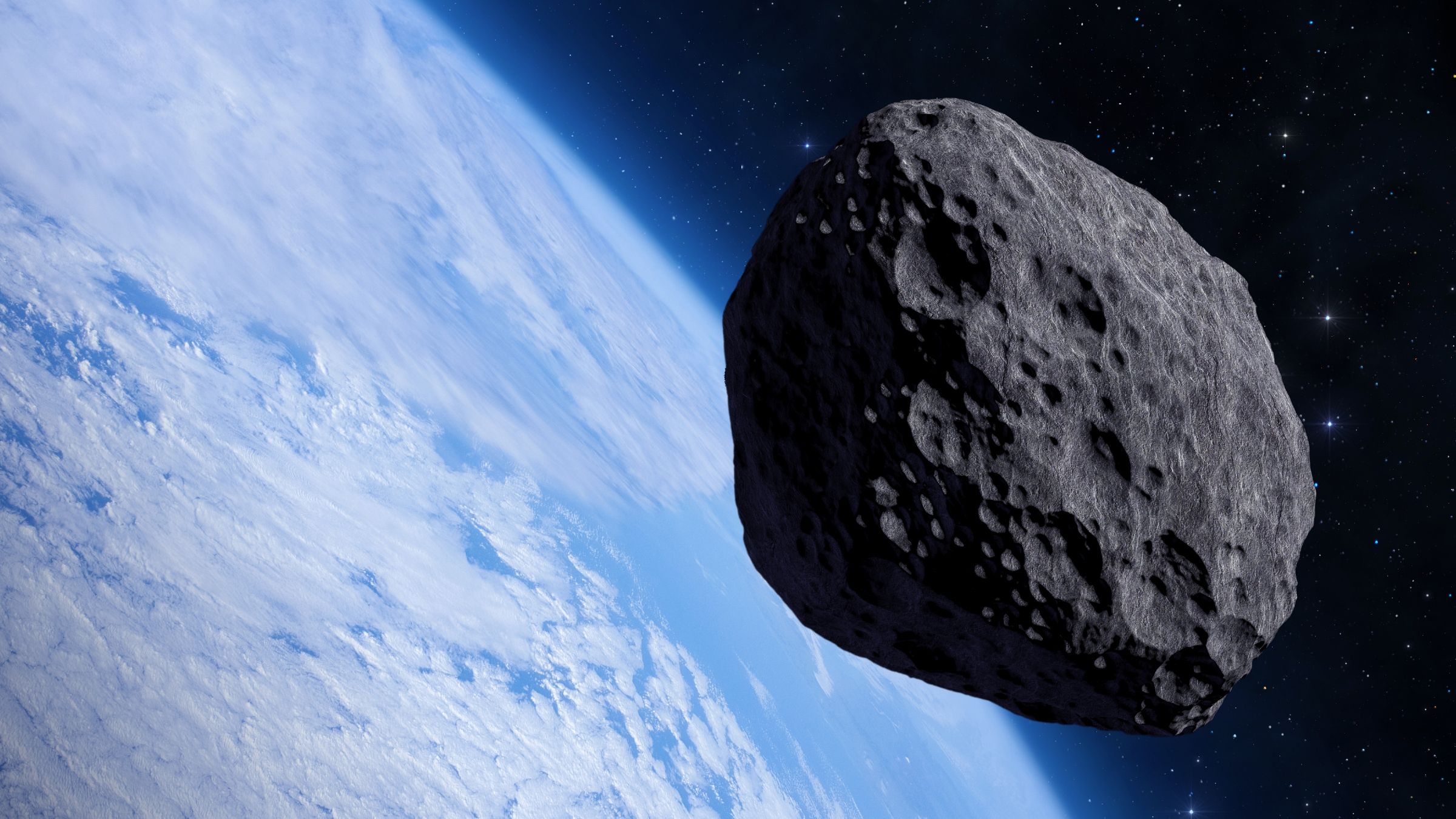
Asteroid Apophis is classified as potentially hazardous, measures roughly 1,230 feet across and will pass closer to Earth than many satellites. Yet NASA says its April 13, 2029, encounter will be safe: the agency has ruled out an impact for at least the next 100 years.
The asteroid is expected to pass about 20,000 miles above Earth’s surface. That is below the roughly 22,236-mile altitude associated with satellites in geosynchronous orbit, though Apophis will not travel through the main equatorial region occupied by geostationary communications satellites. NASA expects the object to remain visible without a telescope for several hours.
That combination a large object, an exceptionally close trajectory and no predicted collision shows why the term “potentially hazardous” needs context. It is a classification used for objects whose size and orbit warrant close monitoring. It does not mean NASA expects the object to strike Earth.
Better observations transformed the risk estimate
Apophis became an unusually public example of how asteroid tracking uncertainty changes over time. After its discovery in 2004, early calculations identified possible impacts in 2029, 2036 or 2068. Its initially calculated probability of hitting Earth in 2029 reached 2.7%.
Those early estimates were based on a shorter observation record. Astronomers do not measure an asteroid’s entire future path directly; they observe its position at different times and calculate a range of trajectories consistent with those measurements. When the available tracking arc is short, that range can remain wide enough to include Earth even when the most likely path does not.
Additional optical observations narrowed the possible orbit. Ground-based radar then supplied more precise distance information, further reducing uncertainty. New radar observations in 2021 eliminated the remaining impact scenario described for Apophis, allowing NASA to conclude that the asteroid presents no impact danger for at least a century.
The changing probability was therefore a product of progressively better measurement, not an asteroid first heading toward Earth and then physically changing course. More observations reduced the range of plausible trajectories until Earth was excluded from it.
A close pass becomes a planetary-science experiment
Apophis appears to have a peanut-like shape based on preliminary observations. During the 2029 flyby, Earth’s gravity is expected to alter the asteroid’s spin state and could change aspects of its surface. That gives researchers a rare opportunity to watch a substantial near-Earth object respond to a close planetary encounter.
NASA’s OSIRIS-APEX spacecraft is expected to reach Apophis in late spring 2029. The spacecraft previously operated as OSIRIS-REx, which returned a sample from asteroid Bennu to Earth in September 2023. Its extended mission is intended to study how the encounter affects Apophis’ rotation and physical properties.
Europe is preparing another observer. The European Space Agency says its Ramses mission is being built to rendezvous with Apophis and accompany it through the flyby. The planned spacecraft would examine changes caused by Earth’s gravity, generating data that could improve scientific understanding of similar objects.
Those missions also turn the encounter into a practical planetary-defense exercise without requiring a deflection attempt. Researchers can compare telescopic measurements made from Earth with close-range spacecraft observations, study how accurately the orbit was predicted and examine how gravitational forces reshape or disturb an asteroid.
NASA describes the 2029 event as the closest currently known approach by an object of this size. For observers, Apophis should appear as a moving point of light. For scientists, it will be a naturally occurring stress test of asteroid tracking and characterization one made possible because years of optical and radar observations first established that Earth is not in its path.
| More aerospace and engineering stories, right in your MSN feed. Follow AMI on MSN |
By David Whitaker — Associate editor for AMI’s aerospace and drone systems desk, translating flight systems, aircraft programs, spaceflight, and UAV developments into accessible technical stories.