Qatar-Origin Air Force One Skips Planned 60-Day Upgrade, More Work Awaits
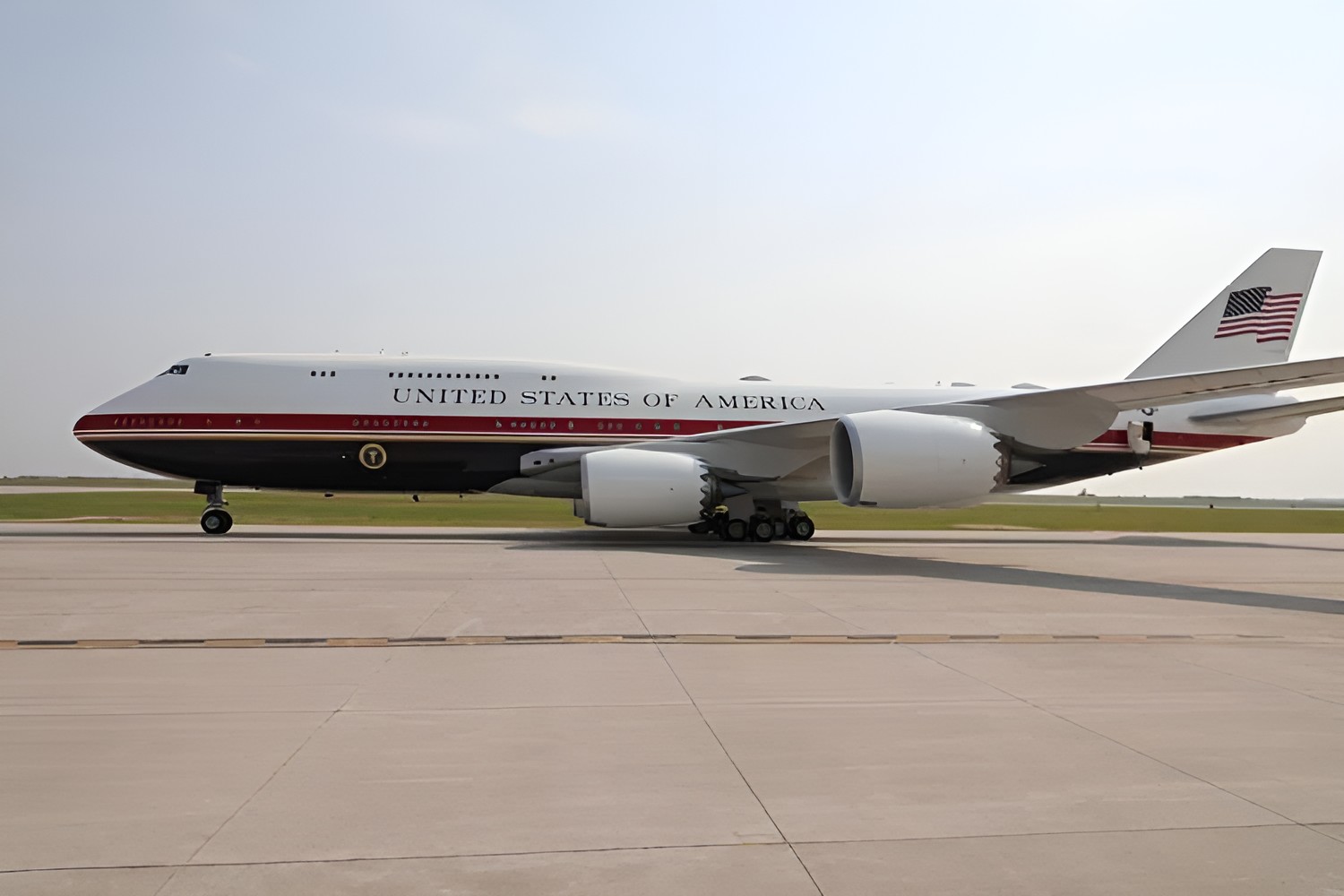
The Qatar-origin Boeing 747-8 serving as a bridge Air Force One did not undergo the previously described 60-day period to “max out” the aircraft. By Nov. 17, officials said it had instead received periodic maintenance and cosmetic interior enhancements, while a longer upgrade period remained planned for the future and was expected to take less than 60 days, according to NBC News.
That changes the timeline without resolving the central question surrounding the roughly $400 million donated aircraft: what work is required to bring it to its intended configuration? Earlier descriptions tied the proposed downtime to improvements involving the interior, engines, capabilities and security. Officials have now confirmed cosmetic work and maintenance, but they have not publicly defined the future work package or said whether it will include the previously discussed security enhancements.
The 60-day plan gave way to incremental work
The aircraft entered presidential service on July 1 after an approximately 10-month conversion from its earlier Qatari VIP configuration. The accelerated effort retained many existing walls, rooms and structural elements, allowing the 747-8 to begin carrying the president sooner than a clean-sheet presidential conversion would permit.
That first phase was never equivalent to building a presidential aircraft from the ground up. The Air Force prioritized core presidential mission requirements while accepting trade-offs involving less frequently used capabilities. Additional work was therefore expected, but its timing has shifted repeatedly.
In July, the anticipated upgrade interval was described as about one month. By September, the public estimate had expanded to roughly 60 days, with the aircraft expected to be sent away in October. It continued operating instead, including a presidential trip to Asia, and officials subsequently said the future upgrade period would not require the full 60 days.
The revised estimate is useful, but it is not a return-to-service schedule because the aircraft is already flying. It describes a future period of unavailability whose start date, location and technical scope have not been disclosed. No public cost has been released for that work, either.
Cosmetic work does not define the aircraft’s final capability
On a VIP aircraft, cosmetic enhancement can cover visible cabin elements such as upholstery, carpeting, veneers and furnishings. The administration has not identified which parts of this 747-8’s interior were changed. Its inherited cabin included beige and tan furnishings, gold tones, dark wood accents, 10 restrooms and a press area fitted with 14 lie-flat pods.
During the initial conversion, Arabic exit signs and Qatari artwork were removed and presidential seals were installed. Those changes illustrate how quickly a former VIP transport can be adapted visually. They do not reveal the status of communications, defensive or other presidential mission systems, which involve different installation, integration and testing demands.
A senior administration official declined to discuss specific modifications while saying the aircraft is maintained as a safe, secure and reliable presidential capability. That leaves the public timeline clearer than before the planned 60-day grounding did not occur but the configuration question remains open.
Older presidential 747s remain the fleet backstop
The bridge aircraft was intended to supplement the older VC-25A fleet while Boeing works on two purpose-built 747-8 presidential aircraft. Those established jets, based on the 747-200, can continue carrying the president whenever the bridge aircraft enters maintenance or modification.
That redundancy prevents a planned upgrade from stopping presidential travel. It also means every future modification period temporarily restores dependence on the aging aircraft the bridge jet was brought in to supplement. Availability therefore depends on more than how quickly technicians install new equipment: inspections, functional checks and formal acceptance must also be completed before a modified aircraft resumes missions.
The $400 million figure is the stated value of the donated jet, not the disclosed cost of converting, maintaining or upgrading it. With no public price or defined work package for the next phase, the practical measures will be how long the 747-8 is unavailable and what additional capability officials confirm when it returns. For now, the promised 60-day transformation has become a shorter, still-unscheduled upgrade period after months of incremental maintenance and cabin work.
| More aerospace and engineering stories, right in your MSN feed. Follow AMI on MSN |
By David Whitaker — Associate editor for AMI’s aerospace and drone systems desk, translating flight systems, aircraft programs, spaceflight, and UAV developments into accessible technical stories.