FAA Router Failure in Two States Stopped Departures Nationwide
A problem traced to communications equipment at two locations reached far beyond Arkansas and Texas. On November 13, the Federal Aviation Administration stopped departures nationwide after instability spread through the network supporting air traffic communications and radar data. The event illustrates a difficult systems-engineering problem: geographically limited equipment can have national consequences when it feeds a highly interconnected, aging network.
The FAA’s preliminary account identifies a radar site in Amarillo, Texas, and a radio communications site in El Dorado, Arkansas, as two potential origins of excessive network traffic. L3Harris, the agency’s network service provider, had been working at El Dorado and deploying a new router. The FAA and L3Harris continue to investigate the root cause.
The failure was narrow in origin but broad in propagation. Data flooded the FAA Telecommunications Infrastructure network at a rate of 1,000 connection attempts every four to five seconds, according to the agency. Instability appeared at 17 of the FAA’s 22 Air Route Traffic Control Centers and spread into several facilities that manage aircraft approaching and departing airports.
Why a ground stop became the safety response
The network did not go completely dark. Some radio frequencies and radar feeds remained reliable, allowing controllers to communicate with and track aircraft already airborne. Approximately 3,500 aircraft were in the air when the ground stop began, and they landed safely. Critical medical, law-enforcement and military flights also continued.
Stopping new departures limited the amount of additional traffic entering a system whose data behavior had become inconsistent. In systems terms, the FAA reduced demand while technicians isolated the disturbance and confirmed that the remaining communications and surveillance functions were stable. The action transferred the cost of uncertainty into delays and cancellations rather than accepting less predictable operating conditions.
The FAA issued the stop at approximately 3:30 p.m. Eastern Time and resumed traffic at 8:15 p.m. Blocking the two potential originating locations stabilized the network. The agency also disabled a broadcasting function on the new routers and applied that precaution to approximately 60 similar routers elsewhere in the system.
Those measures addressed the immediate instability, but they do not yet answer whether the initiating problem involved equipment, configuration, integration or another condition. The investigation remains open. The FAA reported no indication of a cyberattack or outside malicious actor.
A small network fault met a large legacy system
The scale of the response reflects more than the behavior of one router. Air traffic control is a tightly coupled system in which communications, surveillance, controllers, pilots, airlines and airport schedules depend on information arriving consistently. A localized data flood can therefore become a national operational constraint even when most physical facilities remain intact.
A resilient architecture should detect abnormal traffic, contain it and preserve enough independent capacity to continue operating safely. This incident shows that the FAA’s safety procedures worked at the operational level: departures stopped, airborne traffic remained under control and aircraft landed safely. At the infrastructure level, however, instability reached most of the country’s en route control centers before the suspected locations were isolated.
The condition of the underlying equipment increases the integration challenge. A 2024 Government Accountability Office assessment classified 51 of 138 FAA air traffic control systems as unsustainable and another 54 as potentially unsustainable. Together, those categories covered more than three-quarters of the systems reviewed. FAA facilities also operate as technological silos in some cases, using older computers and telecommunications equipment that do not communicate seamlessly.
Congress approved $12.5 billion in July 2025 for air traffic control modernization, including telecommunications and radar work. The government reported that 68% of the legacy copper telecommunications network had been replaced with high-speed fiber. Yet new transmission lines alone cannot resolve every weakness. Routers, software behavior, configuration control, monitoring, fallback paths and maintenance procedures must function as one integrated system.
Program execution is another resilience issue. As of May, the modernization effort had 11,389 separate project schedules that were not coordinated through an integrated master schedule, according to the GAO. That creates risks of repeated work, sequencing conflicts and delays while legacy equipment remains in service. The FAA aims to complete the modernization program’s first phase by December 2028.
The remaining resilience questions
The agency said routine replacement work at remote sites has been conducted during daytime hours for decades without comparable effects, but it will reevaluate when this work occurs. Timing is only one part of the review. Engineers must also determine whether maintenance can be isolated more effectively, whether abnormal connection traffic can be contained sooner and whether backup paths are sufficiently independent of the affected network elements.
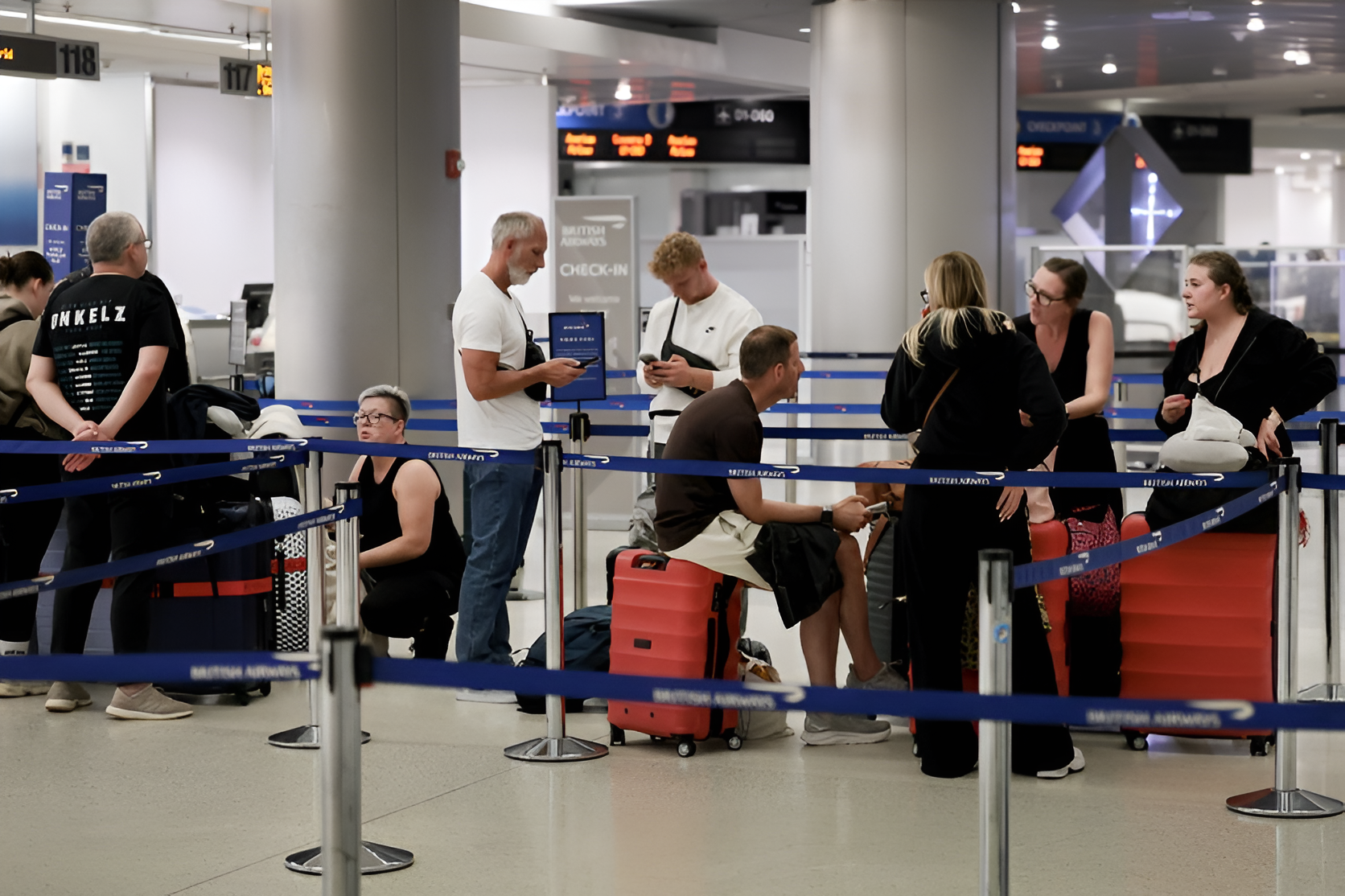
The disruption produced 12,462 cancellations on November 13, including 9,082 by major airlines, although the FAA cautioned that not every cancellation was directly caused by the ground stop. That operational aftermath demonstrates how quickly a communications failure can move into airline schedules, aircraft positioning and crew availability.
The immediate network is stable, and the suspect router functionality has been disabled across similar equipment. The more consequential milestone will be the completed root-cause investigation and whether its findings lead to stronger fault containment before another local inconsistency can again restrict departures across the entire country.
| More aerospace and engineering stories, right in your MSN feed. Follow AMI on MSN |
By Thomas Caldwell — AMI’s senior editor for mechanical and mobility engineering, covering vehicle electronics, systems integration, electrification, chassis systems, propulsion, and safety policy.