Iran Cuts Gas to Six Buildings, Forecasts 430 Million Cubic Meters Daily Deficit
Iran has disconnected gas service at six government buildings in Tehran while preparing for a projected peak winter deficit of roughly 430 million cubic meters per day. Government-affiliated bodies have been ordered to cut consumption by 20%, cap office temperatures at about 18°C, or 64°F, and turn off heating during holidays. The Education Ministry building was among those disconnected for noncompliance.
The restrictions expose a counterintuitive energy problem: Iran holds the world’s second-largest proven natural-gas reserves, yet underground resources are not the same as gas that can be processed and delivered on a cold day. A reserve measures what may ultimately be recoverable. Winter reliability depends on the flow available through wells, processing plants and pipelines at the precise time households, power stations and factories need it.
Large reserves cannot replace lost processing capacity
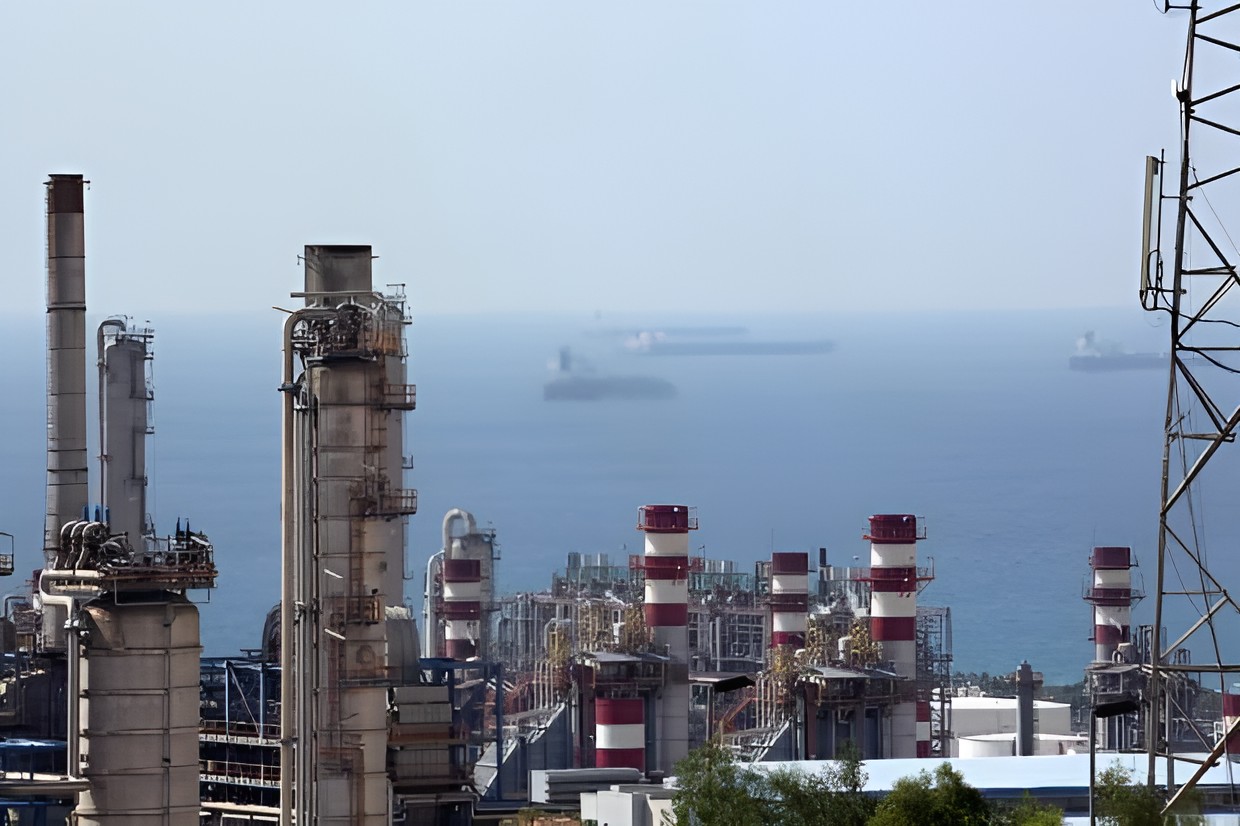
Iran’s immediate constraint is partly a conversion bottleneck. National Iranian Gas Company head Saeed Tavakoli said strikes on six refineries eliminated 28% of national gas-production capacity. The Institute for the Study of War estimated the loss at 20% to 25%. Those figures remain attributed assessments, but both indicate a reduction large enough to reshape winter allocation across the network.
About 100 million cubic meters per day of processing capacity has since been restored, according to Tavakoli. He said the remaining 130 million cubic meters per day of damaged capacity may not return before 2028. That leaves the system facing peak demand with less usable output and limited time to install, repair or finance replacement capacity.
The size of the projected deficit also shows that recent damage is only part of the problem. The previous winter’s shortage was already about 300 million cubic meters per day, government spokesperson Fatemeh Mohajerani said. Then-Oil Minister Mohsen Paknejad estimated in early 2025 that Iran needed $45 billion in investment to address recurring winter shortages. Longstanding underinvestment, subsidized prices and poor building efficiency therefore compound the recent loss of processing capacity.
The International Energy Agency’s overview of Iran’s gas system illustrates the chain involved: gas must be extracted, processed and distributed before it can serve homes, power plants or industrial users. A country can rank highly in production and reserves while still encountering local or seasonal shortages when processing and delivery capacity cannot match demand.
Household priority shifts the shortage toward industry
Gas accounts for 73% of Iran’s energy mix, so conservation in one sector cannot fully isolate the others. Households have been asked to keep temperatures between 18°C and 21°C, or 64°F to 70°F, but residential heating receives priority. Analyst David Jalilvand expects industry to absorb much of the remaining shortage.
That tradeoff is already visible. Zagros Petrochemical in Asaluyeh shut a methanol unit until further notice on orders from the national gas company. Curtailing large industrial consumers can preserve household heating and network stability more quickly than securing equivalent reductions from millions of individual customers. The cost is concentrated in lost production, interrupted plant schedules and reduced supplies of gas-derived products.
Government buildings are an early enforcement target for a related reason. Authorities can impose thermostat settings, verify compliance and disconnect a relatively small number of centrally managed facilities. Cutting service to six buildings will not close a deficit measured in hundreds of millions of cubic meters, but it demonstrates that the 20% reduction order carries consequences and places public agencies under restrictions before broader residential cutoffs.
Fuel substitution trades gas scarcity for dirtier air
Power generation creates another difficult allocation choice. When natural gas is unavailable, some plants can burn mazut, a heavy residual fuel with high sulfur content. Deputy Energy Minister Mostafa Rajabi Mashhadi said Iran would continue burning mazut during the current year. That substitution can keep electricity flowing, but it shifts part of the gas shortage into an air-pollution burden, particularly around urban and industrial areas.
The system also has limited room for abrupt residential interruptions. Officials have warned that cutoffs could spread nationwide, including to Tehran, and restoring service after network pressure is lost can take considerable time. Eleven of Iran’s 31 provinces, including Mazandaran, Golestan and North Khorasan, are described as highly vulnerable.
Possible imports from Russia have been discussed, but imported supply still depends on agreements and transport infrastructure; it cannot substitute automatically for damaged domestic processing. Until more capacity returns, Iran’s operating hierarchy is becoming clear: restrain public buildings first, curtail industrial plants, substitute heavier fuel where possible and protect household heating for as long as the network permits. With 130 million cubic meters per day of damaged capacity potentially unavailable until 2028, the six building cutoffs are an early sign of a constraint that may persist beyond one winter.
| More aerospace and engineering stories, right in your MSN feed. Follow AMI on MSN |
By Thomas Caldwell — AMI’s senior editor for mechanical and mobility engineering, covering vehicle electronics, systems integration, electrification, chassis systems, propulsion, and safety policy.