Southwest Added Mechanic Sign-Offs After Damaged 737 MAX Flew 44 Times
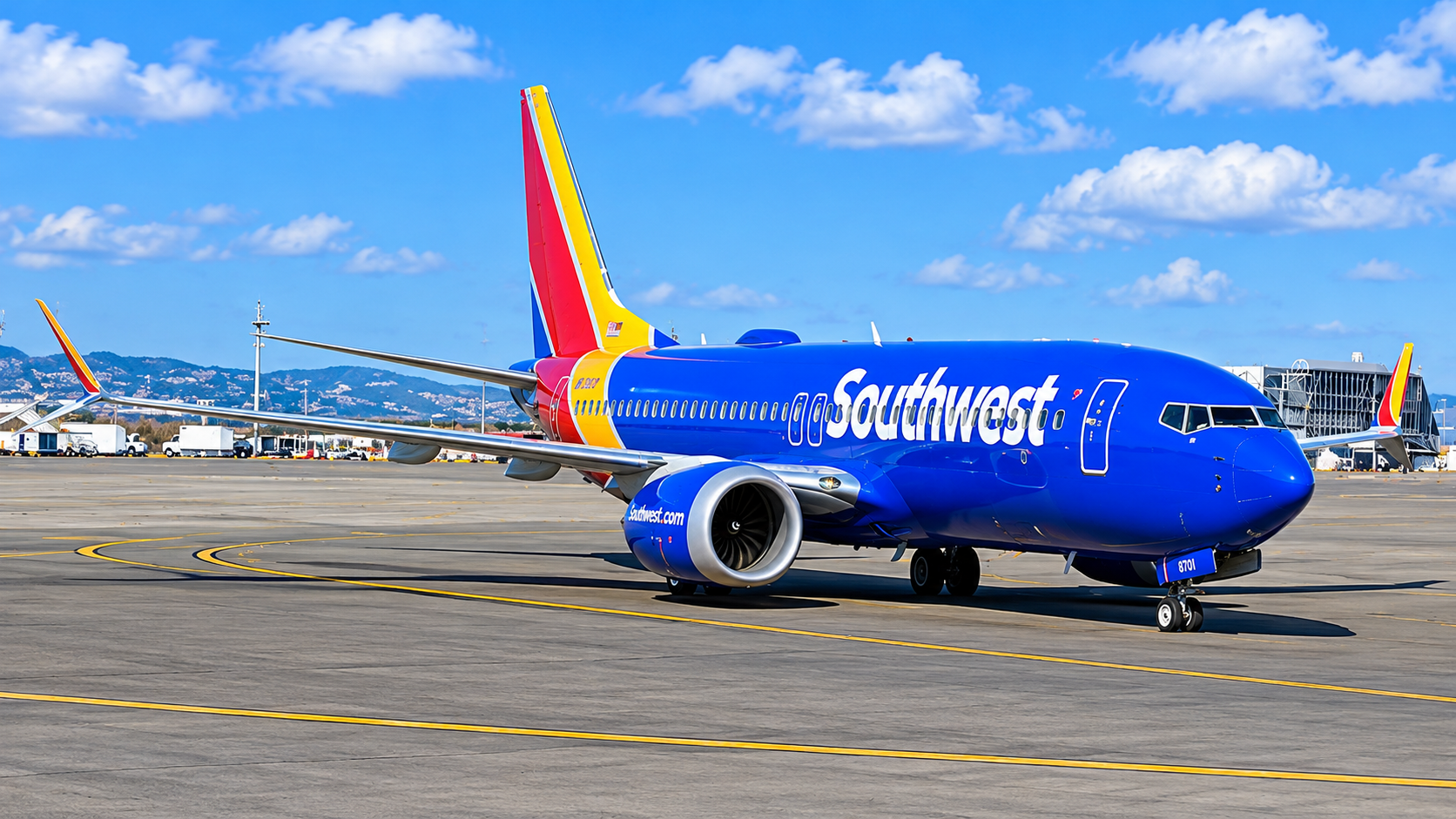
Southwest Airlines has added individual mechanic sign-offs to a flight-control maintenance test after a storm-damaged Boeing 737 MAX 8 remained in service for nine days and 44 flights. The change directly addresses the second of two missed opportunities to find damage around the jet’s rudder system before a May 25, 2024, in-flight oscillation.

The aircraft, registered N8825Q, had been parked overnight at Louis Armstrong New Orleans International Airport on May 16 when gusts reached 73 knots. The wind damaged the mounting structure for the standby rudder power control unit and its connection to the vertical stabilizer. There was no obvious external indication of the internal structural damage, and the aircraft departed without a post-storm inspection.
The first gap involved the inspection trigger itself. Boeing’s maintenance manual called for checks after exposure to extreme winds, but it did not specify the wind speed that required one. Southwest also had no process for notifying maintenance control when a parked aircraft encountered such conditions. The jet consequently completed 38 flights before entering scheduled overnight maintenance in Houston on May 23.
The required observation did not happen
The Houston work package included a test of the standby hydraulic system. Its procedure required a mechanic at the tail to confirm that the rudder moved correctly in both directions. Investigators determined that the rudder moved right but not left and that nobody was positioned behind the aircraft to make the required visual confirmation. The maintenance record nevertheless showed that the test had passed.
The added individual sign-offs make responsibility for that observation explicit within the revised test. Southwest added individual mechanic sign-offs to its standby hydraulic-system test, alongside an extreme-wind notification process and fleet inspections. A sign-off cannot detect damage by itself, but it creates a documented checkpoint tied to the person performing the required verification rather than leaving the overall test result as the only record.
That approach aligns with the FAA’s broader work on human factors in aviation maintenance, which focuses on how procedures, human capabilities and workplace conditions affect inspection performance. In this case, the technical instruction already required direct observation. The breakdown occurred because that observation was not completed even though the task was recorded as passed.
The aircraft returned to service. On its fourth flight after the Houston check, a crew disconnected the yaw damper after it appeared to overcorrect during turbulence. The system was deferred under the minimum equipment list, and the aircraft flew another sector to Phoenix. A functional test there passed, allowing the yaw damper to be returned to service.
The damage surfaced on the 44th flight
Southwest Flight 746 from Phoenix to Oakland was the aircraft’s sixth flight after the Houston maintenance visit and its 44th since the New Orleans storm. At 34,000 feet, the crew experienced what it described as “a small amount of Dutch roll” for several seconds. A second occurrence followed at 32,000 feet.
Dutch roll is a coupled oscillation in an aircraft’s yaw and roll axes. The crew continued to Oakland and landed safely. The National Transportation Safety Board classified the event as an accident because the aircraft had sustained substantial damage.
The NTSB attributed the anomalous rudder operation to extreme-wind damage at the standby rudder power control unit’s connection to the vertical fin. The mounting damage had remained hidden through the absent post-storm inspection, the improperly completed Houston test and the subsequent yaw-damper troubleshooting.
Investigators could not determine whether the Houston maintenance activity caused additional damage to the already affected vertical-stabilizer structure. Their finding instead established the maintenance chain that allowed the original storm damage to remain undetected.
A numerical threshold now starts the inspection
Boeing revised its 737 maintenance manual in May 2025 to require an extreme-wind inspection when ground winds reach 65 knots. That replaced an undefined condition with a measurable trigger and placed the threshold below the 73-knot gusts recorded in New Orleans.
Southwest began monitoring weather reports for winds above 65 knots, established a process to alert maintenance control after parked aircraft encounter extreme winds and revised its inspection procedures. The airline also provided an additional statement concerning the event, while its documented response includes the new mechanic sign-offs and weather-notification controls.
Between June 17 and June 20, 2024, Southwest inspected all 231 Boeing 737 MAX aircraft then in its fleet and found no similar damage. The fleet result suggested that the New Orleans damage was not widespread, but the accident exposed a specific procedural weakness: an extreme-weather condition lacked a numerical trigger, and a later test was closed without the required tail observation. The new 65-knot threshold and individual sign-offs now place explicit checkpoints at both points where N8825Q’s damage escaped detection.
| More aerospace and engineering stories, right in your MSN feed. Follow AMI on MSN |
By David Whitaker — Associate editor for AMI’s aerospace and drone systems desk, translating flight systems, aircraft programs, spaceflight, and UAV developments into accessible technical stories.