Dutch Court Blocks BYD Ti7 EU Sales and Hungarian Production
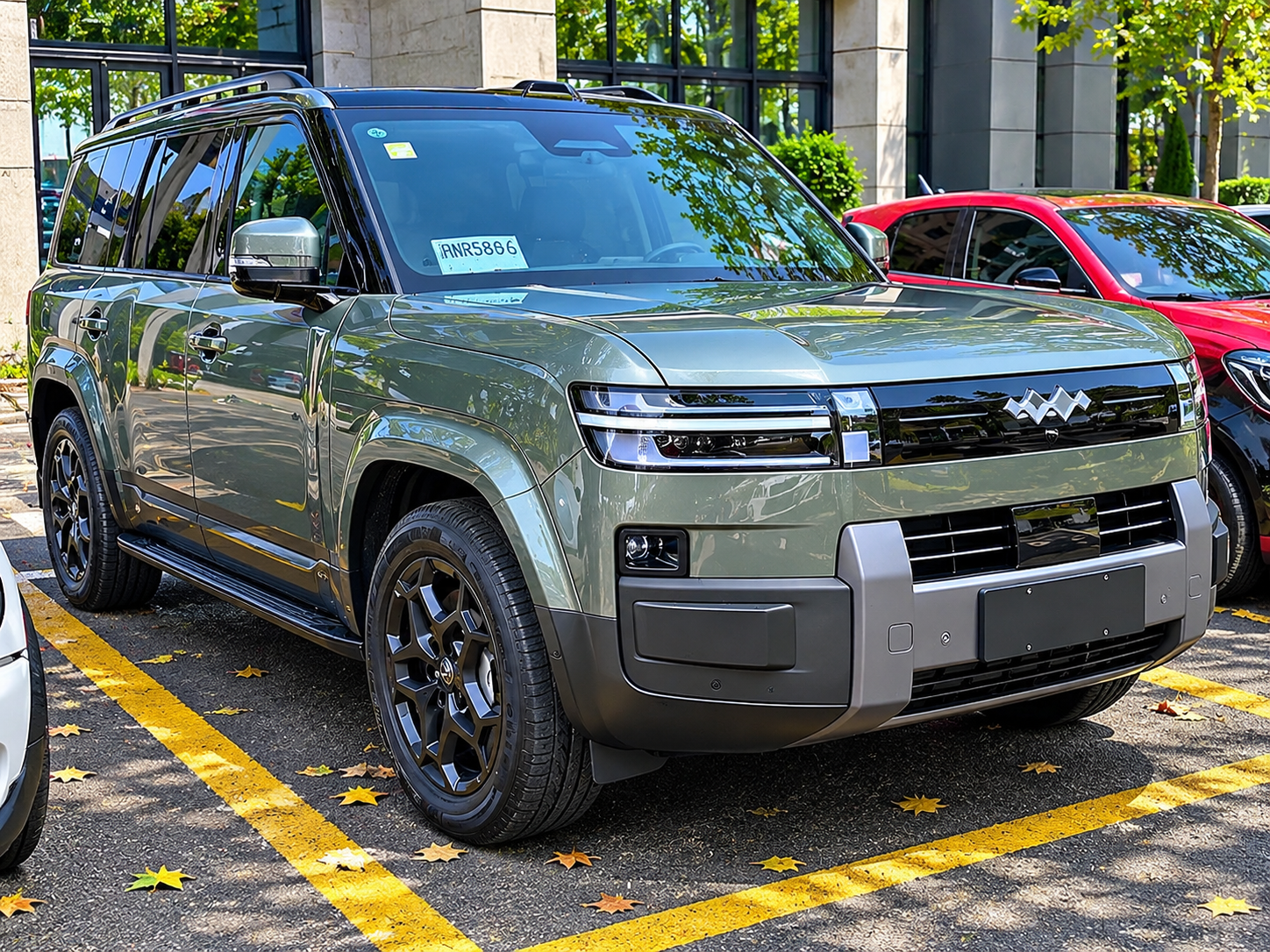
BYD can take UK orders for its Fangchengbao Ti7, but it cannot sell the seven-seat SUV in the European Union or build it at its new Hungarian factory under a preliminary injunction from a district court in The Hague. The split reflects both the geographic reach of Jaguar Land Rover’s EU design rights and a jurisdictional limit: the Dutch judge found infringement at this stage but lacked jurisdiction over BYD’s UK affiliate.

The court concluded in summary proceedings that the Ti7 infringes Jaguar Land Rover’s EU design for the Defender. It said the Defender’s “characteristic and distinctive elements” are reflected in BYD’s vehicle. The order takes effect one week after the ruling because BYD currently has no concrete plan to market the Ti7 in the EU.
The production restriction is the more immediate industrial constraint. BYD’s Hungarian factory is due to begin mass-producing cars early next year, but the injunction prevents the Ti7 from joining that operation until the intellectual-property case is resolved. That closes off a potential EU manufacturing route even before the model has a confirmed EU sales plan.
Why one Dutch ruling reaches across the EU
Jaguar Land Rover, a unit of India’s Tata Motors, brought the case after BYD advertised the Ti7 through its UK website. Orders had opened with customer deliveries scheduled to begin in January 2027. BYD launched the Fangchengbao model in China last year.
The broad reach of the order follows the structure of EU design protection. Registered EU designs have a unitary character and equal effect across EU member states, allowing qualifying injunctions to extend beyond the country where the court sits. Hungary is an EU member, so production there falls within the order’s territorial scope.
The United Kingdom does not. The judge ruled that the court had no jurisdiction over BYD’s UK affiliate, leaving the announced UK order book outside this injunction. That does not resolve the wider dispute; it creates an unusual market boundary in which a vehicle may remain available to UK customers while being barred from sale and production across the EU.
The dispute centers on overall visual identity
Automotive publications have pointed to the vehicles’ boxy, flat-roof silhouettes, upright proportions, squared-off wheel arches, tailgate treatments and solid body-colored panels behind the rear passenger doors. Those observations help explain the comparison, but the legal restriction rests on the court’s preliminary finding rather than a final judgment on each individual styling feature.
EU design analysis generally asks whether a design creates a different overall impression for an informed user, while accounting for the designer’s freedom to choose other forms. Purely technical features receive different treatment, but exterior elements such as proportions, surfaces and the arrangement of visible components can contribute to a vehicle’s protected appearance.
That framework creates a difficult boundary for SUV design. Upright bodies and flat roofs can serve practical packaging goals, including passenger space, but manufacturers still have substantial freedom in the way the roofline, wheel openings, side panels and rear body are composed. A court therefore can assess the complete visual impression rather than treating every shared geometric feature as decisive on its own.
The commercial importance of that appearance is clear. The Defender recorded more than 100,000 global sales in 2025, making its design a valuable and recognizable part of Jaguar Land Rover’s product identity. Litigation between major European automakers over vehicle design rights remains rare, and an injunction at this early stage of an ongoing case is particularly uncommon.
Jaguar Land Rover said it protects its intellectual property through legal action when necessary and noted that proceedings remain underway. BYD said the Ti7 resulted from its own independent design work, “strongly disagrees” with the ruling and will appeal.
The appeal leaves the final infringement decision open, but the preliminary order already has a concrete engineering and production consequence: BYD cannot allocate Hungarian manufacturing capacity to the Ti7 while the restriction remains in force. The next legal decision will determine whether that barrier persists, changes scope or is removed before the planned January 2027 UK deliveries begin.
| More aerospace and engineering stories, right in your MSN feed. Follow AMI on MSN |
By Robert McKinney — Editor-in-Chief for AMI’s automotive and mobility coverage, with a mechanical engineering background and a decade reporting on powertrain systems, EV innovation, and global vehicle manufacturing.