GAO Says F-35 Readiness Is Slipping on Sustainment Strain
Whereas previous concerns about F-35 readiness focused on the aircraft’s design complexity or capabilities, its most recent challenge relates to practical sustainment requirements and costs. According to a report released by the Government Accountability Office, the mission-capable rate of the US F-35 fleet decreased from 67 percent to 44 percent between fiscal year 2021 and fiscal year 2026, whereas the full mission-capable rate declined from 38 percent to 25 percent.

This is a fleet sustainment problem in its essence, where the aircraft’s readiness reflects the ability to manage a vast inventory, contract management, and repairs. The main point made by the Government Accountability Office is that sustainment costs rose over the period while readiness rates fell, meaning the problem is not aircraft performance-based but is rooted in sustaining a complex industrial structure.
The two main challenges identified by the Government Accountability Office relate to limited spare parts and excessive reliance on contractors. Whereas the former implies that aircraft are simply unavailable due to the inability to acquire necessary spare parts, the latter reduces the government’s control over operations since any disruption or delays are largely in the hands of contractors. With a massive fleet such as the F-35’s, those factors make the situation challenging since inefficiencies are amplified.
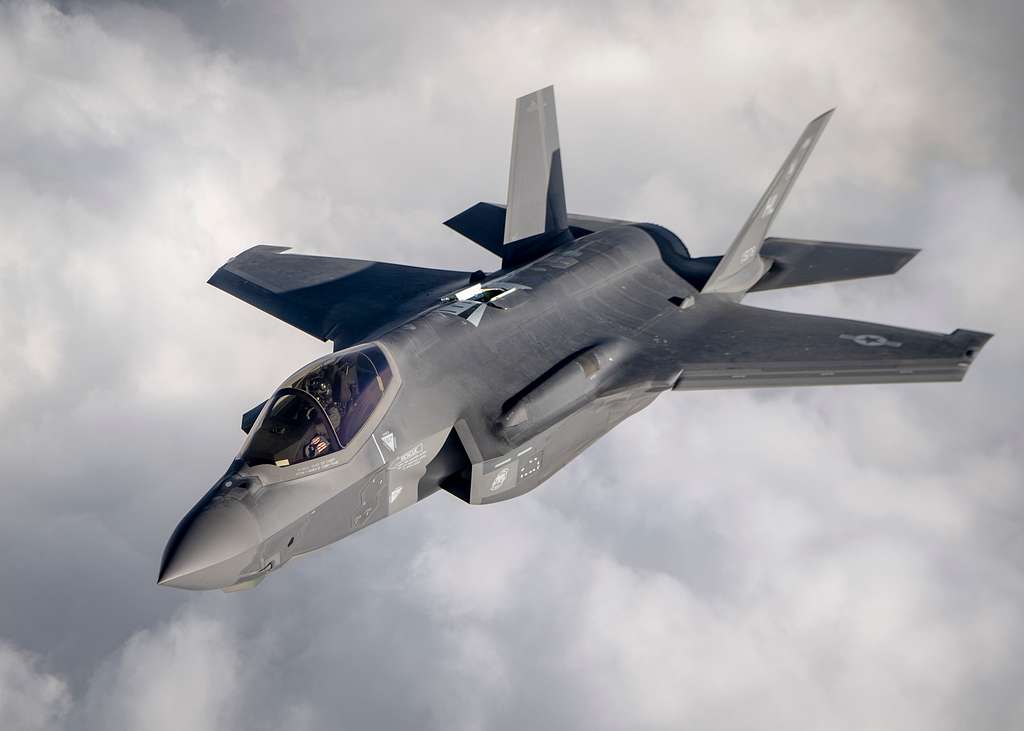
The F-35 fleet operated by the USAF currently consists of more than 500 F-35As, while there are already more than 800 F-35 aircraft delivered to all branches of the US armed forces combined. At this fleet size, small delays in part delivery or repairs can result in substantial numbers of aircraft becoming non-mission capable. Therefore, fleet sustainment becomes crucial as readiness indicators now depend on logistical performance and spare parts availability.
To counteract the issue, the F-35 Joint Program Office has developed a new readiness plan, which provides for increased funding of $13.7 billion in five years or roughly $2.75 billion per year. However, this initiative has raised questions concerning industrial capacity since the F-35 readiness plan assumes more than $7 billion in additional parts and materials to be supplied by the industry. As before, the industrial capacity for such supplies remains limited.
The above-listed facts raise the main engineering question can the necessary spare parts and supplies be manufactured and provided. Additional funding allows purchasing additional supplies and repairs. However, such an action is feasible only if manufacturers have enough capacity to produce necessary components. Otherwise, the readiness plan’s success will be constrained by current limitations.
This fact is reflected in the Government Accountability Office’s recommendations. First, the Department of Defense should ensure that risk mitigation strategies have been devised for potential problems related to technical data availability, industrial capacity limitations, affordability concerns, and service objective compatibility. It must be stressed that such factors as industrial capacity and affordability are systems-level aspects of a fleet sustainment challenge.
Second, the department “should ensure future incentive approaches better achieve the desired performance for sustainment contracts.” For instance, if contractors are required to maintain aircraft readiness, appropriate performance indicators and penalties should be established. The discussion of contract threshold settings should also continue until contractor performance meets service needs.
Finally, the Government Accountability Office recommends ensuring proper documentation practices and incentive fee metrics. More specifically, the Pentagon should develop a system with quality control safeguards in place to obtain, generate, and store relevant, quality incentive fee metric and payment information, and ensure that procedures for documenting changes to the contract are followed. This recommendation is vital since contract performance cannot be assessed without proper documentation.
To summarize, the problem with F-35 aircraft readiness described in the paper above cannot be attributed to individual problems or deficiencies. On the contrary, it is a fleet-wide sustainability challenge involving multiple interrelated aspects of aircraft support. For the Pentagon’s primary fighter jet, fleet readiness will largely depend on sustainment contracts and logistics efficiency as opposed to flight characteristics and other features.
By David Whitaker – Associate editor at AMI’s aerospace and drone systems desk, bringing the complex workings of flight systems, aircraft procurement projects, space travel, and unmanned aerial vehicles to a layman audience.