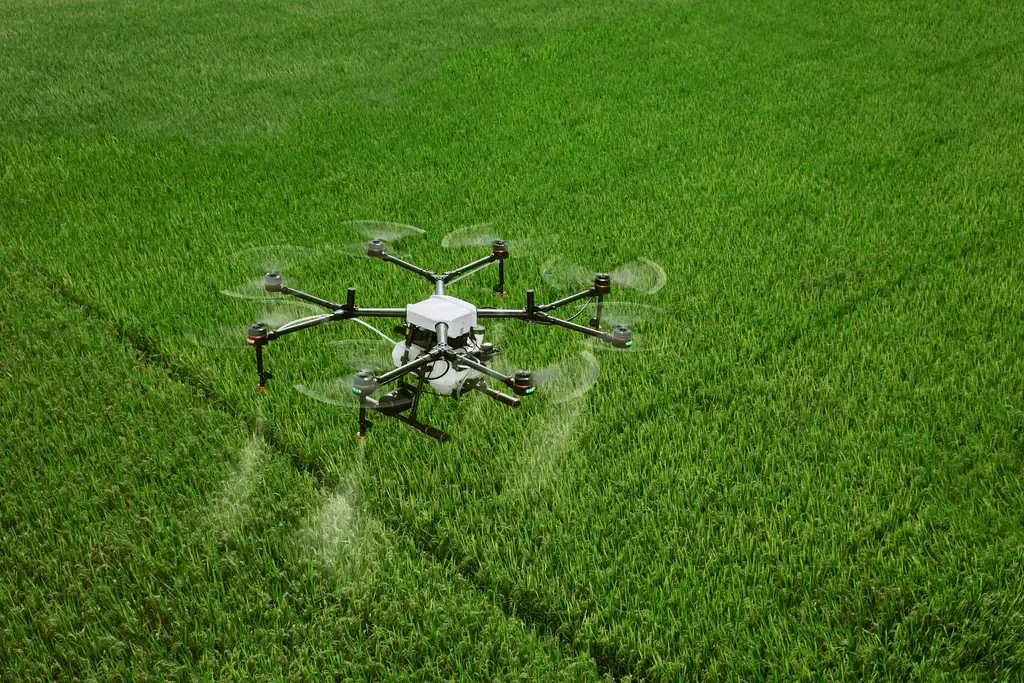
Precision Agriculture’s Rapid Technological Uptake
Precision agriculture has undergone a marked transformation over the past decade, driven by the integration of advanced sensing, guidance, and data analytics into core farming operations. Historical data from a long-running survey of agricultural retailers, initiated in 1997, reveals the trajectory of adoption. By 2019, offerings such as field mapping with GIS, GPS-enabled sprayer booms, auto-guidance systems, grid or zone soil sampling, satellite and aerial imagery, and variable rate technology (VRT) for fertilizer and lime were available from more than two-thirds of surveyed dealers. Technologies absent or undeveloped in 2008—such as cost/profit mapping, autosteer support, and UAV imagery—had reached 38% dealer availability by 2019, with projections indicating significant growth by 2022.

Complementary insights from a 2019 survey of 800 large-scale farmers, each operating 1,000 acres or more, underscore the practical integration of these tools. Among those managing 2,000 or more acres, approximately 75% collected yield monitor data, 85% conducted soil sampling, and nearly 90% utilized imagery data. These datasets most strongly influenced fertilizer, seeding rate, and drainage decisions. Reported outcomes were notable: 72% observed positive yield impacts from data-driven seeding rates, 81% from fertilizer decisions, and 85% from drainage management. Farms leveraging multiple data streams reported higher satisfaction than those relying on a single source.
Data management practices are becoming integral to operational decision-making. Nearly half of farms collecting data employed one or more software products or services, with usage rising to 63% among operations exceeding 5,000 acres. Over 70% shared their data with at least one service provider, and those engaging in data sharing or platform subscriptions were more strongly influenced by analytics in seeding and fertility decisions than those who did not.
International research reviewed by Lowenberg-DeBoer and Erickson in 2019 highlights that guidance systems, sprayer boom control, and planter section shutoffs have become standard in mechanized agriculture, with adoption rates rivaling genetically modified seed. VRT adoption, however, has been slower, in part due to challenges in quantifying its benefit-to-cost ratio. Advances in robotics and artificial intelligence are expected to accelerate uptake.
Economic analyses by Schimmelpfenning found modest gains in operating profit—1.1% to 2.8% for corn and 1.1% to 1.8% for soybeans—associated with GPS soil and yield mapping, guidance systems, and VRT. Yet a 2020 exploratory study by Pope and Sonka, based on interviews with ten early adopters, suggested far greater returns. Categorizing tools into legacy control systems, agronomic/fertility systems, monitoring systems, and decision support technologies, they reported an average net benefit approaching $90 per acre and a benefit-cost ratio of 9.7 to 1. The high payoff was attributed to whole-farm system benefits—interactions among tools that create a new operational paradigm.
Interviewed farmers cited a range of systemic advantages: understanding rainfall events to optimize fieldwork timing; monitoring hybrid performance within fields; making informed decisions on culling cash-rented land; providing documentation for insurance, lenders, landlords, and buyers; facilitating on-farm research; reducing machinery investment and operating costs; enabling benchmarking; lowering labor expenses; and reducing stress in daily operations.
Recent developments point toward continued acceleration in precision agriculture capabilities. Key areas to monitor include deeper understanding of plant growth drivers and constraints, real-time sensing and monitoring at granular spatial scales, improved accuracy in measuring inputs and outputs, and enhanced application control technologies. Data aggregation and sharing remain central challenges, with broadband expansion in rural areas critical for enabling rapid data transmission. Advances in data security, privacy frameworks, and integration of cloud computing, AI, big data, and IoT are poised to further digitize the farming sector.
With sustained venture capital interest and entrepreneurial innovation, the trajectory of precision agriculture suggests an ongoing shift from traditional crop production toward a model akin to biological manufacturing, where integrated digital systems govern every aspect of growth and resource management.