SW North America Targets Flexible CNC Cells at IMTS 2026
With the idea of demonstrating the evolution of modern machining with the help of IMTS 2026 in Chicago, SW North America decided to showcase the way the machine tool, robot, fixture system, and digital model should be considered as one production cell rather than separate purchases. For the US manufacturer, it is critical in such environments where productivity, repetition, and set-ups struggle for the same spindle time.

The company located in Michigan stated that it will exhibit at Booth #338250 during the September 14-19 exhibition held at McCormick Place. It focuses on live CNC machining, cobots, aerospace machining, and automation. IMTS provides the opportunity for manufacturers to experience the technology in action, said Andrew Rowley. This year, our focus is on how CNC machining and manufacturing automation technology creates “smarter, more adaptable production environments across industries.”
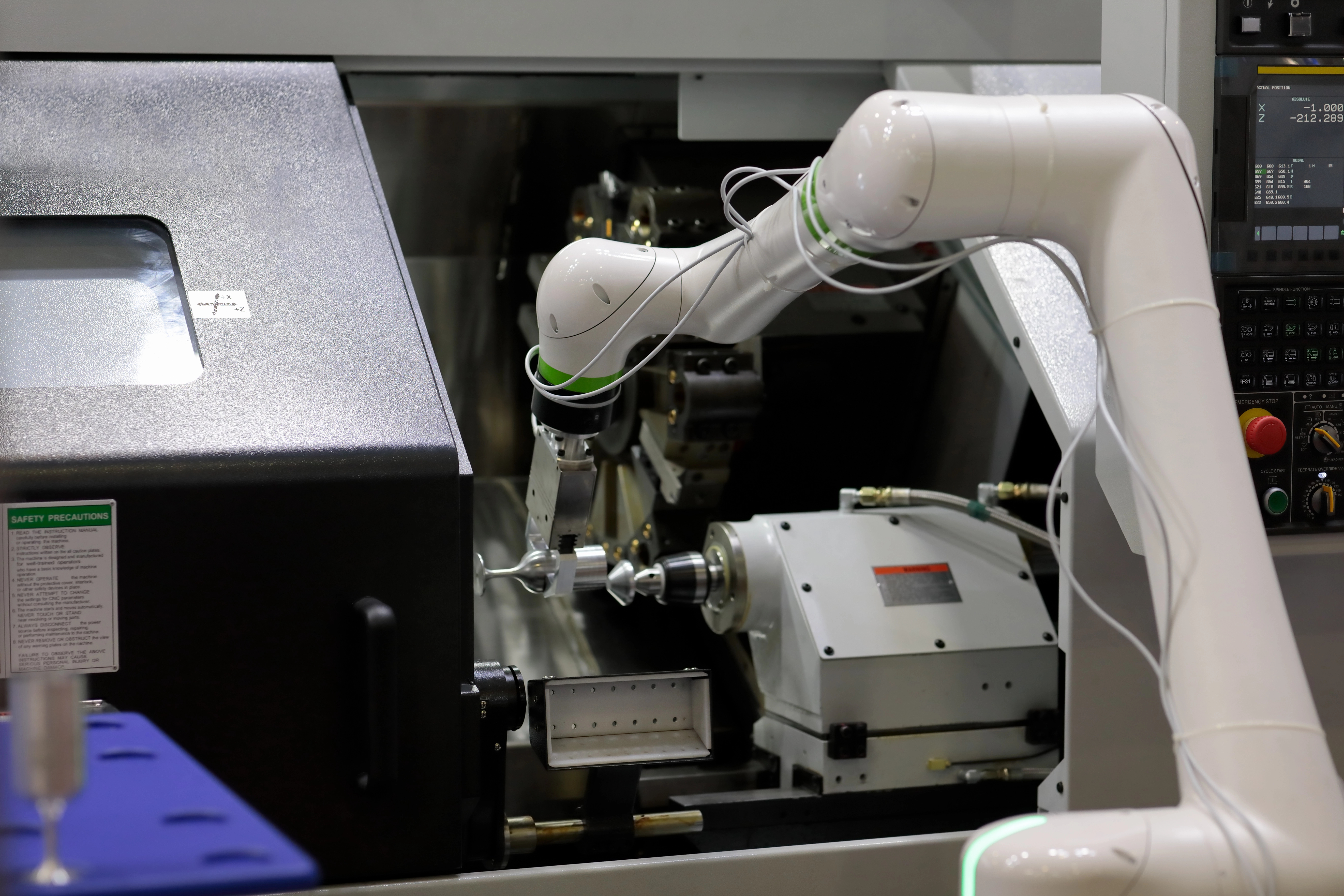
The first demonstration involves the SW BA 322 dual table, dual-spindle machining center with a cobot. At first sight, the part, which the machine will produce, seems pretty simple custom challenge coins. But the engineering value lies in the cell structure. SW said that the cobot will load raw material and unload parts, while the BA 322 will do the machining cycle. This demo will highlight one of the most classical production problems of the US market how to avoid the dominance of the handling process over the cutting process.
Furthermore, according to SW, in BA 322 demo the Digital Twin technology will be used with regard to the machining process. SW defines Digital Twin as a virtual replica that can simulate production scenarios, validate process changes and optimize the performance before making any modifications on the shop floor. In other words, from the manufacturing viewpoint, it means that it is easier to conduct some process changes virtually before performing them on the shop floor to preserve the uptime.
Moreover, it is important that the cobot element will be emphasized in SW demos due to the safety features of the cobot that makes possible its operation near human operators through integrated sensing and intelligent motion technologies. It will make the environment with the cobot relevant for those cases when full fencing and traditional robot design are not the best solution. For many US plants, especially those introducing automation gradually, it is easier to assess collaborative handling as a part of a machining process.
The second demo involves the SW BA W06-22 machining center machining a blisk component. This demo is the most technical among other ones as it does not speak about automation in general but about the process discipline for complex geometry parts. SW said that this demo will highlight aerospace CNC machining applications, precision machining, process reliability, and balancing and pre-setter technology with live pre-setter and balancing station.
This combination is important with regard to aerospace machining because the machining center attracts much attention, but the process reliability is ensured by the tool setting and balancing. Pre-setting ensures the precise tooling before the cutting process, while the balancing is related to the consistency in high-performance machining conditions. Without any exaggerations, even without saying more about this demo, the message is quite clear aerospace machining capability is not only about the ability to cut metals but about the process control around the cut.
The third demo is the most relevant for job shops and high mix manufacturers zero-point fixture change technology with a cobot and an automated fixture exchange platform. According to SW, this setup is aimed at low volume, high mix production with the purpose of reducing downtime between runs and improving positioning accuracy.
This demo is relevant because the fixture change is one of the most common problems in flexible manufacturing. In the classical case, fixture change takes machine time and reduces repetition stability each time a new part family is introduced. Zero-point workholding, on the other hand, allows moving the setup from the spindle to the bench, while the locating system ensures that the next fixture will be placed correctly. Actually, the advantage of this technology is not fast fixture swapping but the recapture of productive machine time spent on numerous interruptions and short runs.
Overall, SW North America’s three IMTS demos reflect the tendency in US manufacturing production. One cell includes the automated part handling around the dual-spindle machine. The second one showcases the aerospace machining supported by balancing and pre-setting. The third one demonstrates the fixture change automation for high mix work. With the addition of the digital twin layer, the common denominator becomes clear production risks are managed both before and around the cut, not only during it.
This is the direction of the evolution of the machining strategy. Competitive advantage is not in the axis motions or spindle output anymore. It is in the ability to combine machining, handling, process discipline and digital simulation to provide the cell’s flexibility without losing accuracy and uptime. For US manufacturers, which have to process various kinds of parts without interruptions, such systemic approach is becoming a specification of the machine.
By Jonathan Barrett — Editor for AMI’s future mobility and autonomous systems section, with two decades of coverage of robotics, e-mobility, drone-vehicle convergence, and transport mechanical systems.